Authorized Distributor Meaning: What It Is and How to Verify One
The B2B SupplierHub Team··7 min read
An authorized distributor is a company that has a signed agreement with a brand to buy and resell that brand's products. The meaning of "authorized distributor" sits in that one word, agreement. The brand knows this company, has approved it, and has put the terms in writing: where it can sell, which product lines it can carry, and what pricing rules it has to follow.
That sounds simple enough, but the trouble is that plenty of suppliers you meet will tell you they're authorized. Some of them genuinely are, while others bought the product off someone else and are simply passing it along. Both can have a nice website, a friendly sales rep, and an invoice that looks perfectly official. You usually can't tell them apart by looking.
You find out later, the hard way. A brand files a complaint, or Amazon asks where your stock came from, and one supplier's paperwork holds up while the other's falls apart. By then the money is already spent.
This blog post is about not ending up there. It starts with what authorization actually is, and then it walks through how to check it before you place an order.
What Is an Authorized Distributor Agreement?
Think of it like a lease. When a brand authorizes a distributor, it signs a contract that lays out the rules. A typical distributor agreement covers how long the deal runs, which countries or regions the distributor can sell into, which product lines it's allowed to carry, and any pricing it has to respect. In some industries people say "franchised distributor" instead, which is the same thing under a different name.
The part that catches a lot of people out is that being authorized is not a blanket pass. A distributor can be fully approved for one product line and have no right at all to sell the one sitting next to it. The rules get that specific. .
Frequently asked questions
Can a distributor be authorized for some products but not others?
Yes, and it catches a lot of people out. Authorization is tied to specific product lines and regions, so a distributor can be fully approved for one brand or category and have no right to sell another. Always confirm authorization for the exact product you plan to buy, not just for the distributor in general.
What does "authorized distributor" mean?
It means a company that has a signed agreement with a brand to buy and resell that brand's products, on terms the brand sets: usually the region, the product lines, and the pricing rules. The agreement is the whole point. Without it, a supplier is just a reseller who happens to have the product.
How do I know if a distributor is actually authorized?
The most reliable way is to ask the brand. Contact its sales or channel team and ask whether the supplier is authorized to sell their products in your country. You can also check the brand's authorized-reseller page and ask the distributor to show its authorization letter or agreement. A genuine one will confirm it without any fuss.
TB
The B2B SupplierHub Team
Wholesale & sourcing
Stop hunting suppliers by hand. Type a UPC instead.
B2B Supplier Hub shows the suppliers in our network carrying a product on one page: wholesale cost, stock, and retail price side by side. Free to search, no card required.
In electronics, a distributor selling a part it isn't contracted for is expected to say so openly
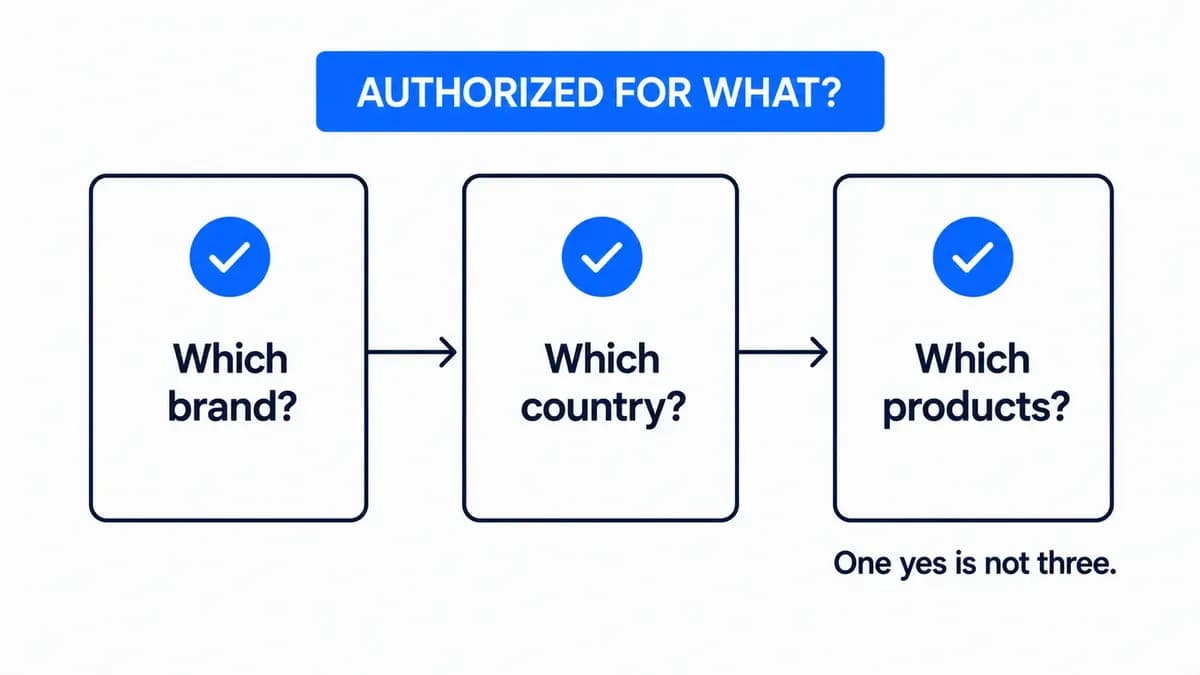
So when a rep says "we're an authorized distributor," you're not done yet. You still need to ask which brand they're authorized for, in which country, and for the exact products you want to buy. Those are three separate questions, and a yes to the first one tells you nothing about the other two.
Why Authorization Matters for Amazon Sellers
Sell through your own store or a small marketplace and nobody may ever ask where your inventory came from. Sell on Amazon, and someone eventually will.
Say you apply to sell a gated brand. You upload an invoice and wait. What most people don't realize is that Amazon isn't only reading the invoice. It's checking the company behind it. Sellers on Amazon's own forums describe Amazon phoning their distributor to confirm an invoice was real before approving them. If that distributor can't be confirmed as a genuine, authorized source for the brand, the application gets rejected. Your product can be completely real and it won't matter.
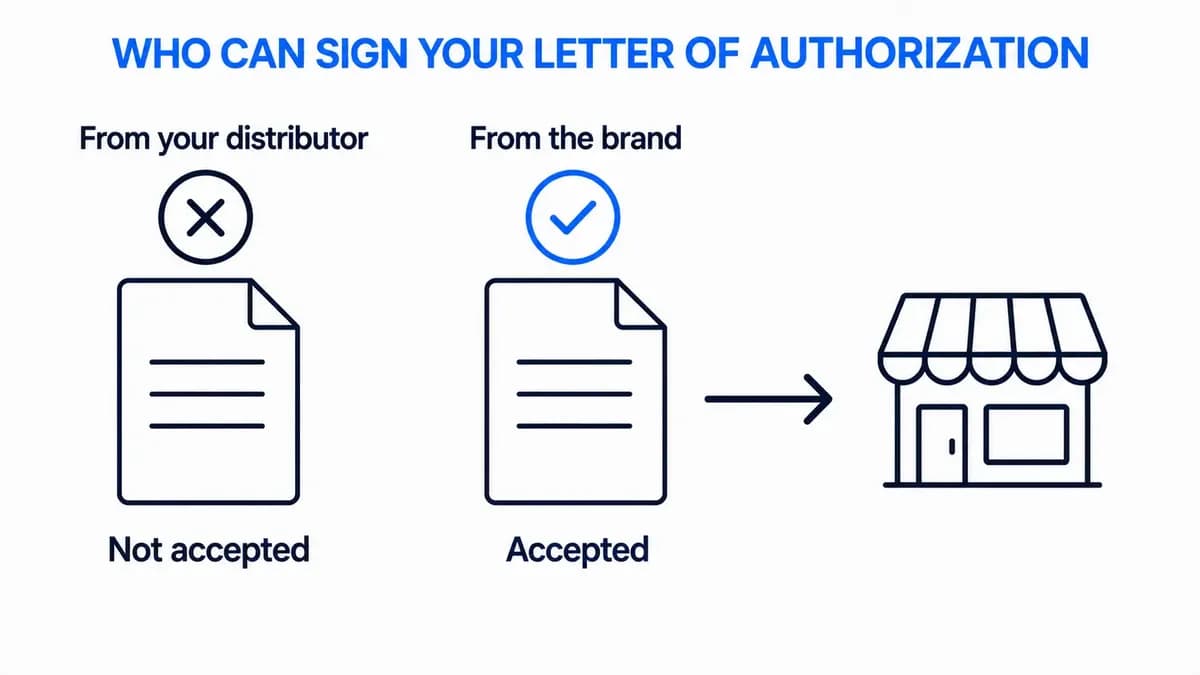
There's a nastier version of this too. When a complaint escalates and Amazon asks for a Letter of Authorization, that letter has to come from the brand itself, not from your distributor. Your supplier can write you the most convincing letter in the world and Amazon will send it straight back. That means your distributor's relationship with the brand is doing more work than you think, and if that relationship is weak, so is your position.
There is a fair warning on the other side of this, though, because authorized doesn't mean easy. An authorized distributor still has to approve you as a customer, and some brands keep their own list of approved sellers on top of that. Authorization tells you the supply chain is clean. It doesn't get you through the door. What happens when real product comes in through the wrong door is a bigger subject, and we covered it in our guide to authorized distributors, middlemen, and gray market.
How to Verify an Authorized Distributor
So a supplier says they're authorized. Now let's find out whether that's actually true.
The best check takes one email, and it goes to the brand. Ask their sales or channel team, plainly, whether this supplier is authorized to sell their products in your country. Real distributors get confirmed without any drama. If the brand goes quiet, or says it can't confirm, that silence is your answer.
While you're at it, look at the brand's own website, because plenty of them publish a "where to buy" or authorized-reseller page. And ask the distributor straight out for their agreement or authorization letter. A real one has no reason to hide it. If they get vague, you've just learned something.
Keep your expectations honest here. No single public database covers all the authorized distributors out there, brand by brand. A perfectly legitimate regional distributor might not appear on any list anywhere. So a supplier missing from a list isn't a strike against them. It just means the list couldn't answer the question, and you go ask the brand instead. Finding authorized distributors from zero is a whole process of its own, and we wrote that one up in how to find the authorized distributors for any brand.
Signs a Distributor Isn't Really Authorized
None of these prove a supplier is crooked on their own, but if you see two or three of them at once, you should slow right down.
They won't say which brands they actually carry, or which channels they're allowed to sell into. They can't show any proof of a brand relationship, and they change the subject when you ask. Their price is well under every other legitimate source, which often means the goods came in through a side door. They push you to buy today. And the "distributor" is registered to a house, a mailbox store, or a virtual office rather than a real warehouse.
Can a Tool Verify an Authorized Distributor for You?
It can handle part of it, but not all of it.
Confirming that a supplier is authorized is something you have to do yourself, with the brand. But there's a second question you still need answered, and it's just as important: are this supplier's numbers even real? That second question is what B2B Supplier Hub is for. Every distributor in our network is verified by our team before they're listed, and you can search a product free and see the real cost and real stock from the ones that carry it, before you connect with any of them. You can also browse the brands in our network to see which ones already have verified distributors listed. What no tool can do is get you approved with the brand. We'd rather say that outright than pretend otherwise. If someone promises to skip that step, be careful.
The Bottom Line: Ask Before You Order
"Authorized" isn't something a supplier gets to call itself. It's a relationship with a brand, and either the paperwork exists or it doesn't. Learning to tell the difference is a quiet skill, and it's one of the things that separates sellers who build something steady from the ones who keep getting blindsided.
Checking takes a few emails and a little patience. Skipping it can cost you a rejected application, money held by Amazon, and the stress of trying to prove where your products came from when you have no way to prove it.
So ask the boring questions. Ask exactly what they're authorized for, ask whether they can show you, and ask if they mind you confirming it with the brand. Good suppliers won't blink. The ones who do just told you what you needed to know.
And if you want to see what a product actually costs across the distributors in our network who carry it, before you spend anything on approvals, run a free search on B2B Supplier Hub and look at the real numbers first. Connect when they make sense for you. If the product isn't in the network yet, ask our team to find and verify a distributor who carries it.
Is an authorized distributor the same as a wholesaler?
Not always, because the two words describe different things. "Wholesaler" describes how a company sells, in bulk at wholesale prices, and a wholesaler may have no relationship with the brand at all. "Authorized distributor" describes the brand relationship, a contract that gives them the right to resell. A wholesaler is only an authorized distributor if the brand has actually signed off on them.

-1200x627.webp&w=3840&q=75)