
Distributor Authorization
Amazon Brand Registry vs Brand Authorization: Not the Same
You search a brand in Seller Central and it tells you listing limitations apply. One forum reply says you need Brand Registry. The next says you need brand authorization. The brand registry vs brand authorization mix-up sends wholesale resellers down the wrong path, because the two do different jobs for different people.
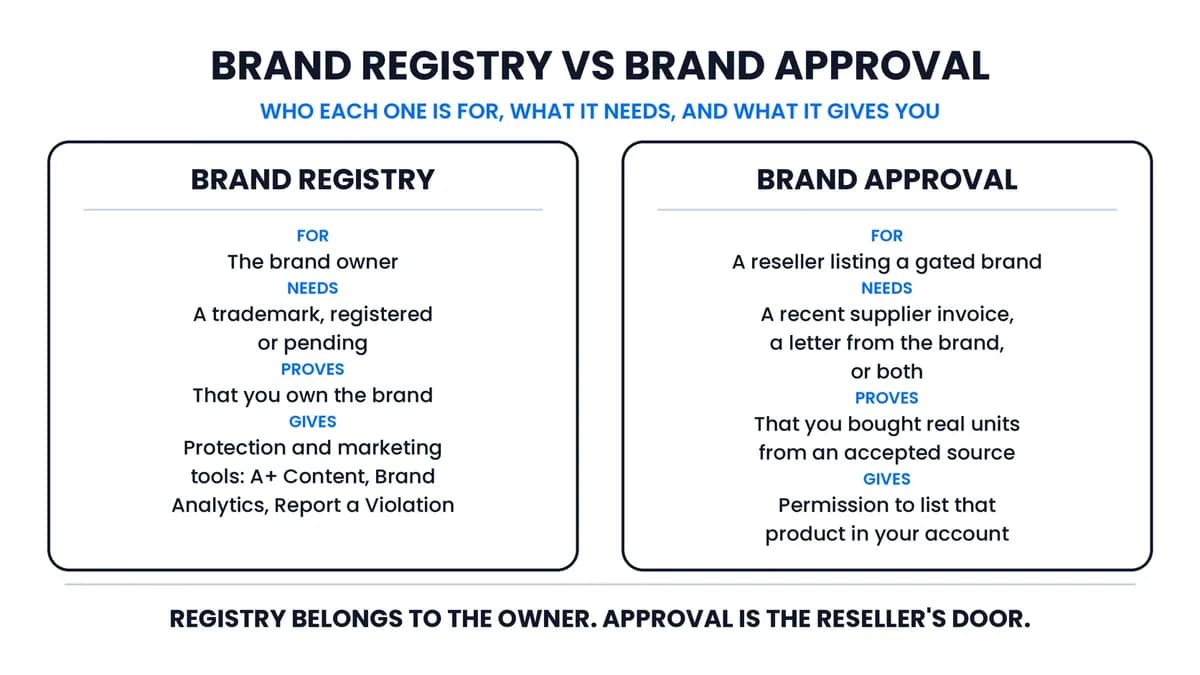
Is Brand Registry the same as brand authorization? No. Brand Registry is for the brand owner and needs a trademark. Brand approval, which most people call brand authorization, is for a reseller and usually needs an invoice that traces back to the brand, a letter from the brand, or both.
Brand Registry vs Brand Authorization, Side by Side
Brand Registry | Brand approval (brand authorization) | |
|---|---|---|
Who it is for | The brand owner | A reseller who wants to list a gated brand or product |
What you need | A trademark, registered or pending, plus the brand name or logo on the product or packaging | Usually a recent supplier invoice, a letter from the brand, or both |
What it proves | That you own the brand | That you bought real units from a source Amazon will accept |
What you get | Brand protection and marketing tools such as A+ Content and Brand Analytics | Permission to list that product in your own account |
Can a reseller get it | Only by owning the trademark | Yes, if your paperwork passes review |
What Brand Registry Is, and Why a Reseller Can't Use It
Brand Registry is a free Amazon program for brand owners, and the Amazon Brand Registry requirements all point back to ownership. To enroll, you need a logo with your brand name on your products or packaging, an active or pending trademark, and proof that you own that trademark. In return you get tools like A+ Content, Brand Analytics, and Report a Violation, and Amazon says a brand can use it even without selling in the Amazon store.
That is why Brand Registry for resellers is a dead end, and the wrong answer to a gating message. Can a reseller use Brand Registry? Only by owning the trademark, which would make you the brand, and that is a different business from wholesale. Amazon's own guidance for an authorized agent is that the trademark owner enrolls first and then adds the agent as a user, so the brand holds the access even there.
How Amazon Brand Approval Works for a Reseller
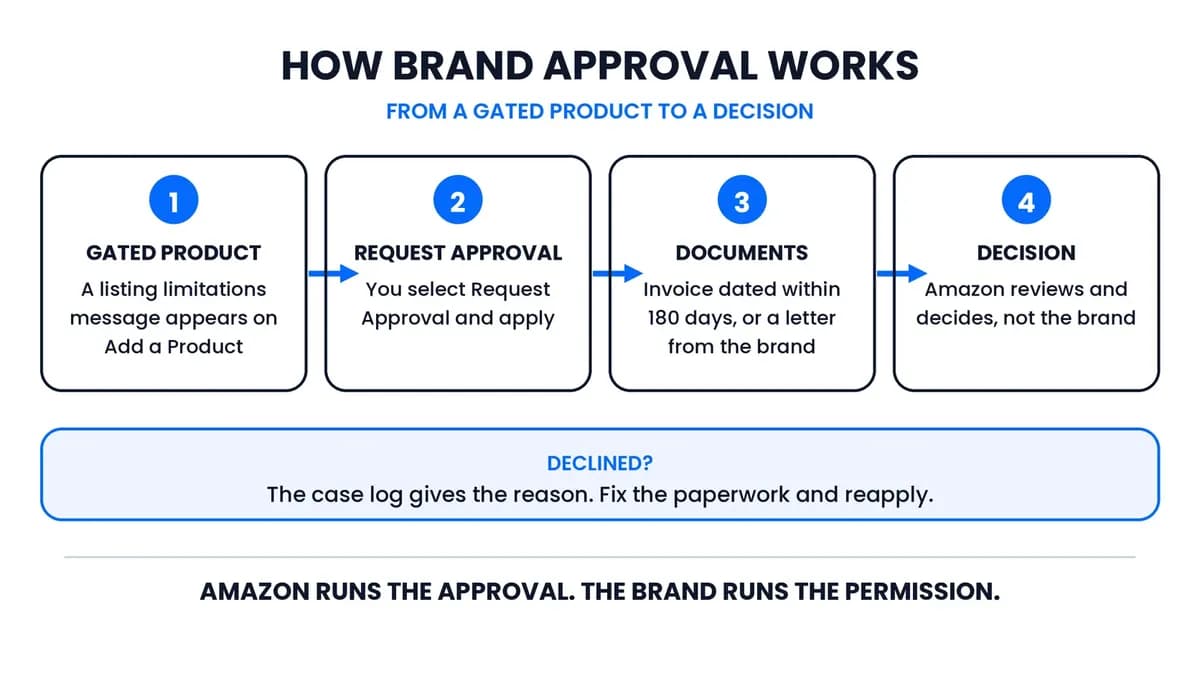
Amazon brand approval is the process Amazon runs when a product, brand, or category is gated. On the Add a Product page, a gated item shows a listing limitations message. From there you select Request Approval, submit the documents Amazon asks for, and wait for a decision. Amazon says it, not the brand owner, decides which products, brands, and categories need approval. If you are declined, the case log gives the reason and you can reapply once you fix it.
What Amazon asks for varies by product. Its guidance lists three kinds of proof: purchase invoices that show your business name, the supplier, and the product and are dated within the last 180 days, a Letter of Authorization from the brand or rights holder, or other supply chain documents. A letter is one way to prove where your stock came from. It is not the only way, and it is not required for every product. A brand authorization letter for Amazon is one option among several.
If you do send a letter, it normally carries the brand's letterhead, names both parties, states which products and which geography it covers, gives a term, and has an authorized signature. Our guide to the brand letter of authorization for Amazon walks through what a valid one contains. Amazon's guidance also says to keep your documents on file, since it can ask for them after you are already selling.
3 Mix-Ups That Cost Resellers Time
Most resellers first run after a trademark. That is the wrong turn. A listing is gated, so they start reading Brand Registry threads, and the mix-up grows from there. Brand Registry is only for the trademark owner. A reseller has nothing to file there. That time is better spent on the papers Amazon asked for.
The second mistake is to lean on your supplier's letter. The brand wrote that letter to your supplier. It proves your supplier can sell the brand. It does not prove you can. A letter has to name the seller it covers, and that letter names your supplier, not your business. So ask your supplier for an invoice that meets the rules above. If Amazon wants a letter in your name, ask the brand yourself. If the brand says no, ask which distributors it sells to directly. An invoice from one of them may be the paper Amazon needs.
The third mistake is to think a real product proves itself. Real boxes and a receipt do not prove where the stock came from. A middleman can sell you real units and still give you an invoice that stops one step short of the brand. Our breakdown of authorized distributor vs middleman shows how to tell them apart, and the guide to Amazon ungating invoice requirements covers what passes review. One lawyer who works with Amazon sellers has said some of his clients got brand authorization notices on products they had sold for years. So keep an invoice that traces back to the brand, long after your first approval.
Can You Sell on Amazon Without Brand Registry?
Yes. Brand Registry exists for brand owners, so wholesale resellers sell without it, and gated brands go through approval instead. What you give up is mostly operational.
Since March 31, 2026, PPC Land reports, only sellers with the Brand Representative role in Brand Registry can keep using manufacturer barcodes on FBA units. Everyone else applies Amazon's own barcode labels, called FNSKUs, even when the product already has a UPC on the box. For a wholesale reseller that means label time, label cost, and an extra prep step. Price it into your landed cost before you decide a product works, and check Amazon's FBA barcode FAQ in your own account, since the report is based on Seller Central documentation.
Brand Registry or Brand Approval: How to Decide, and in What Order
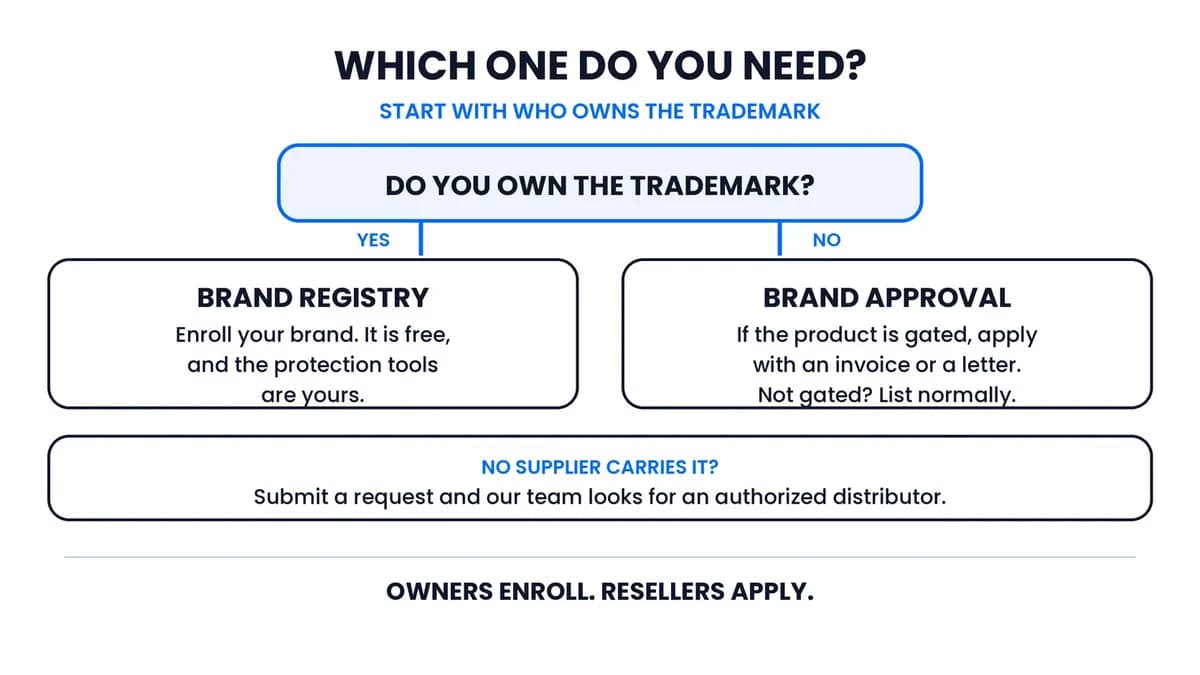
Start with the listing. Search the product on Add a Product. If no limitation message appears, you may be able to list without approval. If you want to check a brand before you spend money, our guide on how to check if a brand is gated on Amazon covers three free methods. If a message does appear, you need brand approval, not Brand Registry, and your first job is a supplier whose invoice Amazon can follow back to the brand. The order of steps matters, because the invoice has to be dated within the last 180 days. An older invoice for stock you bought months ago may not count, so line up the supplier before you plan the application. For the wider picture of how authorization works up and down the supply chain, see brand authorization for Amazon sellers.
Then find that supplier before you pay for stock. Search the product on B2B Supplier Hub to see real cost and real stock from every verified distributor in our network carrying it, free, before you apply to any of them. Or browse the brand to see how many verified distributors in our network carry it. Seeing the numbers first does not remove the approval step. A distributor may still run its own approval, a brand may restrict who can sell its products, and Amazon makes its own call on your request.
If nobody in the network carries the product, submit a request and our team looks for an authorized wholesale distributor who carries it, verifies them, and brings them onto the platform. You get an answer within 30 days either way.
Your Place in the Supply Chain Decides Which One
If you own the trademark, Registry is yours. If you resell, your job is a paper trail Amazon can follow back to the brand, and that starts with where you buy. Check who carries the brand and what they charge before you place the first order. This post is general information about Amazon's processes and is not legal advice.
Frequently asked questions
01Is Amazon Brand Registry worth it?
02How to get a brand authorization letter for Amazon?
03Can you sell on Amazon without a brand registry?
04What is the purpose of the Amazon brand registry?
The B2B SupplierHub Team
Wholesale & sourcing
Stop hunting suppliers by hand. Type a UPC instead.
B2B Supplier Hub shows the suppliers in our network carrying a product on one page: wholesale cost, stock, and retail price side by side. Free to search, no card required.