
Supplier Management
How to Read a Distributor Price Sheet: Pricing Tiers and Quantity Breaks Explained
If you have ever opened a price sheet from a new distributor and wondered how anyone makes money at these prices, you are not alone. Almost every wholesale seller has that moment with their first few suppliers. The prices look bad because you are new, and distributors do not give their best numbers to accounts they have never worked with.
That sheet is not the price. It is your price, at least for now. Understanding the difference is worth real money, so let's walk through how these sheets actually work.
Why Your Price Sheet Was Generated Specifically for Your Account
Wholesale pricing is not one number. Distributors usually keep three to five price levels for the same products, stored as columns in one master file. A typical setup looks like this: a list or Manufacturer’s Suggested Retail Price (MSRP) column that exists for reference, standard dealer pricing, volume dealer pricing for bigger accounts, distributor pricing for resellers who move serious volume, and custom pricing for their largest relationships.
When your rep sends “your” price sheet, the system pulls the column your account sits in. A seller two tiers up gets a different sheet from the same file. Same products but with different numbers.
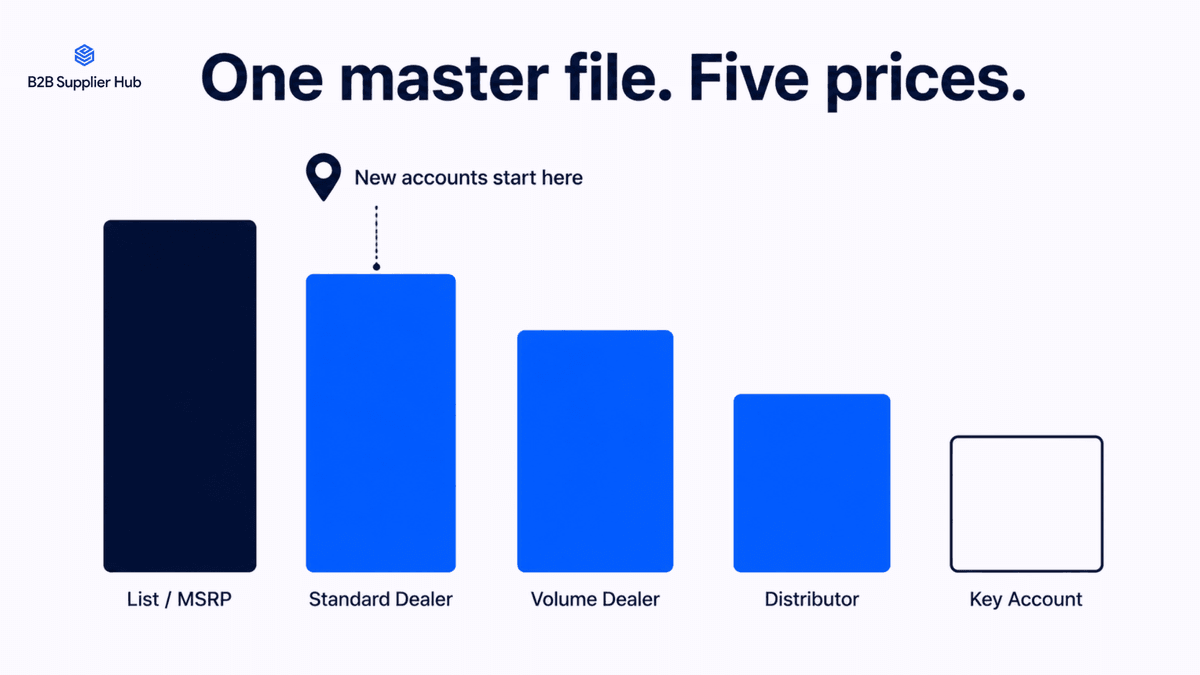
Many distributors also give special rates on single products. You might sit on standard pricing overall but hold a better rate on the few items you order every month. So keep two questions separate for the life of the relationship: what column am I on, and what can I negotiate per product?
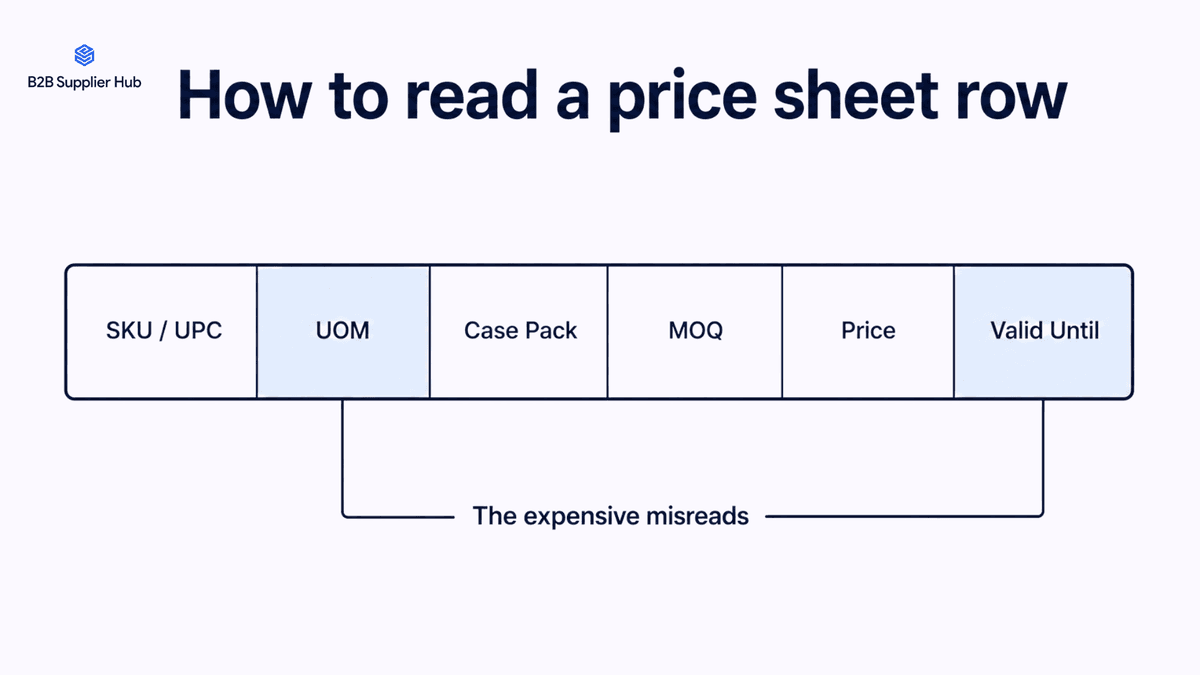
The row layout is fairly standard across the industry: an internal SKU, the manufacturer part number, UPC, a description, the unit of measure, case pack, minimum order quantity, your price, often a quantity break price, and a “prices valid until” date. That last one is easy to miss and expensive to ignore. Old sheets keep circulating, and running your margins on a stale file is a self-inflicted wound.
Why the Price Tiers are Guarded instead of Open
It helps to know what a pricing column is worth to the other side. McKinsey studied 130 large, publicly traded distributors and found that a 1 percent price increase raises their EBITDA margins by about 22 percent. This shows that pricing is the most potent profit lever available to a distributor. The same study found that distributor margins have remained quite slim, even during years of consistent revenue growth.
So, when your representative doesn’t upgrade your column in the first month, it’s not because they’re being difficult. A better column is the most valuable thing they can give away, and their business depends on not giving it away casually. Tiers are earned with order history, steady volume, and clean payment behavior. These are the same things distributors screen for before they approve you in the first place.
This insight can really change how you approach the conversation. Instead of asking, “Can I get better pricing?” try asking, “What does the volume look like at the next tier, and what would my account need to show to get there?” The first question is likely to get a no, while the second one will get a specific number.
From our Sourcing Desk: Authorized, genuine suppliers need time, volume, and commitment before they prioritize you. Some suppliers who sat dormant after we first signed up are now among our biggest contributors. What they wanted was sizable orders, fulfillment commitment, and clear communication. Once they believed in us, they worked with us as partners, not just vendors. We would share a problem, brainstorm together, and land on solutions that worked for both sides.
The Two Different Discounts Hiding in Every Distributor Price Sheet
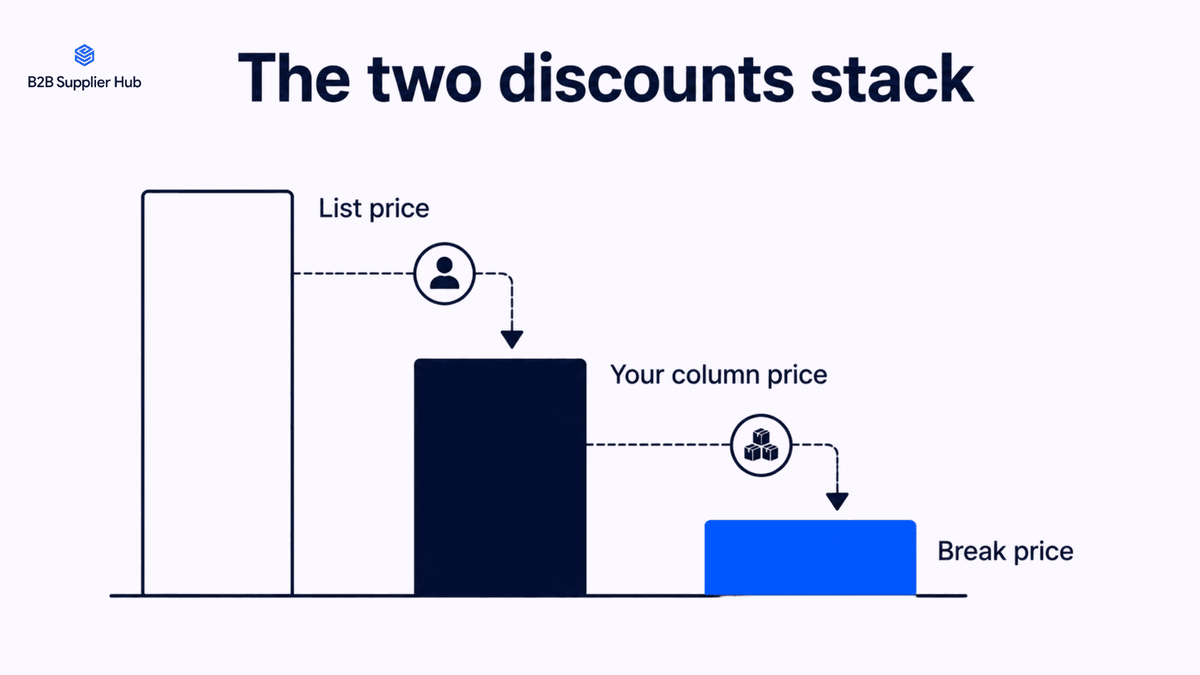
Sellers often overlook the fact that there are usually two discounts available instead of just one. Your account tier sets your base column price. Quantity breaks, then cut the unit price further based on how big a single order is. They work inside your tier and stack on top of it.
Let’s break it down with a hypothetical example, not tied to any real distributor. Imagine your column lists an item at $9.40 per unit, with a price drop to $8.80 if you order 36 units or more, and the case pack is 12. A seller who only pays attention to the column price might do the math at $9.40 and decide to pass. However, a seller who considers both pricing strategies orders three cases, hits that quantity break, and calculates the price at $8.80. For a product with thin margins, that difference alone can be the deal.
Also, pay special attention to the breaks that align with freight costs. Distributors often set thresholds around half-pallet and full-pallet quantities because their shipping expenses hardly change between the two. At those points, your costs improve in two ways: once with the lower unit price and again with reduced freight costs per unit.
Why is my wholesale price higher than Amazon retail?
This is the moment that makes new wholesale sellers question the whole model, so here is the honest answer. Sometimes you are on the entry column while the sellers on that listing buy two tiers better, buy direct from the brand, or buy through a group. There are even times when Amazon itself is on the listing, selling at prices close to their own cost. And yes, sometimes the item just can’t be sold profitably at your level of distribution. It happens, and no amount of wishful thinking is going to change that.
Compare everything against retail prices. If a good chunk of your catalog is working, even if your target brands do not work yet, you might have a column problem. These column problems can usually be fixed with time and volume. If nothing works, reach out to your rep and ask about pricing at one or two tiers above you. If the answer still does not work, this distributor may simply not be your distributor. The good news is learning that from one sheet costs you nothing. We covered how to run this comparison step by step in our supplier comparison framework.
Working Out Your Actual Margin From the Same Numbers on the Sheet
The position of your columns is crucial because the same leverage affects your business in reverse when it comes to costs. Jungle Scout’s seller research found 57% of Amazon sellers running net margins above 10%, and 28% above 20%. That puts many wholesale sellers somewhere in the low to mid-teens. Now run the numbers on your own business. At a 12% net margin, a 3-point cost difference between two columns is a quarter of your profit. Reading the sheet correctly is not admin work. It is margin management.
Five Checks to Run Before You Judge Any Price on the Sheet
Check 1: Which Pricing Column Are You Actually On
Ask directly: “Where does my account sit in your pricing structure, and what moves accounts up?” Sales reps are often more open about this than sellers might think.
Check 2: The Unit of Measure the Price Is Based On
Confirm whether the price is for each item or for a case. Mixing these up is a common mistake that can really throw off your calculations. For instance, if a case contains 12 items, treating the case price as if it were for a single item can skew your margin calculations significantly.
Check 3: Where the Quantity Break Thresholds Actually Sit
Pay attention to any quantity breaks for the items that matter to you, and see how they align with case and pallet quantities. These breaks can also impact your freight costs.
Check 4: The Valid Until Date and Whether the Sheet Is Current
If the pricing sheet is outdated, ask for a current version before crunching any numbers. Most distributors update their prices once or twice a year, and changes often come in waves.
Check 5: What Is Deliberately Left Off the Sheet
Freight terms, payment terms, and rebate programs live outside the price columns, and they change your true landed cost. Sometimes, a more than a column move would. The sheet starts the cost conversation. It does not end. We collected those conversations in the questions to ask a distributor before your first order.
How to Actually Use a Distributor Price Sheet Once You Understand It
Here’s the shift that really counts. A price sheet isn’t a final judgment on the distributor, nor is it a reflection of you. Think of it as a snapshot of your relationship on day one. Sellers who are serious about building real wholesale businesses see it as a starting point and work toward better columns on purpose. On the other hand, the sellers who quit read it as a final answer.
Three moves you can make this week. First, email your rep one question: where does my account sit in your pricing structure, and what would move it up? You now have a target instead of a mystery. Second, recheck the unit of measure and case pack on your top ten items before your next order. Five minutes, and it catches the most expensive mistake on any sheet. Third, note the valid-until date and set a calendar reminder to request a fresh file when it passes.
Even a sheet you never buy from teaches you something. It shows you a brand's lowest wholesale price, how their case packs work, and which categories the distributor is strong in. And if you are building a group of suppliers instead of relying on just one, which you should be, you will be reading a lot of these sheets. It is a skill that pays every single time.
The hardest part of judging any one sheet is having no reference point. Is this cost normal, or is this column bad? That is the problem we are working on at B2B Supplier Hub. Search a product and see the numbers, wholesale cost, inventory, and retail price from distributors in our network that carry it, free. Benchmark the sheet in front of you against what the market actually looks like, and connect with a supplier only when you are ready.
Frequently asked questions
01What is a pricing tier sheet from a wholesale distributor?
02How do I get moved to a better pricing tier?
03What Does UOM (Unit of Measure) and Case Pack Mean on a Price Sheet?
04How often do distributors update their price sheets?
The B2B SupplierHub Team
Wholesale & sourcing
Stop hunting suppliers by hand. Type a UPC instead.
B2B Supplier Hub shows the suppliers in our network carrying a product on one page: wholesale cost, stock, and retail price side by side. Free to search, no card required.