
Sourcing
Selling Gray Market Goods on Amazon: What Actually Happens (2026)
Most sellers who get hit for the gray market never saw it coming, because nothing in their supply chain looked wrong. They bought genuine products from a real company with a real warehouse, paid a fair wholesale price, and sold them the same way they sell everything else. Then a complaint landed and the invoice they were counting on turned out to be worthless.
Gray market goods are authentic products sold outside the brand's authorized channel. Our guide on authorized distributors vs middlemen vs gray market explains how to tell the difference. This blog is about what comes after: the exact sequence Amazon's enforcement follows in 2026, and what you can do before and during it.
Quick note before we start: this is operator experience, not legal advice. If you're facing enforcement action, talk to a professional.
The Gray Market Enforcement Sequence: 5 Steps, In Order
Most sellers imagine gray market risk as one bad email from Amazon. The reality is a chain of events, and once it starts, it moves faster than you can respond.
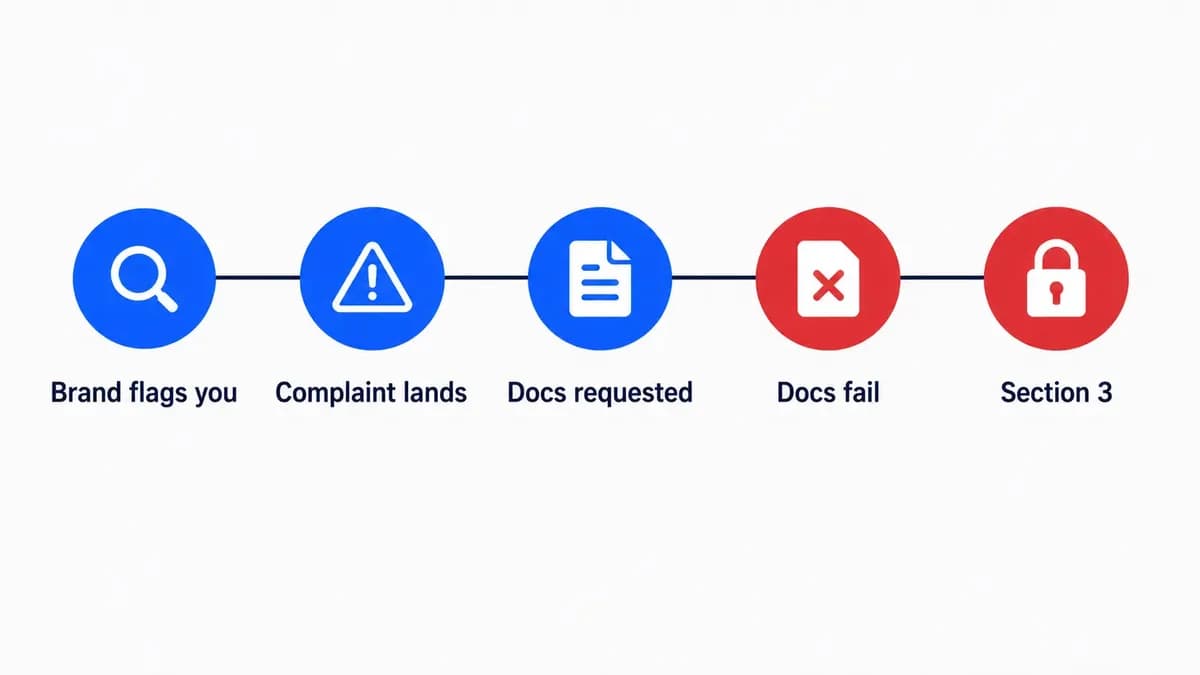
Step 1: The Brand's Monitoring Software Finds You
Brands in 2026 do not stumble onto unauthorized sellers by accident. They run monitoring software that scans listings, tracks prices, and flags sellers who are not on their approved list. Many go further and test-buy the product from your listing, then trace the serial number to figure out where their stock leaked out of the authorized chain.
Step 2: An IP or "Inauthentic" Complaint Takes Your Listing Down
It usually arrives as an intellectual property complaint or an "inauthentic" complaint. The wording matters less than the effect. Your listing comes down, often the same day, before you have said a single word in your defense.
Step 3: Amazon Requests Invoices and a Supply Chain Trace
You get a request for invoices and supply chain records. This feels like your moment to fix everything. You have real invoices from a real company, so you send them in and wait.
Step 4: Your Real Documents Fail the Review
This is the step that shocks sellers, and we'll spend a whole section on why it happens.
Step 5: Complaints Escalate to Section 3 and Frozen Funds
One complaint stings. Several complaints in a short window put your whole account at risk. That's when sellers see Section 3, Amazon's broadest enforcement action. A Section 3 notice often names no specific order or listing. It simply states that your account poses a risk to the marketplace. Your listings go offline, and under Amazon's Business Solutions Agreement, your funds can be held for 90 days, sometimes longer, while Amazon decides what happens next.
Here's the hard truth about timing. Even if you're eventually proven right, the process doesn't wait for that. By the time any dispute gets sorted out, your listing has been gone for weeks, your inventory is sitting frozen, and your account metrics have taken damage that doesn't undo itself. Being right slowly is almost the same as being wrong.
Why "It's Genuine and It's Legal" Doesn't Hold
Sellers holding gray market stock usually reach for the same defense. The goods are real, they were bought legally, so reselling them should be fine. There's a real legal principle behind that instinct. Once a genuine product is sold the first time, the buyer can generally resell it.
But that protection has limits, and brands know exactly where they are. Federal courts have repeatedly sided with brands when the resold product is materially different from what the authorized channel delivers. A missing manufacturer warranty has been enough. Courts have also backed brands when the reseller's supply chain bypasses the brand's quality controls, things like storage standards, lot tracking, and tamper checks.
Gray market inventory almost always trips both wires. It usually carries no valid warranty and no traceable quality chain. And here's the practical point that matters more than any of the legal theory: Amazon's enforcement doesn't wait for a court to weigh in. The complaint takes effect first. The arguments come later, if they come at all.
Why Your Real Invoice Fails Amazon's Review
This is the part that catches experienced sellers, not just beginners. The invoice you submit is not fake. The problem is what Amazon checks it against.
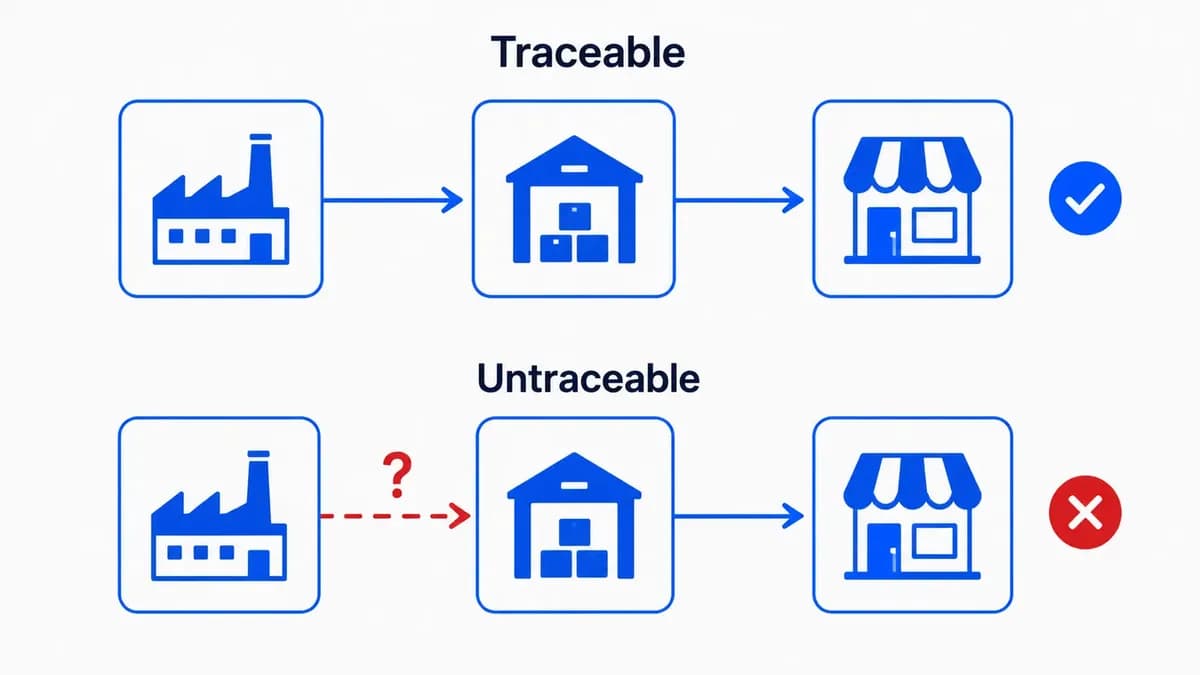
Amazon isn't just reading your invoice. It's evaluating your supplier. The question isn't "did this transaction happen," it's "does this supplier sit inside the brand's authorized chain." An invoice from a liquidator, a reseller posing as a distributor, or any middleman who can't trace their own stock back to the brand fails that test no matter how professional the paperwork looks. This isn't guesswork on our part. Amazon's own Responsible Sourcing documentation requirements state that your documents must trace your products back to the original manufacturer even if you didn't buy from the manufacturer directly, and that Amazon may contact your suppliers or the manufacturer to verify what you submit. Read that twice. Your supplier's supply chain is your problem now.
Three things have made this test much harder to pass in 2026.
- Invoice Review Is Largely Automated Now
Submissions get cross-checked against known authorized channels by rule-based systems. Sourcing that slipped through a human review two years ago now gets flagged in hours. Some categories have tightened to the point where brand authorization letters and distributor invoices are requested before any complaint even exists.
- Serial Codes Changed The Game.
Many brands now enroll their products in Amazon's Transparency program, which puts a unique code on every single unit. If a brand is enrolled and your supplier can't provide those codes, that tells you something important. Authorized distributors have access to them. Suppliers who don't are almost always outside the chain.
- Brand Whitelists Are Spreading.
More brands maintain lists of approved sellers, and if you're not on the list, even an invoice from a genuinely authorized distributor won't get you selling. The distributor can sell you the product, but they cannot authorize you to sell it. Knowing how to find the authorized distributors for any brand is only half the job now. The other half is confirming the brand will let you sell at all.
If You're Already Holding Gray Market Inventory
Maybe you're reading this with a sinking feeling because you recognize your own supply chain in it. Here's what the situation actually looks like from the inside.
First, stop adding fuel. Don't reorder from that supplier, and don't send more of that inventory into FBA. Every unit you inbound extends your exposure.
Second, understand what's coming if a complaint arrives. The documentation request will ask for a full supply chain trace, from your invoice back through your supplier to the original manufacturer. If your supplier can't or won't show where their stock came from, that trail dead-ends, and so does your case.
Third, know that clearing the inventory doesn't always clear the problem. Complaints can arrive months after the sale, triggered by a customer return or a brand's test buy of an old order. The exposure outlives the stock.
What you do with the remaining units is a business decision only you can make, and if there's an active enforcement action against your account, that's the point where professional advice earns its cost.
How To Spot Gray Market Supply Before You Buy
Everything above is expensive. This part is cheap. Gray market supply almost always announces itself before you wire a dollar, if you know what to listen for.
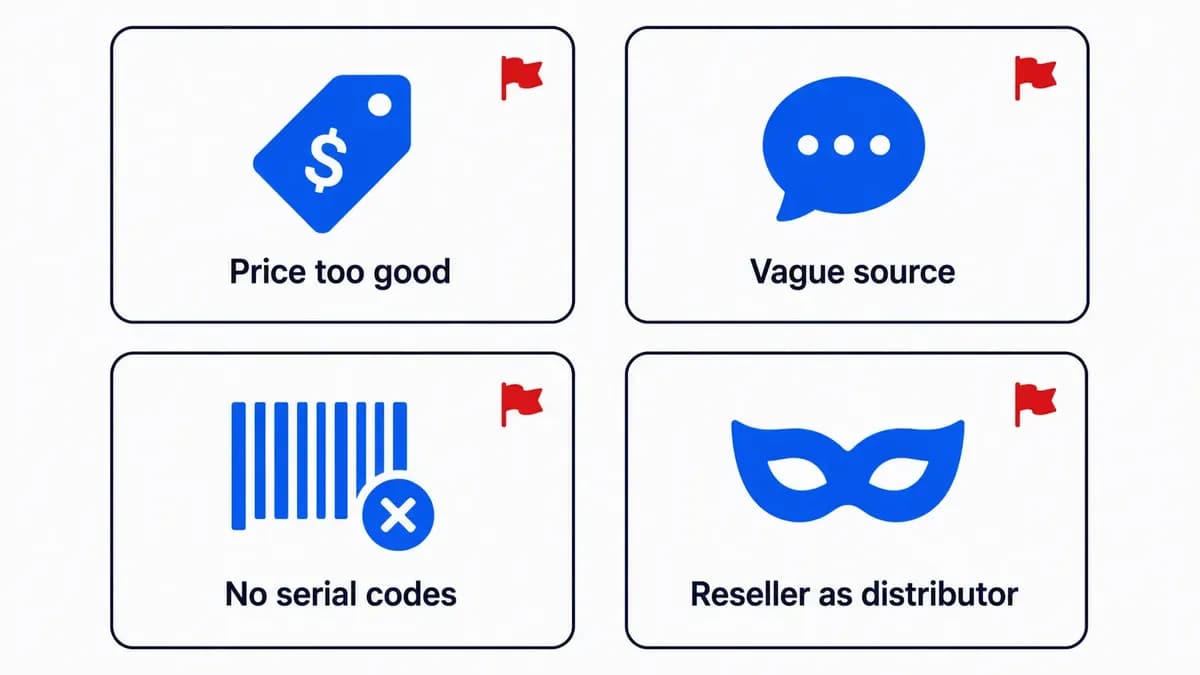
The Price Is Too Good.
If a quote sits meaningfully below the known wholesale floor for that product, ask yourself why this supplier can beat every authorized distributor in the country. There's always an answer, and it's rarely one you would like.
They Won't Say Where The Product Comes From.
An authorized distributor has nothing to hide about their relationship with a brand. A diverter does. If the answer to "where do you get this" is vague, that vagueness is the answer.
No Transparency Codes For An Enrolled Brand.
If the brand puts serial codes on its units, ask your supplier about them before you order. A real authorized distributor can answer that question easily. A supplier who gets vague or has no idea what you mean is probably outside the chain. On its own that's a warning sign. Combined with any other flag on this list, walk away.
A "Distributor" That's Actually A Reseller.
Some of the most convincing gray market sources have real warehouses and real catalogs. What they don't have is a direct line to the brands they carry. Ask about their authorization and watch how they answer. And keep records like your account depends on it, because someday it might. Source documentation for every purchase, kept before trouble arrives, not scraped together after a complaint lands.
This vetting problem is a big part of why we built B2B Supplier Hub the way we did. You can search millions of wholesale products free and see the exact cost, real stock, and retail price from human-verified suppliers in our network before spending anything, and there's a freshness timestamp on every listing. Then you connect with a supplier only when you're ready. One honest caveat, because this whole post is about honesty in sourcing: verification isn't the same as brand authorization. Once you connect with a supplier, confirming their authorization for the specific brands you plan to sell is still your job, and now you know exactly what to ask.
The Real Cost of Gray Market Is the Account, Not the Inventory
Every gray market deal starts with the same math: the price is better, the product is genuine, and the risk feels abstract. Then a complaint lands and the math flips. The few points of margin you saved on one purchase order get weighed against a frozen account, held funds, and weeks of listings you can't sell on.
Sellers who last in wholesale figure this out early. They pay a little more to buy from the authorized chain, they keep their paperwork before there's a problem, and they ask suppliers uncomfortable questions before wiring money, not after. None of that is exciting. All of it is cheaper than the alternative. If a supplier can't show you where their product comes from, that's your answer. Find one who can.
Frequently asked questions
01Is selling gray market goods on Amazon illegal?
02Can Amazon suspend your account for selling genuine products?
03How does Amazon know a product is gray market?
04 What's the difference between gray market and counterfeit on Amazon?
The B2B SupplierHub Team
Wholesale & sourcing
Stop hunting suppliers by hand. Type a UPC instead.
B2B Supplier Hub shows the suppliers in our network carrying a product on one page: wholesale cost, stock, and retail price side by side. Free to search, no card required.