
Distributor Authorization
How to Verify a Wholesale Supplier Before You Wire Money (Red Flags + Checklist)
The first wire to a new distributor is an act of faith. You've traded a few emails, looked at a price sheet, and maybe gotten a rep on the phone once, and then you send real money on the strength of a website.
And it can go wrong in two very different ways, not one.
Most "how to spot a wholesale scam" advice only covers the first. If you've been doing this a while, it's the second that can quietly take down your whole business.
From Our Sourcing Desk: In 2020 we found a new supplier with prices that looked great. Every check came back clean until we stumbled on a single review we almost skipped: the supplier was shipping short boxes, 8 units instead of 10. That one review saved us from a $10K wire. Ever since, we read Trustpilot, Google, and BBB reviews before any payment goes out.
The Two Wholesale Supplier Risks That Cost Amazon Sellers the Most
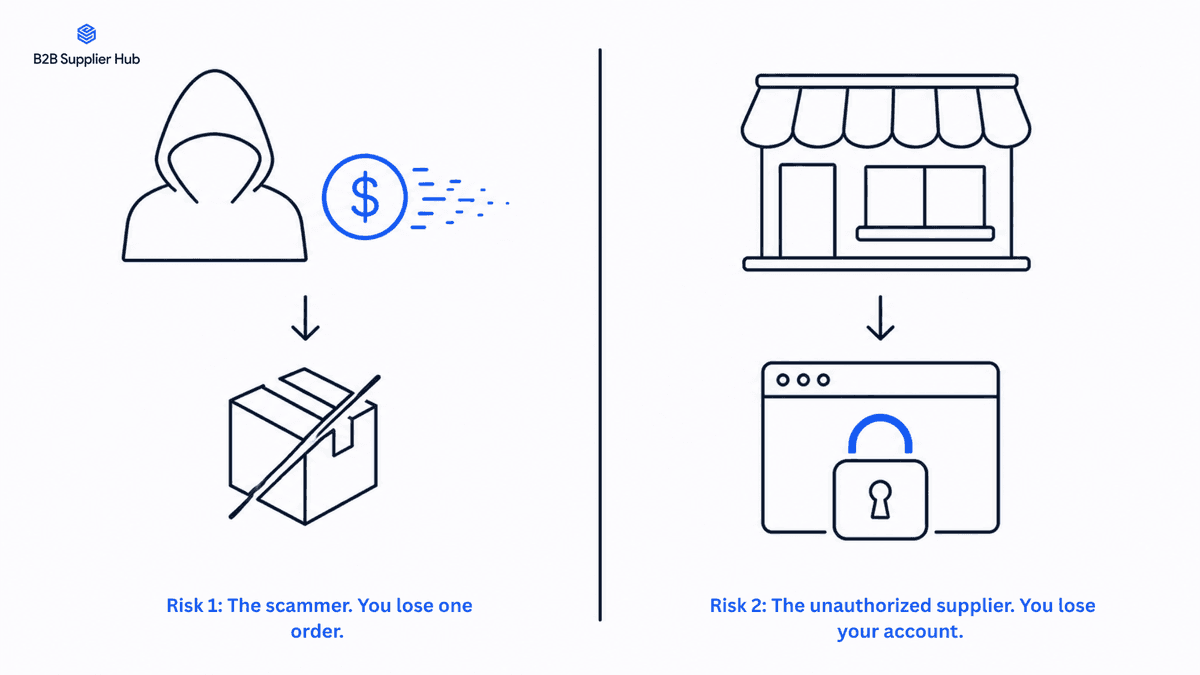
- Risk 1: The Wholesale Scammer (Fake Supplier Fraud): They take your payment and disappear, or they ship counterfeit or lower-grade products disguised as the real thing. You lose the money on that order. It hurts, but it's a contained, one-time loss.
- Risk 2: The Unauthorized Supplier (Legitimate-Looking but Unverified): This is the dangerous one. The product shows up. The relationship feels normal. Then you list the items, a brand files an inauthentic-goods complaint, your invoice gets rejected because it can't be traced back to an authorized source, and your account gets suspended. The loss here isn't one order. It's your selling privileges and your cash flow
For a seasoned seller, the second failure is the one that really matters. A vetting process that only checks if the supplier might steal your money overlooks the real danger that could actually jeopardize your business. It's crucial to evaluate both risks.
Communication Red Flags That Signal a Fake Wholesale Supplier
Legitimate distributors welcome scrutiny because they have answered these questions countless times. On the other hand, scammers shy away from scrutiny because it exposes them. Here are some red flags to keep an eye out for:
- No verifiable contact information. If you can’t find a physical address or a real phone number, or if the contact page leads you nowhere, that’s a huge warning sign.
- A free email domain. A real distributor that handles a good amount of business will have a company email domain, not just a generic Gmail or Outlook address.
- They dodge straight questions. Don’t hesitate to ask straightforwardly, “Are you an authorized distributor for this brand? Or can you provide documentation?” A legitimate distributor will respond confidently. If their answers are vague or seem to dodge the question, that’s a red flag.
- Manufactured urgency. Phrases like “This price is only valid today,” “We only have three units left,” or “Wire the money now to secure it” are tactics used to pressure you into skipping the necessary checks outlined in this blog.
Wholesale Pricing and Terms Red Flags to Watch For
Prices Significantly Below Market Rate
A flagship product at 30–50% under legitimate wholesale usually signals counterfeit stock, gray-market goods, or a bait-and-switch. Real distributors can't sell premium products at a steep loss and stay in business.
No Account Vetting, Anyone Can Buy Without Qualification
Real wholesale distributors will typically want to verify your business before letting you open an account, asking for your EIN and resale certificate. If you can just check out with a credit card without any approval process, you’re likely dealing with a retailer or a middleman who’s just marking up prices.
No MOQ, No Terms, and No Formal Paperwork Required
Legitimate distributors have minimum order policies, account requirements, and a standard onboarding. The absence of all structure is itself a signal.
Authorization and Supply Chain Red Flags in Wholesale
This is the part beginners skip and experienced operators never source without:
The Supplier Cannot Produce Authorization Documentation
Ask for a brand authorization letter or distribution agreement. A real authorized distributor has this on file and will send it. One important detail: an authorization letter that names your legal business entity is far stronger than a generic "To Whom It May Concern" letter, which Amazon routinely rejects in enforcement disputes.
The Brand Has No Record of the Supplier
A simple yet effective check is to reach out to the brand directly and request their list of authorized distributors. If your supplier isn’t on that list, you’ve got your answer, no matter how impressive their website may look.
The Supplier Is Also Selling the Same Product Directly
If your "distributor" is also selling the same SKUs on Amazon or eBay, they’re actually your competitor, not your partner. Their pricing will undercut yours, and their position in the supply chain isn't what a true distributor's looks like.
With Amazon's invoice scrutiny tightening through 2025–2026, this layer matters more than ever. A clean supply chain, from brand to authorized distributor to you, documented at every step, is what protects the account. (For the full approval side of this, see our guide on getting approved by wholesale distributors.)
Payment Method Red Flags (And Why Wiring Money Is the Riskiest)
How you pay determines whether a mistake is recoverable.
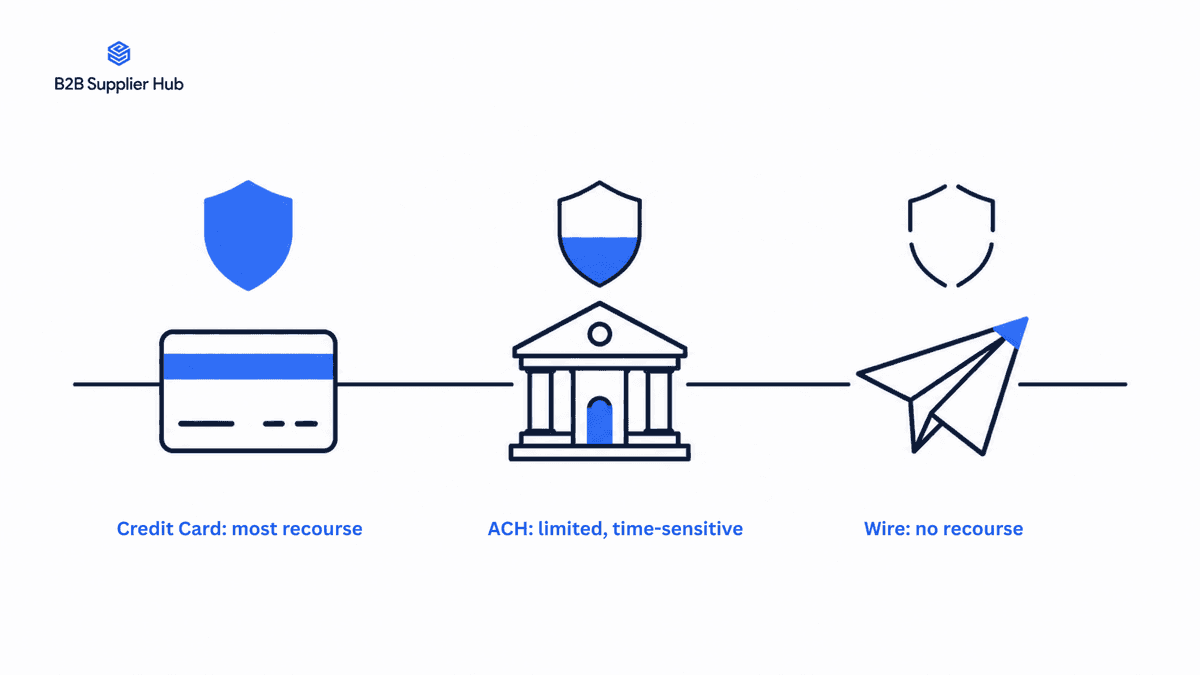
Wire Transfers Are Effectively Irreversible
Once the money moves, it's gone. That's exactly why scammers push for wires.
ACH and Credit Cards Give You More Recourse
A credit card gives you chargeback rights, the strongest recourse if a supplier takes the money and never delivers. ACH sits in the middle: a payment you authorized isn't reversible just because you regret it. But if you spot fraud or an error fast, often the same day or by the next morning, your bank may be able to recall it. Miss that window, and you're relying on the receiving bank to cooperate. A wire gives you none of that.
Watch for Last-Minute Changes to Bank Details
The fastest-growing attack in B2B isn't a fake company; it's a real invoice with the banking information quietly swapped, often through a compromised email account. The FBI tracks this as business email compromise, and the defense is simple: if a supplier's payment details change, confirm the new details by phone using a number you already have, not one from the email.
Requests for Payment to a Personal Bank Account
A real distributor invoices you and gets paid into a company bank account that rarely, if ever, changes. If a supplier asks you to pay an individual's account, or suddenly switches from the company account to a personal one, stop. That redirect is one of the most common ways sourcing payments get stolen.
If a brand-new supplier will only accept a wire and resists every other method, treat that as a flag in itself, especially on a first order.
From Our Sourcing Desk: Real suppliers keep the same company bank account for years. We once dealt with a new supplier whose contact sent us the company account details for payment. We paid, then they claimed the money never arrived. We opened a case with our bank and got the funds back after 15 days. The same contact then sent different details, and this account wasn't in the company's name; it was a personal one. He kept pushing us to pay it, saying it would speed things up and we'd lose the stock otherwise. We refused and blacklisted the supplier. After that, we set two rules: 1. Never wire a new supplier. We pay by credit card, where we control the reversal. 2. Only ever pay into the supplier's company account, never a personal one.
The Wholesale Supplier Verification Checklist (Before Any Wire Transfer)
Run this before the first payment to any supplier you haven't worked with. Most of it costs nothing but time.
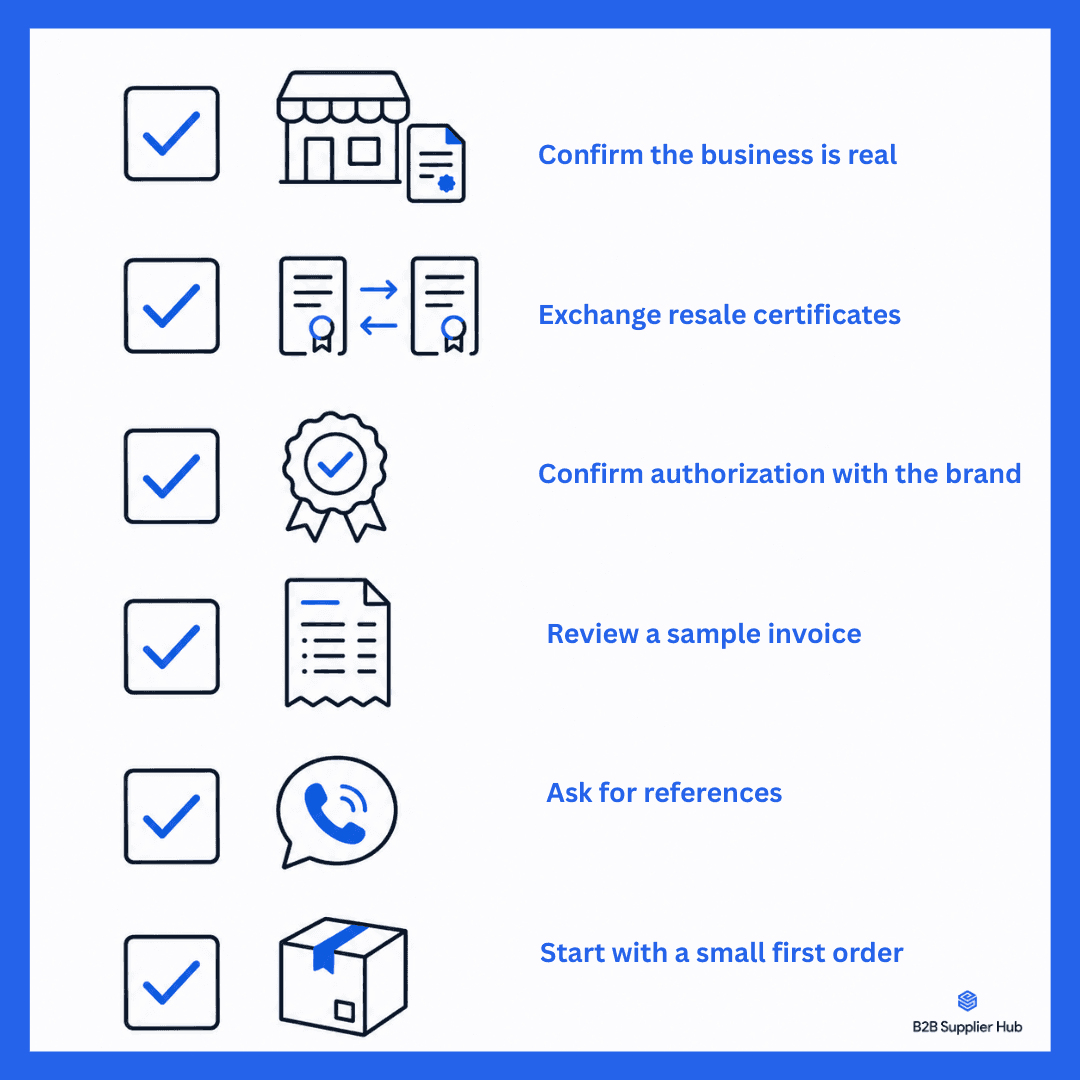
- Confirm the business is real. Check state business registration, get their EIN, verify a physical address exists, and read public reviews on Trustpilot, Google, and BBB.
- Exchange resale certificates. A real distributor will ask for yours. You should ask questions about theirs. Mutual paperwork is a good sign.
- Confirm authorization with the brand directly. Email the brand, ask for their authorized distributor list, and check that your supplier is on it.
- Review a sample invoice. It should carry the distributor's legal business name, your business name, itemized products with UPC/EAN codes, quantities, and dates. This is also what protects you in an Amazon dispute.
- Ask for references. A few trade references you can actually call.
- Start small. Place a modest first order before you commit real capital. A clean, on-time, correctly invoiced first order tells you more than any sales pitch.
This is the same disciplined mindset that goes into finding suppliers and into reverse sourcing a proven winner. Verification isn't a separate step; it's part of every sourcing decision.
The Hidden Cost of Vetting Wholesale Suppliers at Scale
When done right, the process of vetting a cold distributor (finding them, confirming the address, verifying authorization, requesting a sample invoice, checking registration) runs 30 to 60 minutes per company. When you're evaluating dozens of potential suppliers, that's days of work, and it's the kind of work that quietly doesn't get done when you're busy. That's exactly when a bad first payment slips through.
That cost is part of why we built B2B Supplier Hub around a network of vetted wholesale suppliers with live pricing, so the baseline checks are handled before a supplier ever shows up in your results, and you spend your time on the decision, not the diligence. It doesn't replace your own judgment on the first order. It removes the hours of repetitive verification that stand between you and it.
Verify Every Wholesale Supplier Before You Send a Single Dollar
A real distributor is easy to verify and welcomes the questions. A fake one or a "real" one that isn't actually authorized gives you reasons to skip the checks. The first payment is where you find out who you're dealing with, and a wire is the one form of payment that gives you no second chance.
So, take a breath when everything around you is pushing you to speed up. The half hour you spend verifying a supplier before you wire is the cheapest insurance in this business.
The B2B SupplierHub Team
Wholesale & sourcing
Stop hunting suppliers by hand. Type a UPC instead.
B2B Supplier Hub shows the suppliers in our network carrying a product on one page: wholesale cost, stock, and retail price side by side. Free to search, no card required.