
Distributor Authorization
Brands That Don't Allow Amazon Resellers (2026)
-1200x627.webp&w=3840&q=75)
Not every brand wants you selling it on Amazon. Some make you get approved first. Some let you list, then file a complaint that puts your whole account at risk. And a few are shut to new sellers no matter what you do. The catch is that you cannot just look up which brands to avoid, because a brand that is blocked for one seller is wide open for another. What you can learn is the shapes these restrictions take, so you see the wall coming before you buy. That is what this guide is for: the handful of ways brands lock resellers out, and how to spot each one early. If you are still learning how approval works, start with our guide to brand authorization on Amazon first.
Why There Is No Reliable List of Restricted Brands
Amazon restricts selling at three levels: the whole category, a single brand, or one individual product. A brand can be blocked at any of those levels, and the block is not the same for everyone. The exact same brand can be wide open for a five-year-old account with clean numbers and closed for an account that opened last month.
That is the whole reason a public list does not work. Any list you find is really a snapshot of someone else's account on some past day, and Amazon changes what is gated all the time. We have spent ten years sourcing wholesale at Leverify, with relationships across multiple suppliers, and the one thing that has stayed true is this: the only answer you can trust is the one your own account gives you. What a list can do is teach you the shapes these restrictions take, so you recognize one when you see it. That is what the rest of this guide is for.
The 5 Ways Brands Restrict Amazon Resellers
These overlap in real life. One brand can be several of these at once, and the more of them it is, the harder it will be to sell. Here is what to watch for.
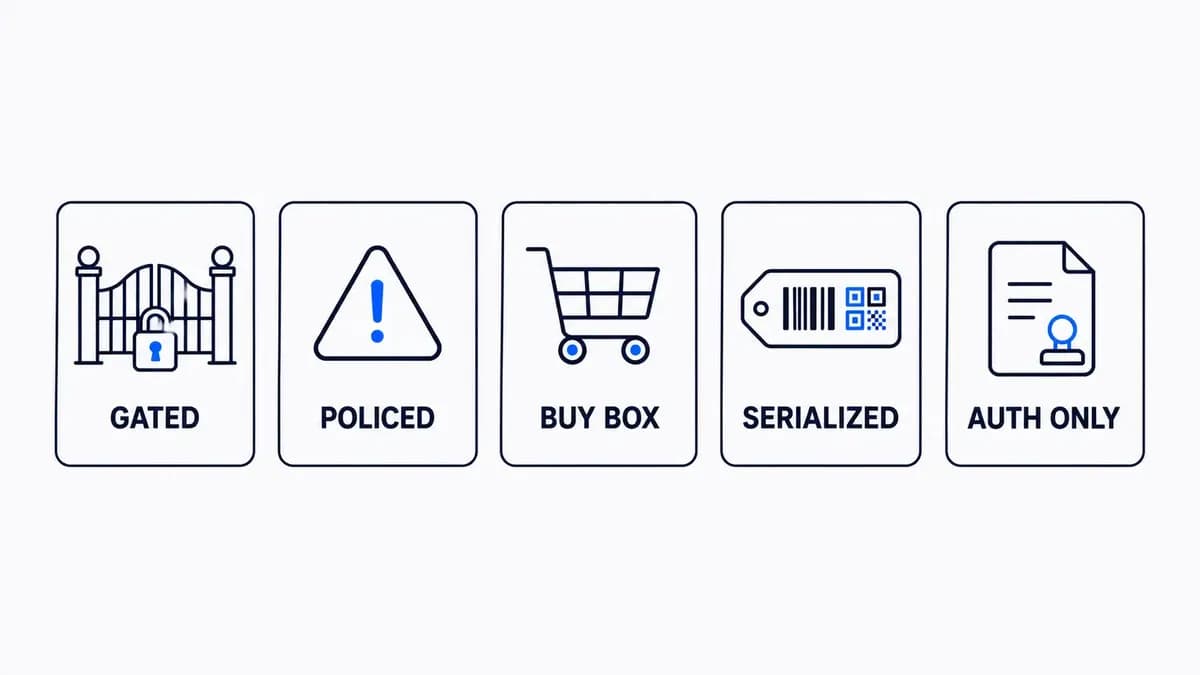
- Gated: Approval Required First
This is the classic one. Amazon will not let you list the product until you apply and get approved. It runs on a scale. Some brands approve you the second you click apply, based on your account history, with no paperwork at all. Some ask for invoices from an authorized wholesaler, usually showing you bought a minimum number of units recently. And some are hard-gated, where the apply button is greyed out or the brand shows as not available, which means it is closed to new sellers for now. Whole categories can also tighten by season. Toys is the standard example, where the gate comes down for newer accounts every fourth quarter.
- Listable but Policed
These are the dangerous ones, because nothing stops you at the door. The product looks open, a scanner shows it as fine, and you list it. Then the brand, which watches its listings closely, files an intellectual property complaint against you for selling without permission. A couple of those complaints can put your whole account at risk. Brands in this group often enforce a minimum advertised price too, so even when you can sell, you cannot price the way you planned. The green light here is not really a green light.
- Amazon or the Brand Owns the Buy Box
Sometimes you are technically allowed to sell, but Amazon itself is on the listing, or the brand sells direct and keeps the Buy Box. You can list all you want and never make a sale, because the buy button almost never points at you. It is worth treating as its own kind of restriction, because it costs you money in a quieter way than a hard gate does.
- Serialized (Transparency) Brands
Some brands put a unique code on every single unit, often under Amazon's Transparency program. If your units do not have valid codes, you cannot ship them, full stop. It does not matter how legitimate your supplier is. Without the codes, the inventory is stuck.
- Authorized-Distribution-Only Brands
These brands sell through a tight, controlled set of distributors, and they expect a letter of authorization from you before you can list. Here is the part that catches people out: an invoice from a general wholesaler, even a real and legitimate one, is not the same as being authorized by the brand. Amazon may ask for proof that the brand itself allows you to sell, and a random distributor cannot give you that. This is the trap that ends more wholesale plans than any other, so we come back to it below.
How to Spot a Restricted Brand Early: The Free Check
The good news is that you can check most of this for free, in under a minute, before you buy anything.
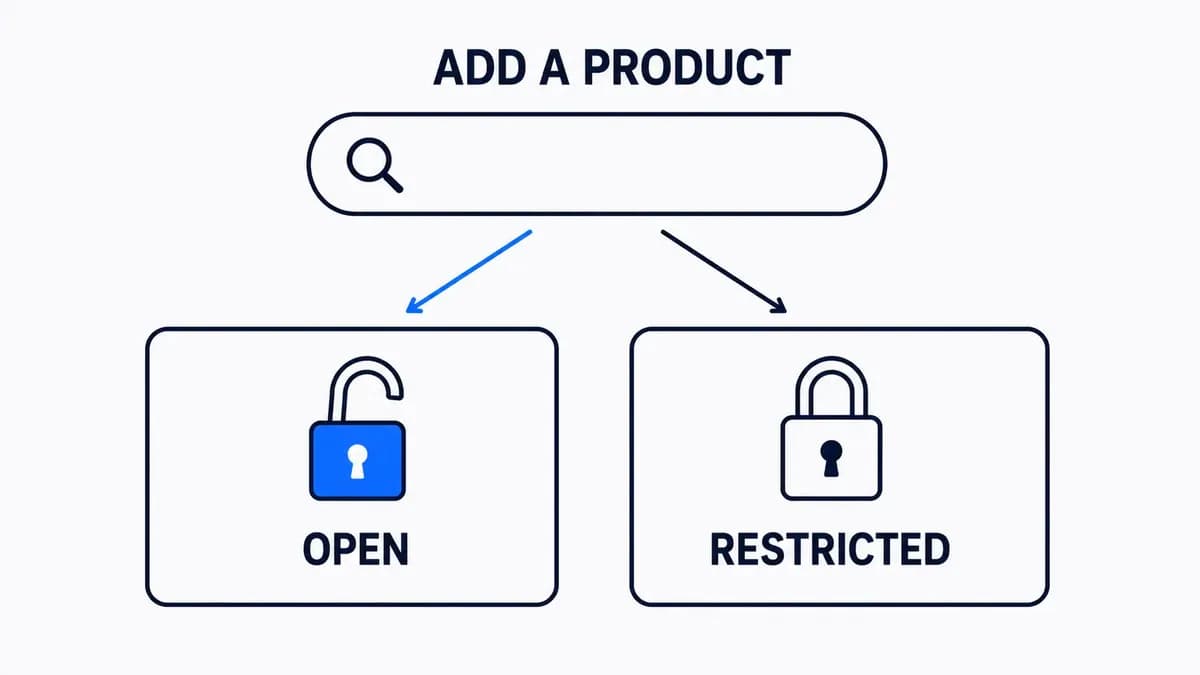
The only check that gives you a real answer is inside your own account. In Seller Central, go to Add a Product and search the brand's item by ASIN or UPC. If you see a normal option to sell it, the product is open for you, and you can list today. If you see a link like "Show limitations" or "Apply to sell," it is restricted for your account. Because a brand can gate some products and not others, check three to five of its items before you decide anything. Our post on how to check if a brand is gated on Amazon walks through this step by step.
There are also signals you can read before you even run the check. Very few sellers on a product that clearly sells a lot is a hint that most people cannot get on. Amazon sitting on the listing is another. So is a Transparency badge on the packaging, an "authorized dealers only" or minimum-price page on the brand's own website, or a brand that only sells through its own store. None of these are proof on their own, but together they tell you to slow down and check before you commit.
Finally, there are browser tools that flag a restriction lock while you source. The ones worth using read your own account's permissions, so they tell you about your account and not someone else's.
How to Sell a Restricted Brand (If It's Worth It)
Start by being clear with yourself about one thing. Amazon letting you list a product is not the same as the brand authorizing you to sell it. A legitimate wholesaler's invoice proves you bought real stock from a real business, but it does not prove the brand approved you. When a brand demands its own authorization, only the brand can give it.
From there, the paths that actually work are simple. Buy from a distributor who is genuinely authorized by the brand and keep clean invoices for every order. Ask the brand directly for a letter of authorization when the brand requires one. Start the free application even on a brand you assume is closed, because Amazon auto-approves some sellers on the spot. And learn to walk away early when the paperwork is impossible to get, instead of buying first and finding out later. If any of this is new, our guide on authorized distributors, middlemen, and gray market explains why the source of your stock matters so much.
Once you have decided a brand is worth pursuing, the next job is finding a real distributor who carries it. That is what B2B Supplier Hub is for. You search a product free and see the suppliers in our network carrying it on one page, with wholesale cost, stock, and retail price side by side, then reveal a supplier when you are ready to connect. Clean invoices from a legitimate distributor are part of clearing Amazon's checks. Brand authorization, where a brand requires it, is a separate step you handle with the brand. You can also see the brands our network covers before you start.
Spot The Wall Before You Hit It
The sellers who lose money to brand restrictions are almost always the ones who bought first and checked second. You do not have to be one of them. The shapes above are easy to recognize once you know them, and the account check that settles it for certain takes less than a minute. Do that check before you wire money, not after. And when a brand does turn out to be worth chasing, the real work is finding a legitimate distributor who carries it. You can search B2B Supplier Hub for free and see the numbers before you spend anything.
Frequently asked questions
01How do I know if a brand is restricted on Amazon?
02Can I sell brand-name products on Amazon without approval?
03Why don't some brands allow Amazon resellers?
04Is it legal to resell a brand you are not authorized for?
05Can a distributor invoice get me ungated?
The B2B SupplierHub Team
Wholesale & sourcing
Stop hunting suppliers by hand. Type a UPC instead.
B2B Supplier Hub shows the suppliers in our network carrying a product on one page: wholesale cost, stock, and retail price side by side. Free to search, no card required.