
Distributor Authorization
B2B Distributor vs Wholesaler vs Vendor: What Each Means
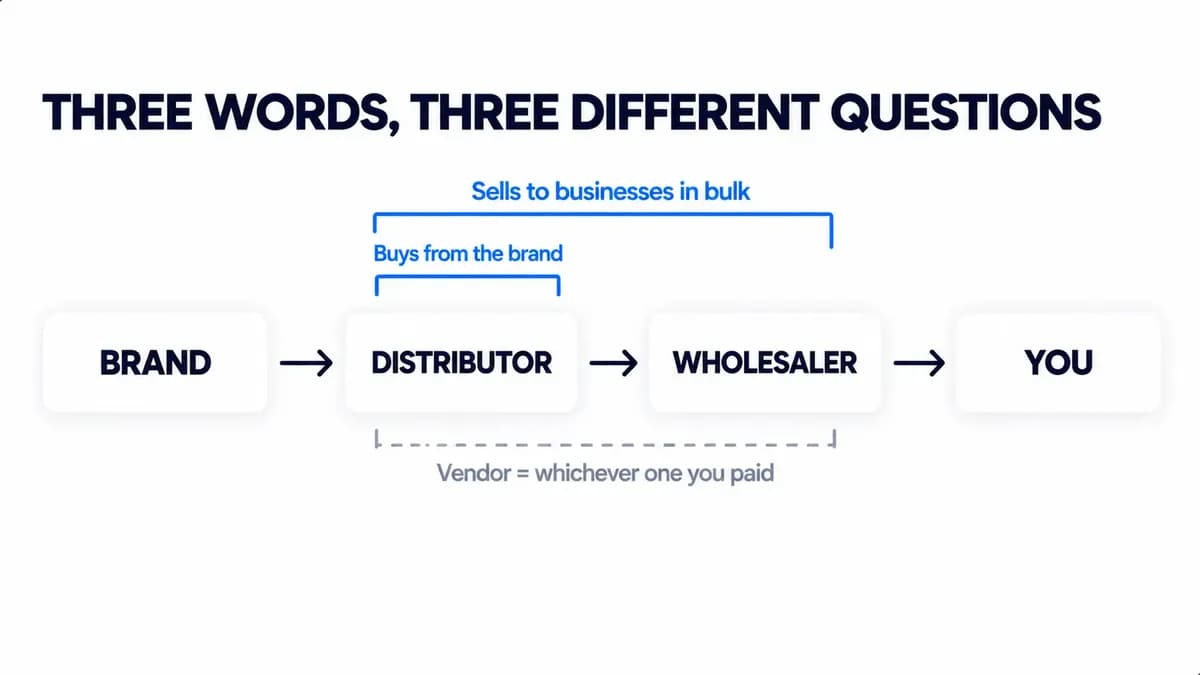
A B2B distributor buys from the brand and sells to businesses. A B2B wholesaler sells to businesses in bulk and may buy its stock from anyone. A B2B vendor is simply whoever you bought from. Three words, and most supplier websites use them as if they meant the same thing.
For a reseller they do not. Only one of them tells you something a brand will care about when it checks your invoice. The second tells you how the company sells but not where its stock came from, and the third tells you nothing at all.
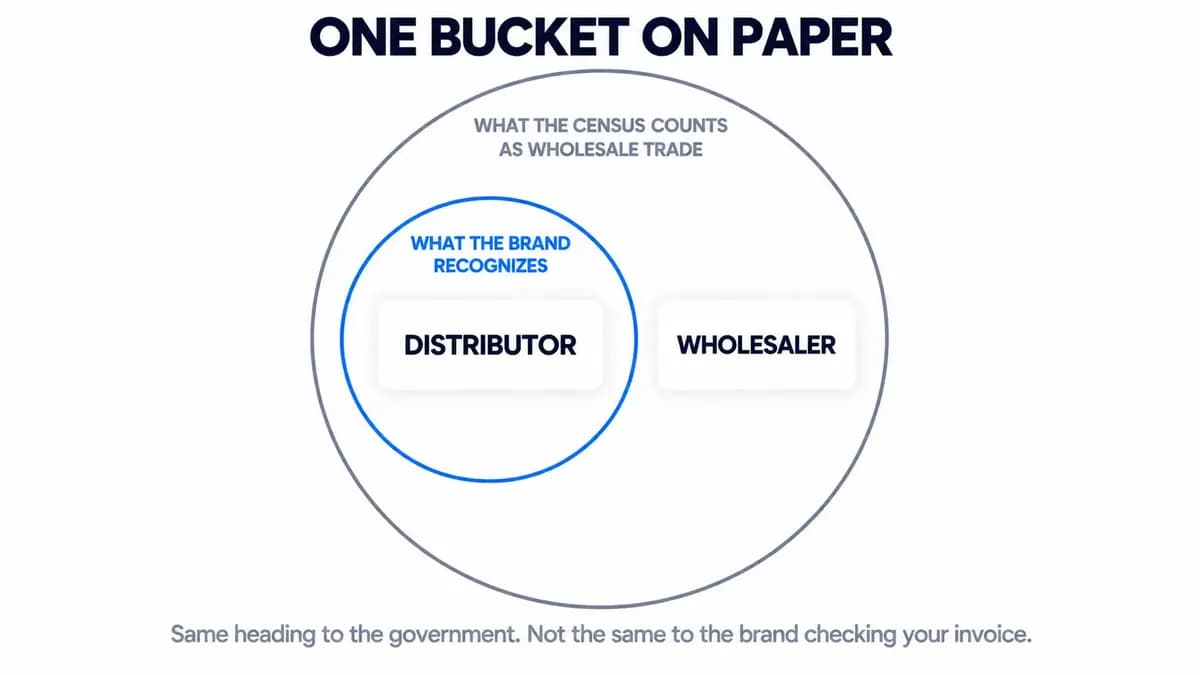
The US government files the first two under the same heading. The brand that decides whether your invoice passes does not. Resellers get caught in that gap all the time, usually after the money has moved.
Distributor vs Wholesaler: Officially the Same, Practically Not
When the government counts businesses, wholesale trade goes in one bucket. Inside it, companies that buy goods and resell them on their own account are known as "wholesale merchants, distributors, jobbers, drop shippers, and import/export merchants". The same source says wholesalers "sell merchandise to other businesses and normally operate from a warehouse or office." So in the official count, distributor is just one of the names a wholesaler can go by.
So on paper, there's barely any difference between a distributor and a wholesaler. A company can call itself either one and still be telling the truth. The name only tells you how they sell. It doesn't tell you where their stock came from, or whether the brand even knows who they are. You have to find that out another way.
What Is a B2B Distributor? (And Why the Brand Cares)
A distributor is a company that buys directly from the manufacturer. They usually have an agreement with the brand, often for a certain area or a certain type of product. They keep the brand's stock, use the brand's prices, and send out invoices the brand will accept.
That's what you really want to know when you ask if a supplier is a distributor: does the brand know this company? If it does, their invoice counts for something. If it doesn't, you're buying further away from the brand than you thought.
People also tend to mix up two things here. First, being a distributor doesn't always mean they're allowed to supply you for the place you sell. That matters when a brand is strict about where its products are sold. We explain this in what an authorized distributor actually means. Second, distributors aren't all on the same level. Some buy straight from the brand, and others buy from those distributors. You can read more in master distributor vs authorized distributor.
How to Find the B2B Distributor for a Product You Already Sell
Most people searching for a B2B distributor are not after a definition. They have a product and want to know who supplies it.
The brand is one place to start, since many have a "where to buy" or dealer page that names who they sell through. The product itself is another. The packaging, the UPC and the label often lead back to whoever brought it into the country. The quickest route is a search that already knows the answer. On B2B Supplier Hub, you type the product and see real cost and real stock from every verified distributor in our network that carries it, free, before you unlock a name.
The brand and product routes are laid out in how to find authorized distributors for any brand. The bigger picture of how brands decide who may sell their products is in brand authorization for Amazon sellers.
What Is a B2B Wholesaler? (And What the Word Leaves Out)
A wholesaler is any company that sells to businesses in bulk. That's the whole definition, which is why the word covers so many different kinds of companies. A wholesaler might sell one brand or three hundred. It might buy its stock from the manufacturer, from a distributor, from a clearance sale, or from another wholesaler.
When you buy from a wholesaler, you get a real business invoice. The question is who sold to the wholesaler. Say the wholesaler bought from a distributor, and the distributor bought from the brand. Now you're two steps away from the brand, and some brands only accept invoices from one step away.
Wholesalers work well when you sell everyday products from lots of different brands, or when the brands in your category don't care much about who sells their products. They're risky when a brand limits who can sell its products and checks exactly where every invoice came from. It's also hard to tell a real wholesaler from a middleman just by looking. We explain how to spot the difference in authorized distributor vs middleman vs gray market.
“B2B Wholesale Distributor" Means Both at Once
You will see this phrase a lot, and it is not a contradiction. A wholesale distributor buys from brands and sells to businesses in bulk. It is doing both jobs, and for a reseller it is usually the phrase you want to see.
It is still just a phrase. A company that uses it should also be able to show you which brands it carries, whether those brands list it as an authorized source, and what territory it covers. If those three things are missing or vague, the phrase is doing the work the facts should be doing.
What Is a B2B Vendor? (And Why Amazon Flips It)
Vendor is the loosest of the three. It describes the deal, not the company. Anyone who sells you anything is your vendor, whether they made it, distributed it, or picked it up at a liquidation sale last week. In your accounting software, vendor is just the name on the bill.
On Amazon, it means something more specific, and almost the reverse of what a reseller expects. Amazon's own glossary defines a vendor as "a third party (person or entity) who sells products to a retailer like Amazon." A vendor sells to the marketplace, and Amazon sells to the customer. A reseller does the opposite. You buy from suppliers and sell to the customer yourself.
So when "vendor" shows up in a supplier's name or a directory listing, it tells you nothing about authorization. Go find out which of the other two words actually applies.
3 Questions That Sort Any Supplier
You do not need the label to work out what a company is. You need three answers.
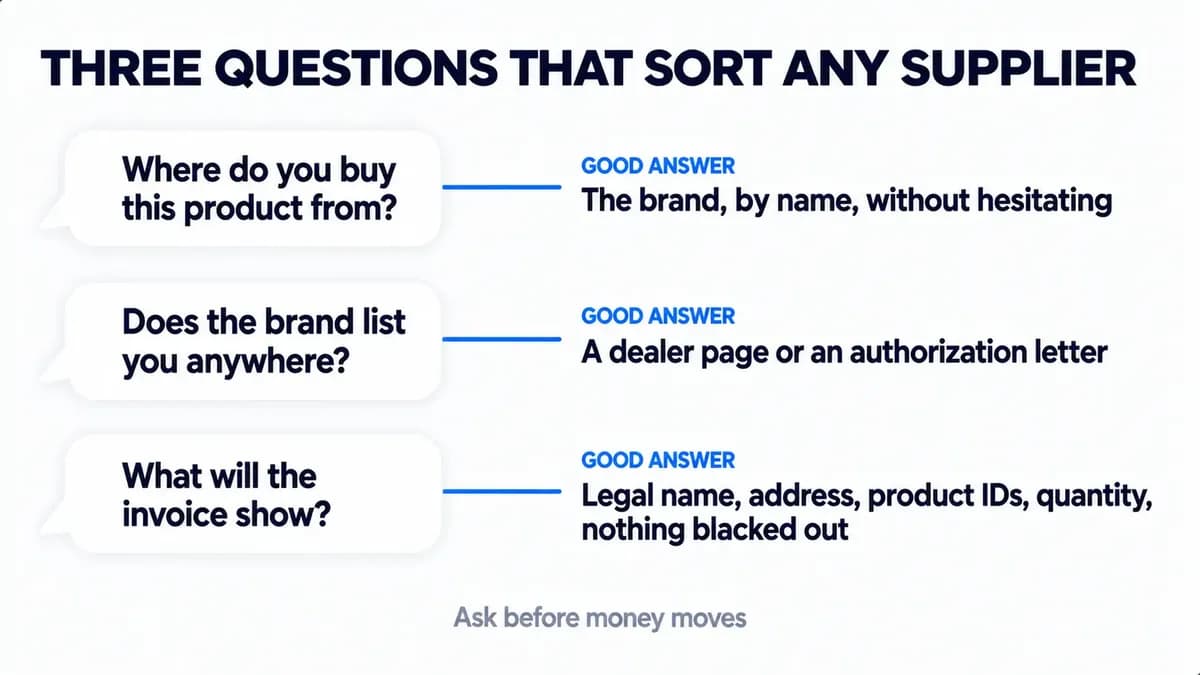
Where do you buy this product from? A distributor says the brand by name, without hesitating. A wholesaler often names a mix of sources, or gives a vague answer. A middleman changes the subject.
Does the brand list you anywhere? A distributor can usually point to the brand's dealer page or an authorization letter. If the answer is no, you are at least one step removed; however, the company describes itself.
What will the invoice show? Ask for a sample before you order. It should carry the supplier's legal name and address, the product identifiers, and the quantity, with nothing blacked out. If the supplier hesitates on that, the invoice is likely to be the problem later.
Once you have these three answers, it doesn't matter what the company calls itself. You'll know who you're really buying from.
The Word Is Not The Proof
A supplier can call itself whatever it likes. What a brand or a marketplace checks is where the stock came from and how many hands it passed through. Learn the three words so you know what a supplier is claiming. Then check the claim.
If you have a product and want to know who actually supplies it, search it free and see the numbers before you talk to anyone. If nothing comes back, no distributor in our network carries it yet. Tell us the product through Request a Supplier and our team will find an authorized distributor who does, verify them, and bring them onto the platform. It is free on every plan, and you get an answer within 30 days, either way.
Frequently asked questions
01What is a B2B distributor?
02What is a B2B wholesaler?
03Is a B2B wholesale distributor the same as a distributor?
04What is a B2B vendor?
05Can a company be both a distributor and a wholesaler?
The B2B SupplierHub Team
Wholesale & sourcing
Stop hunting suppliers by hand. Type a UPC instead.
B2B Supplier Hub shows the suppliers in our network carrying a product on one page: wholesale cost, stock, and retail price side by side. Free to search, no card required.