
Supplier Management
What Is a Buying Group for Resellers?
A wholesale buying group is a handful of independent resellers who put their orders together, so the combined order is big enough to hit a distributor's minimum or a better price tier. If you sell on Amazon, you probably can't use one, because the invoice comes in the group's name and Amazon wants one with your name on it.
So for most Amazon sellers, a buying group isn’t an option. Groups charge a joining fee, so ask whose name will be on the invoice before you pay one.
Three Different Things Are Called a Buying Group
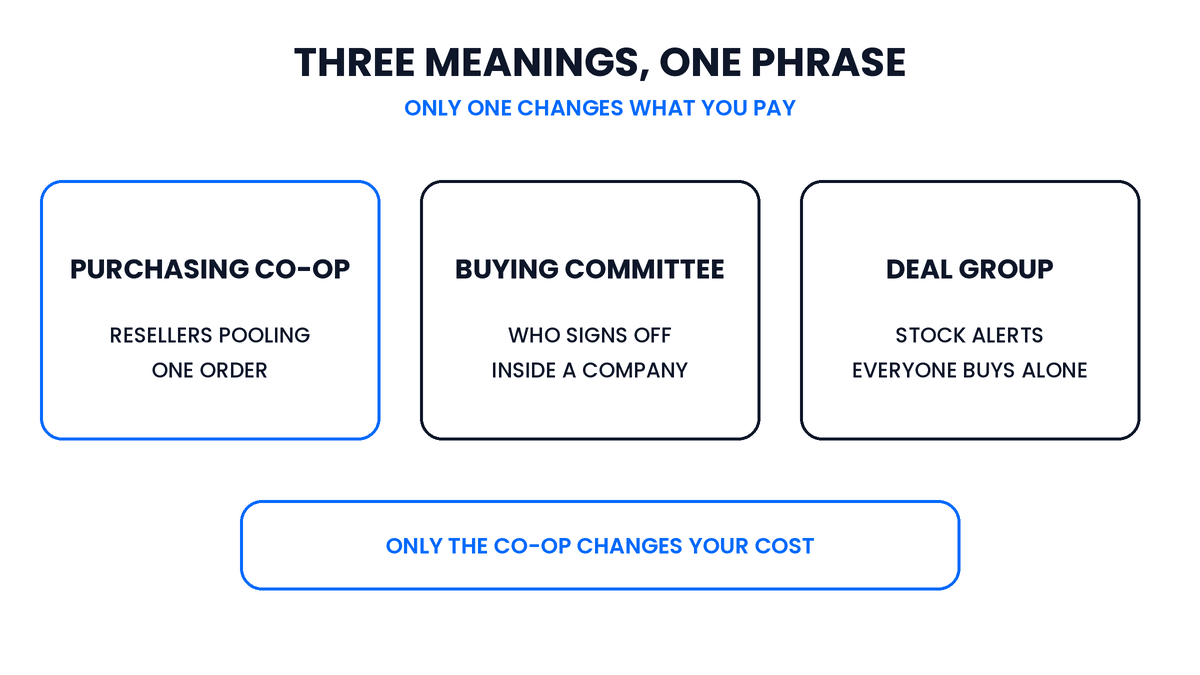
The word itself is part of the problem. Search the phrase, and you'll get three answers that have nothing to do with each other, so it's worth knowing which one you mean.
- A purchasing co-op. Independent businesses buying together to get the price a big chain gets. That's the one a reseller means, and the one this post is about.
- A buying committee. The people inside a company who sign off on a purchase. Sales teams use the phrase this way, and it has nothing to do with your cost.
- A deal group. Paid chat groups, often on Discord, posting stock alerts and links. They aren't buying together. Everyone buys their own units at retail.
Only the first one changes what you pay a distributor.
How Do Buying Groups Work
The co-op version is simple. A distributor's price gets better the more you buy, and their minimum order is usually bigger than a small reseller wants to hold. So a group collects orders from its members, places one big order, and splits the shipment. Members get the better price. But the group now sits in the middle of the deal, and that's where the problems start.
None of this would exist if minimums weren't real. Our explainer on case pack, inner pack and master carton covers why your real minimum is the order minimum rounded up to a full case.
How Do Buying Groups Make Money
Someone has to pay for all that work, and it's usually you. So ask how the group gets paid before you join. Whoever pays them is who they work for.
- Membership fees. A flat annual or monthly cost, and the easiest to judge. You can hold it against what you expect to save.
- A share of the rebate. The group negotiates a volume rebate from the supplier and keeps part of it. So your savings and their revenue come out of the same pot.
- Supplier allowances. The supplier pays the group to get featured to members. A group paid by suppliers has a reason to point you at those suppliers.
None of them is dishonest. But each one changes what the group pushes you toward, so find out which one you're dealing with.
Buying Group vs GPO
People use two names for this, and both are not the same. Buying group and GPO overlap a lot in practice. But one difference between them matters more than the rest.
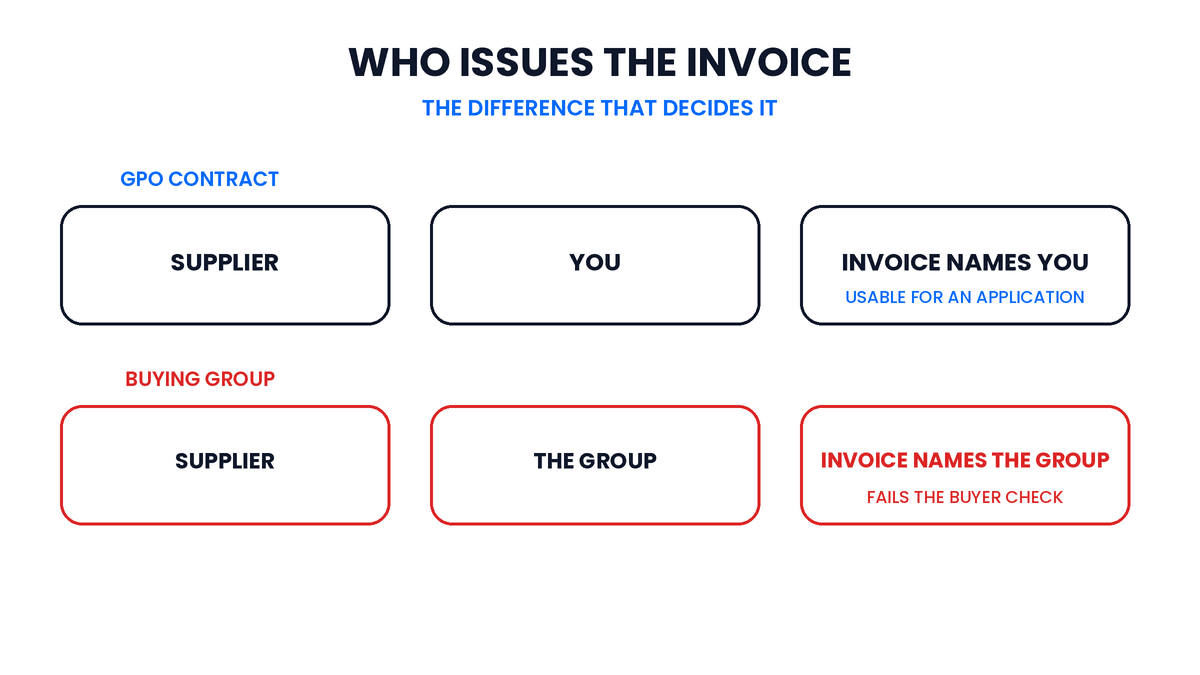
A group purchasing organization usually negotiates the contract, and then you buy from the supplier yourself at those terms. So the invoice comes from the supplier, with your name on it.
A buying group more often places the order itself and buys as one customer. That invoice comes from the group. Which sounds like a small detail, and for a marketplace reseller it's the one that matters.
The Invoice Problem for Amazon Sellers
Amazon is the clearest case. When you apply to sell a restricted brand there, you have to show an invoice from your supplier. Amazon's stated requirement is that it carries your business name and address as the buyer, and that it comes from a real supplier.
A group invoice usually fails on both counts. The group made the purchase, so the paperwork shows the group buying from the distributor. And if you appear on it at all, it's as a member who received part of a shipment. That same weakness turns up further down the chain. Our post on what a sub-distributor is covers the version where your invoice only proves the last hop, not where the goods actually came from.
So ask one question before you join, and get the answer in writing. Will the distributor invoice me directly, in my business name? If the answer's no, the group might still save a retail store money. It won't get you approved on a marketplace.
Are Buying Groups Legal
None of that makes a buying group illegal. That's the other thing resellers ask about. Businesses buy together all the time, in plenty of industries, and it's generally lawful. What's gone is the published guidance people used to point at.
For years lawyers pointed at two sets of federal guidance. One covered competitors working together in general. The other covered health care, and that's where the safe percentage thresholds came from. Both have been withdrawn.
The agencies withdrew the Antitrust Guidelines for Collaborations Among Competitors, issued back in 2000. They said it no longer tells businesses how enforcers really judge these deals, and pointed people at the law instead.
Then the FTC withdrew two health care antitrust policy statements on July 14, 2023, on a 3-0 vote. The Justice Department had already rescinded the same statements that February. The FTC said much of the content was outdated.
So day to day, not much changes. Buying together is still ordinary. But the percentage thresholds people quote at each other aren't current guidance anymore. And if a group starts agreeing what its members charge their own customers, that's different altogether.
This is general information, not legal advice. For a specific arrangement, talk to a lawyer.
Are Buying Groups Worth It
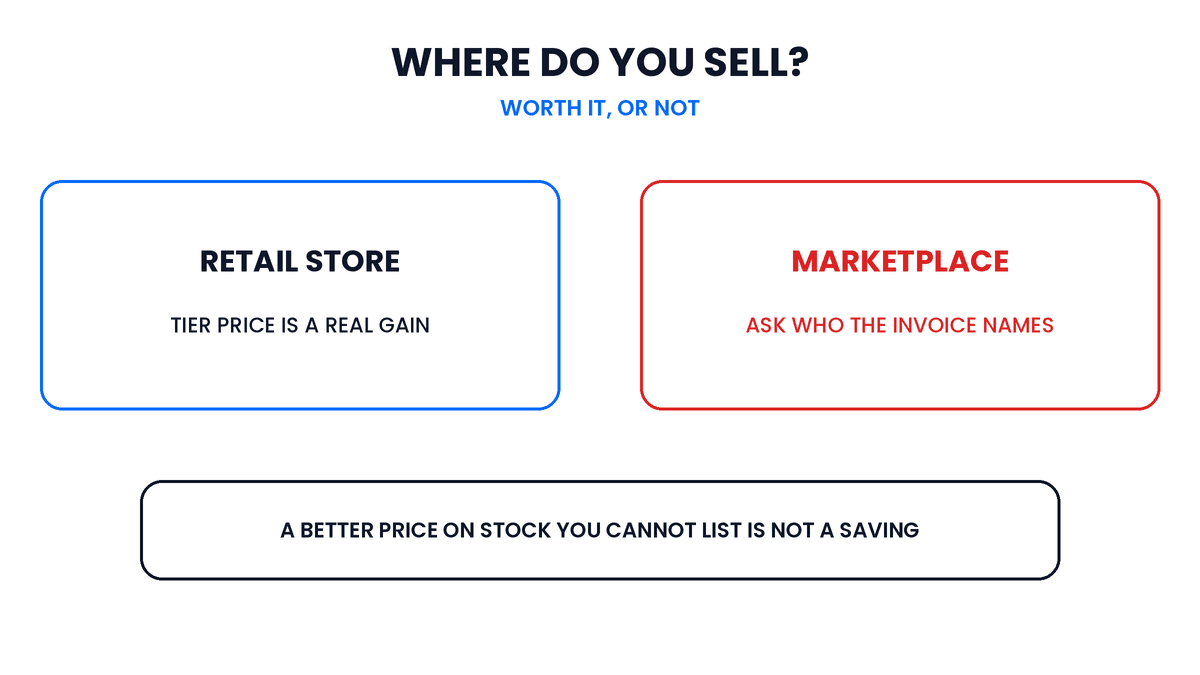
Whether a group is worth joining depends on where you sell. For a retail store, often yes. For a marketplace reseller, usually no, and the invoice is why.
A buying group for small retailers solves a problem those owners really have. You stock a shelf, you sell to walk-in customers, nobody asks where the goods came from. The better price is simply money saved.
But that same retail buying group does much less for you if the place you sell asks for paperwork. You end up with a good stock price you might not be allowed to list. There's another cost too, and it's easy to miss. In a group, you buy what the group buys, so the group order sets your products, your timing, and your quantities.
And if you're still early with a supplier, our guide to your first 30 days with a new wholesale distributor matters more than any group membership.
Where to Find a List of Buying Groups
Real groups are not easy to find. There's no single list worth publishing, and any post that hands you one is mostly guessing.
They tend to be built around one industry, and usually one region. So the reliable route is a trade association in your category, a distributor's own sales rep, or other resellers in your niche. A rep will often name the ones they already sell to.
And if the real problem is that nobody you can reach supplies the product, a group won't fix that. You can search a product for free and see real cost and real stock from the verified distributors in our network carrying it. When nothing in the catalog has it, you can ask our team to find an authorized wholesale distributor. Both start from a free account.
Wholesale Buying Groups: The Takeaways
- A wholesale buying group pools orders to reach a distributor's minimum or tier price.
- Three unrelated things share the name, and only the purchasing co-op affects your cost.
- Ask who issues the invoice, and get the answer in writing before you join.
- Amazon wants an invoice naming your business as the buyer. Other marketplaces often do too.
- Check how the group earns: fees, a share of your rebate, or supplier allowances.
- The federal guidance that described safe joint purchasing has been withdrawn.
- In a group, you buy what the group buys, on the group's timing.
Ask Who Is on the Invoice
A wholesale buying group really does what it promises. You get the price a bigger buyer gets. But it creates a different problem, and that one shows up months later, when you're trying to list the stock and the paperwork doesn't have your name on it. So ask one question before paying the joining fee: whose name is on the invoice?
Frequently asked questions
01What is considered a buying group?
02Are buying groups legal?
03What is the difference between a GPO and a buying group?
The B2B SupplierHub Team
Wholesale & sourcing
Stop hunting suppliers by hand. Type a UPC instead.
B2B Supplier Hub shows the suppliers in our network carrying a product on one page: wholesale cost, stock, and retail price side by side. Free to search, no card required.