
Distributor Guides
What Is a Sub-Distributor? Why the Second Link in the Chain Matters
A sub-distributor is a company that buys a brand's products from an authorized distributor, not from the brand, and then sells them to smaller businesses. Should you buy from one? Yes, if they tell you who they buy from and the brand confirms that company is one of its authorized distributors. If they won't name their source, don't buy.
That rule matters because a quote tells you very little. A real sub-distributor and a reseller who just uses the name send the same kind of email: a price, a minimum order, a stock number and the word "authorized." You only find out which one you bought from later, when a brand, a marketplace or a customer asks where your products came from.
To see every type of distributor side by side, read our post on master vs authorized distributors.
Sub-Distributor Meaning: Who They Are and Why They Exist
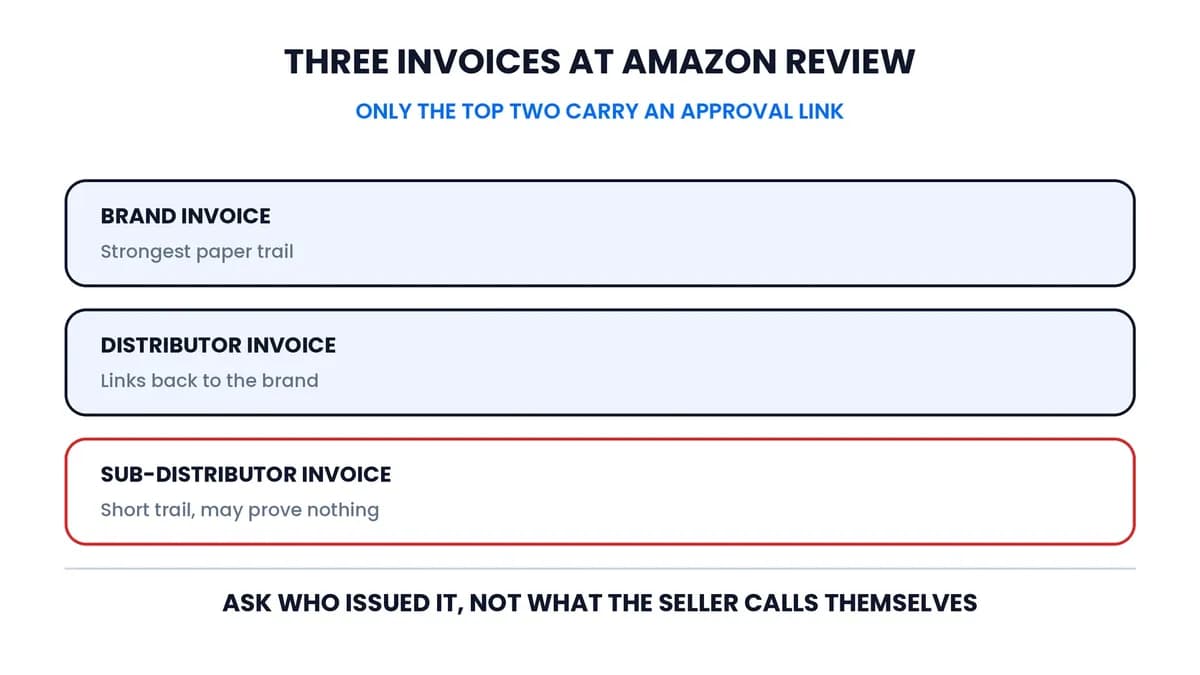
Most brands don't sell to every reseller. They choose a small number of distributors, sign agreements with them, and let those companies sell to stores and resellers. These are the brand's authorized distributors.
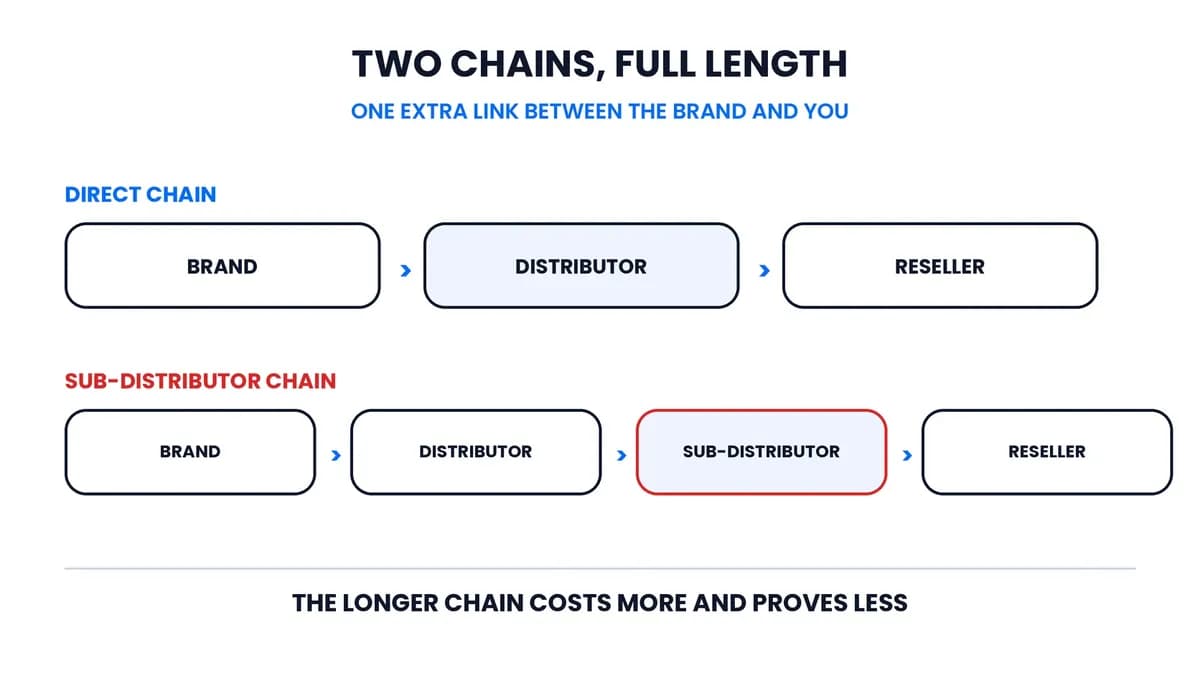
A sub-distributor sits one step below them. It buys from an authorized distributor and sells to smaller accounts the distributor doesn't want to handle. Some people call it a second-tier distributor.
This step exists because big distributors are set up for big buyers. Many ask for large minimum orders, a credit check and references from other suppliers. A new or small reseller often can't meet those rules yet. A sub-distributor sells in smaller amounts, opens accounts faster, and sometimes ships from a warehouse closer to you. It makes its money by adding its own markup to the price it pays.
Two kinds of companies use the name:
- A real one has a written agreement with an authorized distributor. The agreement usually says which brands it can sell, where it can sell them and to whom. Sometimes the brand knows about it and has approved it. This kind of supplier will tell you who it buys from without any trouble.
- A reseller using the name buys from whoever is cheapest that week. The products may be genuine, but there's no fixed source and no paperwork showing where they came from.
From a quote alone, the two look the same. The questions later in this post help you tell them apart.
Sub-Distributor vs Distributor: What Changes for You
Buying one step further from the brand changes four things.
Authorized distributor | Sub-distributor | |
|---|---|---|
Price | Their markup on the brand's price | Usually higher: their supplier's markup plus their own |
Opening an account | Bigger minimums, stricter checks | Smaller minimums, easier to open |
Stock and delivery | Usually ships from their own warehouse | May order from their supplier after you order, which adds time |
Paperwork | The invoice links straight to the brand | The invoice only shows the sale from them to you |
The price gap is easy to see. The other three are easy to miss until something goes wrong: an order arrives late, a return has to pass through two companies, or a brand asks you to prove where your stock came from.
A higher price can still be a fair deal. If a smaller minimum order leaves you cash for other products, paying a little more per unit can make sense. You just need to know how big the gap is, and that means comparing their price with what other distributors charge for the same product.
Is a Sub-Distributor Authorized?
It depends on who did the authorizing. A brand authorizes its distributors. A distributor can then approve a company to resell for it. Whether the brand also accepts that company is a separate question.
Some brands accept these resellers as long as they are named and approved. Others don't allow their distributors to sell to other resellers at all. Most brands don't publish their rule, so you have to ask.
So when a supplier calls itself authorized, ask one more question: authorized by whom? "Authorized by the brand" carries far more weight than "approved by a distributor" when someone checks your paperwork.
What a Sub-Distributor Agreement Usually Covers
This agreement is a contract between the authorized distributor and the company reselling for it. It usually sets out:
- which brands and products it can sell
- the area it can sell in
- the types of customers and sales channels it can sell to
- prices, payment terms and how long the agreement lasts
You won't usually see the contract. Ask three questions instead. Who is the agreement with? Does it cover the brand you want to buy? Does it allow sales to resellers who sell where you sell, such as online marketplaces? A supplier with a real agreement can answer all three in one email. For how the brand's own contract with its distributor works, see what is a distributor agreement.
This is general information, not legal advice. Every agreement is different.
5 Questions to Ask a Sub-Distributor Before You Buy
Say a supplier sends you a quote for a product you already sell. The price works, you can meet the minimum, and the email says "authorized sub-distributor." Before you pay, ask these five questions in order.
1. Who Do You Buy This Brand From?
Ask for the company's name. An answer like "a large national distributor" doesn't help, because you can't check it. If they say the name is private, explain that you only want to confirm it with the brand and won't contact their supplier. If they still won't say, stop here. Every other check needs that name.
2. Does the Brand Confirm That Company?
Check with the brand, not the supplier. Look on the brand's website for a list of distributors or a "where to buy" page. Or email the brand's sales team and ask. Our guide on how to find the authorized distributors for a brand shows where to look. If the brand confirms the company, you have a clear path from the brand to your supplier. If the brand has never heard of it, your supplier's paperwork can't make up for that.
3. What Paperwork Can You Give Me?
Their invoice is a real record of your purchase, and it should include everything listed in what counts as a valid wholesale invoice. But it only shows the sale from them to you. If a brand or marketplace asks where your stock came from, they will want to know where your supplier got it too. Ask for a short written note that names their source, and ask whether that source will confirm the relationship if a brand checks.
4. Is the Stock in Your Warehouse?
Ask where the order ships from and whether the quantity they quoted is on their shelves today. Some of these suppliers only order from their own source after you order. That adds days and makes it more likely your order arrives in parts. It's fine for regular reorders, but risky for a product you can't afford to run out of.
5. How Much More Am I Paying, and Is It Worth It?
Compare their price with what other distributors charge for the same product. Then weigh that gap against what you get for it, such as a smaller minimum order or easier payment terms. You can search the product free on B2B Supplier Hub. You'll see real cost and real stock from the verified distributors in our network that carry it, before you apply anywhere or unlock a supplier. If the gap is small, this supplier may be the better choice for now. If it's large, you're paying a lot to avoid one account application.
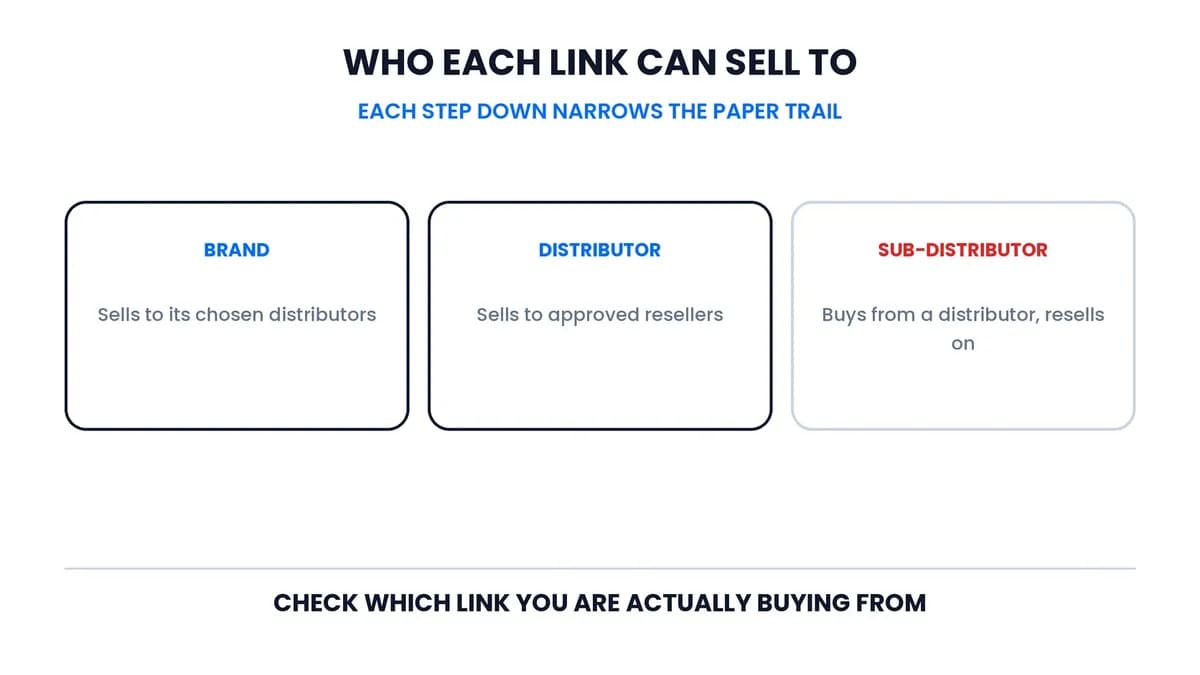
If you sell on Amazon: your supplier's invoice is usually what you show when you apply to sell a restricted brand or answer an authenticity complaint. If that invoice comes from a sub-distributor, be ready to show who they bought from as well. Our guide to brand authorization for Amazon sellers explains what Amazon asks for.
When to Walk Away From a Sub-Distributor
Don't buy, even at a good price, if:
- They won't tell you who they buy from. This is the most important check.
- The brand doesn't recognize their supplier. Without that link, your paperwork stops at your supplier.
- Their price is far below what authorized distributors charge. A company that buys from a distributor and adds its own markup can rarely beat that distributor by much. Stock that cheap often comes from another seller's leftovers or from goods meant for another country. Our post on authorized distributors, middlemen and gray-market sources explains why that can cause trouble even when the products are real.
- They rush you. A supplier with a real agreement won't mind waiting a day while you check with the brand.
You can still get the product. The authorized distributor for it often exists, but many distributors don't advertise, so the companies reselling their stock are easier to find.
When It Makes Sense to Buy From a Sub-Distributor
Buying one step below the distributor can still be the right choice when:
- you can't meet an authorized distributor's minimum order or account rules yet
- the supplier is closer to you and ships faster
- you want to test a new product with a small order before you open a bigger account
Treat it as a short-term step. Keep every invoice, the supplier's note about their source and the brand's confirmation in one folder per brand. If anyone asks where your stock came from, the answer is ready, and that buying history also helps you qualify with the authorized distributor later.
Before you commit, check whether the brand is carried by verified distributors in our network, where you can see cost and stock first.
Buy Only When You Can See the Source
Buy from a sub-distributor when you can see where the products come from. That means three things: the supplier names the company it buys from, the brand confirms that company, and you have paperwork to show if anyone asks. With those in place, a sub-distributor's higher price is a fair trade you can choose to make. If they won't name their source, don't buy at any price.
If the only supplier you can find won't say who they buy from, submit a request and let our team find an authorized wholesale distributor for it.
Frequently asked questions
01What is a sub-distributor?
02What is the difference between a distributor and a sub-distributor?
03Is a sub-distributor the same as a wholesaler?
04Can Amazon sellers buy from sub-distributors?
The B2B SupplierHub Team
Wholesale & sourcing
Stop hunting suppliers by hand. Type a UPC instead.
B2B Supplier Hub shows the suppliers in our network carrying a product on one page: wholesale cost, stock, and retail price side by side. Free to search, no card required.