
Distributor Authorization
What Is a Distributor Agreement? What It Means for Resellers
A distributor agreement is a contract between a brand and a distributor. It says which products the distributor can sell, where it can sell them, who it can sell to, and for how long. You never sign it, but it decides what that distributor can sell you.
Most resellers never see one, because the brand and the distributor keep the terms private. You still run into its rules, from the questions on a distributor's application to an account that closes after a brand changes its mind.
This is a general guide for wholesale resellers, not legal advice.
What a Distributor Agreement Covers
The brand gives the distributor the right to buy its products and sell them to other businesses. In return, the distributor follows the brand's rules.
Legal sites go deep on what is in a distribution agreement, but most cover the same basics. They name the products and the area the distributor can sell in. They say which customers are allowed, which pricing rules apply, how much the distributor has to buy, and how long the deal lasts.
Some brands add a second layer. They sign a master distributor agreement with one large company, and that company signs its own deals with smaller distributors. So the supplier you buy from may be two contracts away from the brand, and each contract can add limits. Our post on authorized dealer vs distributor vs reseller explains how these roles differ.
4 Distribution Agreement Clauses That Affect You as a Reseller
Most distribution agreement clauses only concern the brand and the distributor. Four reach you directly. They decide whether a distributor can sell to you, and whether it still can next quarter.
1. Territory: Where the Distributor Can Sell
This clause sets where the distributor can sell, such as one country or a few states. Brands are generally allowed to set these limits when they decide them on their own, according to the FTC. So a distributor that covers only part of the country may say no to you, even if you meet every other requirement. Our guide to building a territory map of regional distributors shows how to find out who covers your area.
2. Customers: Who It Can Sell To
This clause says who a distributor can sell to. Some can only sell to physical stores. Others can also sell to approved online sellers, or to almost anyone except marketplace sellers. That is why an application asks for your store links and where you sell. Answer honestly. An account approved on a vague answer can be closed later, sometimes after you have paid for stock.
3. Term: When the Deal Ends
Every agreement has an end date or a way to end it early. When a brand drops a distributor or moves a line to someone else, the distributor has to stop selling it, sometimes after a short window to clear old stock. A supplier that is fully authorized today can lose the brand next month, and its new invoices for that brand will no longer show an authorized source.
4. Pricing Rules: MAP and Resale Conditions
Many agreements require the distributor to sell only to resellers who follow the brand's pricing policy, such as a minimum advertised price. The distributor adds that rule to your account terms and may close your account if you break it.
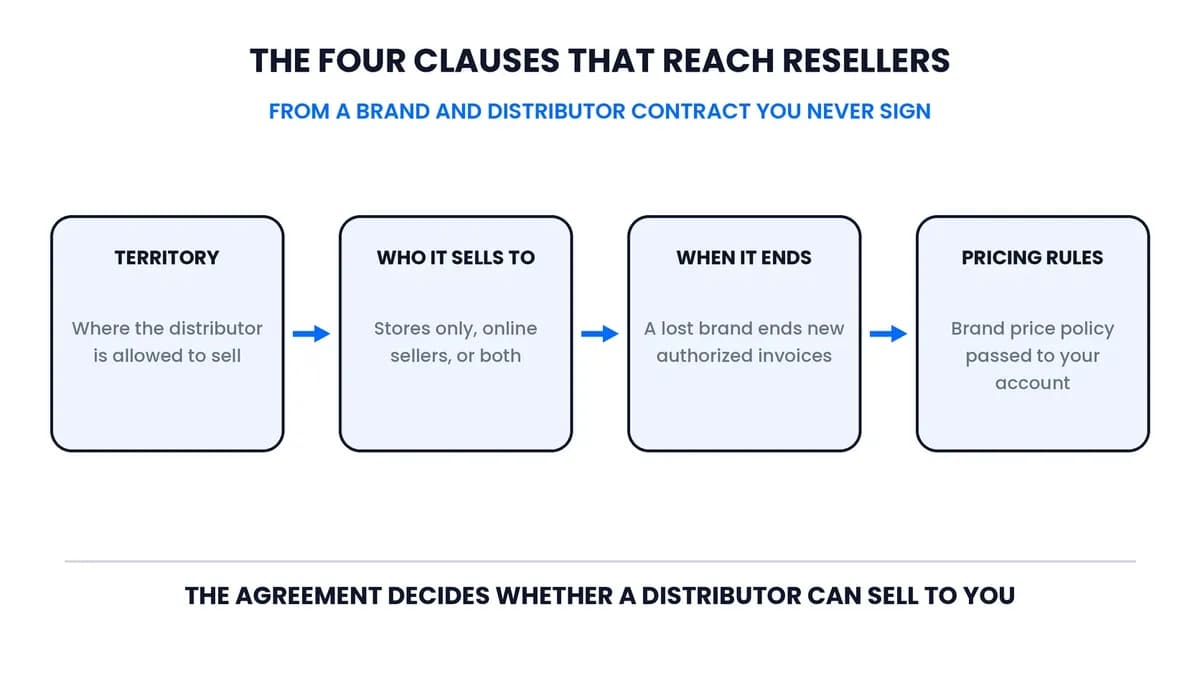
So a distributor can only sell you what its agreement allows, and only while it lasts. Before you compare costs, find out which distributors carry the brand.
How to Find Out What the Agreement Says: 5 Questions to Ask
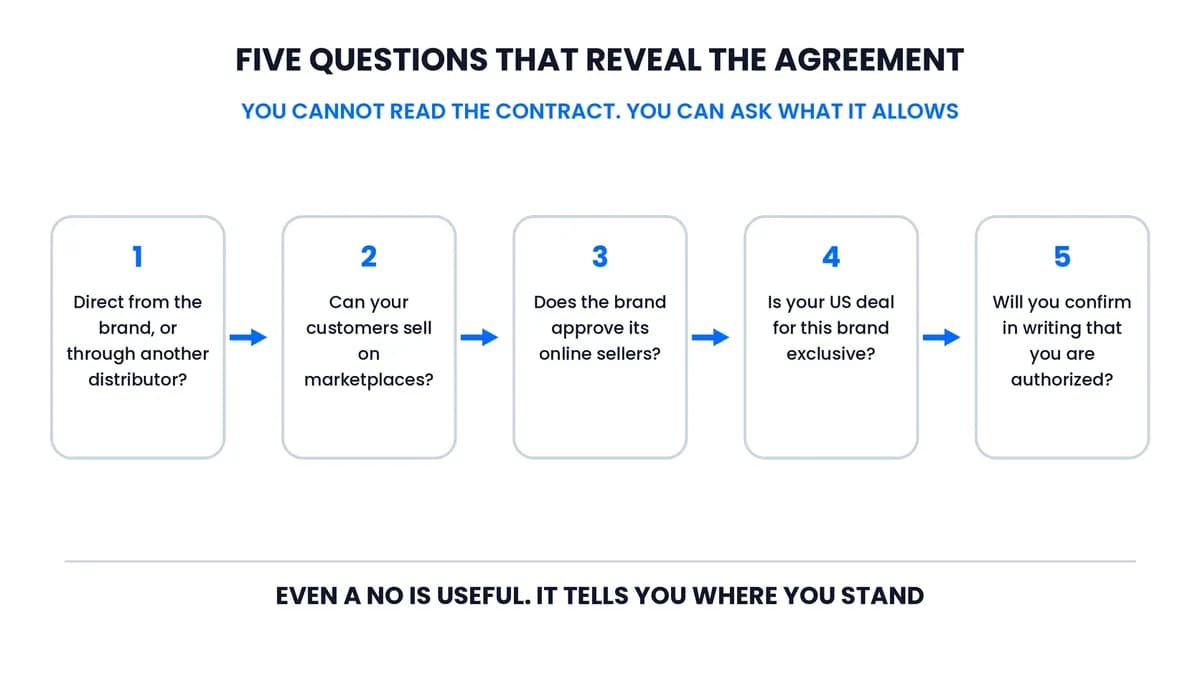
You can't ask to read the contract, but you can ask questions it answers. Even a "no" is useful. Start with these five.
- "Did you get this brand directly from the brand, or through another distributor?" This tells you how many contracts sit between you and the brand.
- "Can your customers sell this brand on online marketplaces?" A clear answer stops you from buying stock you can't sell.
- "Does the brand approve its online sellers?" If it does, you may need the brand's approval as well as the distributor's.
- "Do you have an exclusive distribution agreement for this brand in the US?" If they do, there is no other distributor to compare them with. Our post on Exclusive Distributor Meaning: Can a Reseller Get Exclusivity? explains more.
- "Can you confirm in writing that you are authorized for this brand?" A truly authorized distributor should be fine with this.
The application form gives clues too. A form that asks for your store links, sales channels and ship-from state is checking you against its agreement. If it asks nothing about where you sell, ask the five questions yourself before you pay for anything.
If you sell on Amazon: a distributor can sell you the brand's products, but it can't give you the brand's approval. Only the brand can issue a brand letter of authorization. What a distributor can give you is an invoice that shows your stock came from an authorized source. Our brand authorization guide for Amazon sellers explains what Amazon asks for and when.
What to Do When the Agreement Shuts You Out
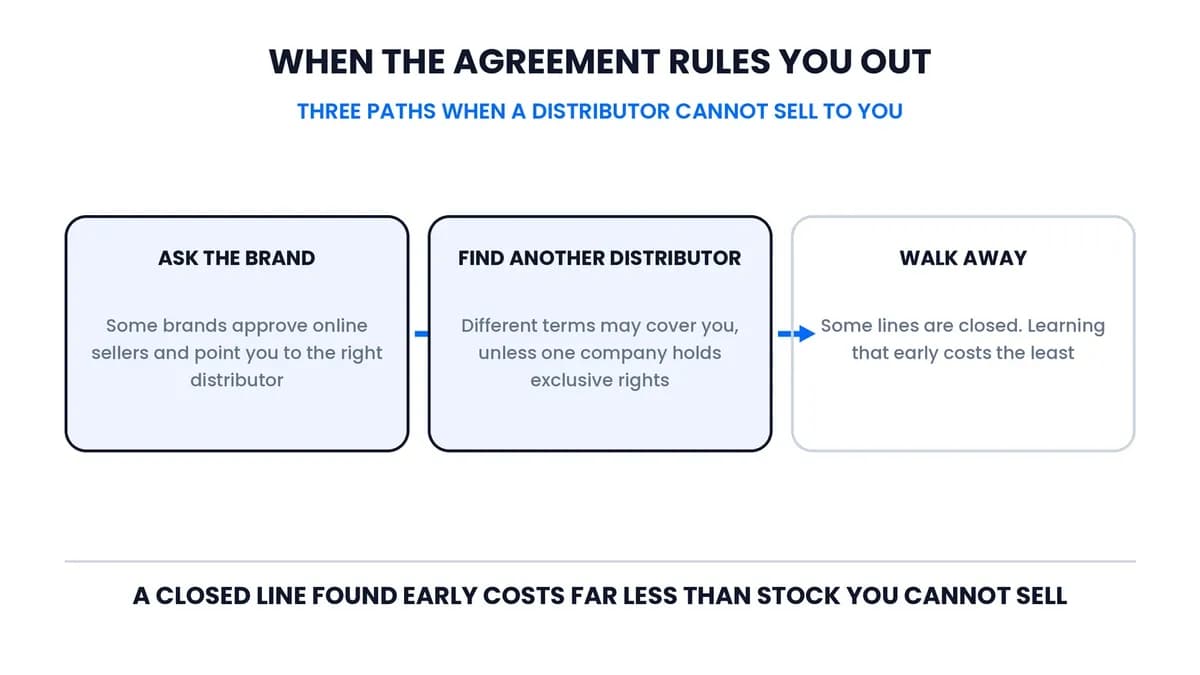
The answers may show that this distributor can’t sell to you. It might not cover your area or allow marketplace sellers, or it might have lost the brand. You have three choices.
Ask the brand. Some brands approve online sellers themselves. If they approve you, they can tell you which distributor is allowed to sell to you.
Try another distributor. If no single company has exclusive rights to the brand, other distributors may work under different rules, and one of them may be able to sell to you. You can search a product free on B2B Supplier Hub to compare real cost and stock from every verified distributor in our network that carries it, before you apply to any of them. You will still need to apply and get approved, but you will know which distributors are worth applying to.
If you can’t find any distributor that carries the product, you can find an authorized wholesale distributor through a request. Our team looks for one, verifies them and brings them onto the platform. It’s free on every plan, and you get an answer within 30 days, either way.
Walk away. Some brands don’t sell to new resellers at all. If that’s the case here, it’s cheaper to find out now, before you’ve paid for stock.
You Never Sign It, but It Shapes Every Order
You will probably never hold one, but it shapes every order you place with that distributor. Before you choose a distributor on cost, find out what its agreement lets it sell you, where, and for how long. A few direct questions now can spare you a closed account later.
Frequently asked questions
01What is the purpose of a distribution agreement?
02What are the disadvantages of using a distributor?
03Can you provide an example of a distributor agreement?
04Can a reseller see a distributor agreement?
The B2B SupplierHub Team
Wholesale & sourcing
Stop hunting suppliers by hand. Type a UPC instead.
B2B Supplier Hub shows the suppliers in our network carrying a product on one page: wholesale cost, stock, and retail price side by side. Free to search, no card required.