
Distributor Authorization
Exclusive Distributor Meaning: How to Spot One, Buy From One, and Get Exclusivity Yourself
Exclusive Distributor Meaning: How to Spot One, Buy From One, and Get Exclusivity Yourself
An exclusive distributor is the only company a brand lets buy its products directly and resell them in a certain area, usually under a contract that stops the brand from adding anyone else there. If a brand you want to carry works this way, you have one distributor to apply to. If that company turns you down, there is no other distributor to try.
This guide covers how to tell when a brand works this way, how to buy from it anyway, and whether a reseller can get exclusivity of its own. It is general information, not legal advice.
What It Means When a Brand Shows One Distributor
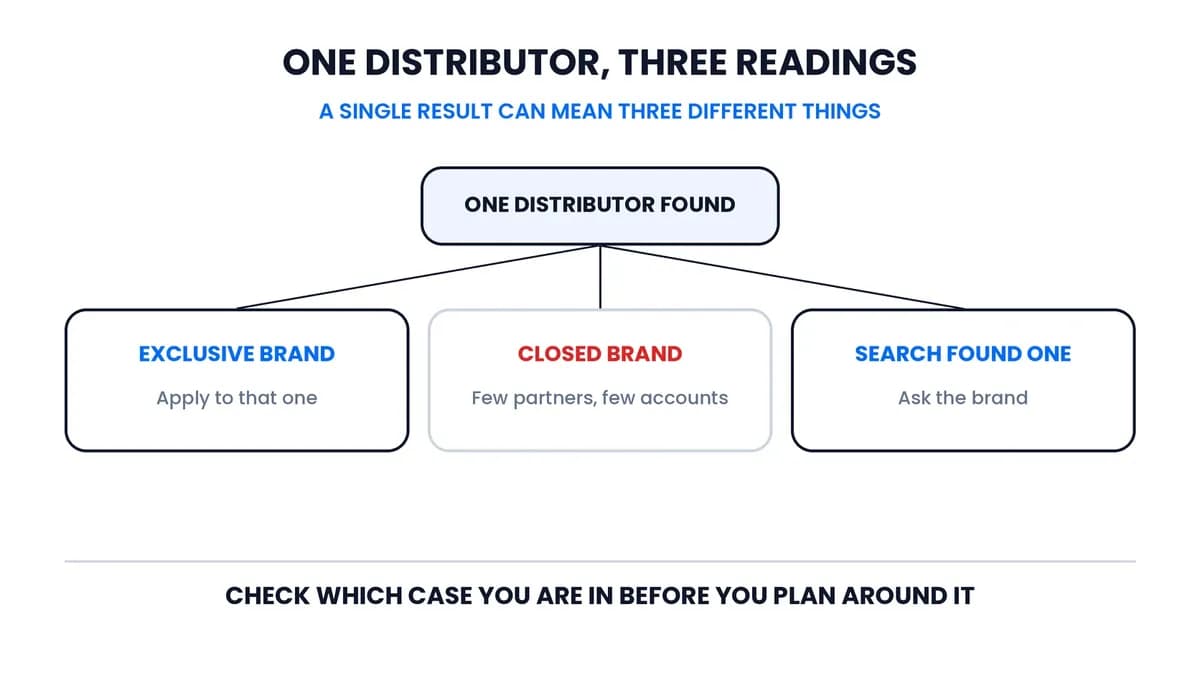
Let's say you look up a brand and find only one distributor. That can mean three different things, and each one calls for a different next step.
The first is that the brand really is exclusive. Every invoice that traces cleanly back to the brand then starts with that company, which matters wherever brand authorization gets checked. Getting approved there becomes your whole plan for the brand, because no second distributor can quote you.
The second is that the brand works with only a few partners, and you found the one willing to talk to online sellers. Getting in is still hard, but other partners may be worth asking. We list the signs in our post on why some products have no distributor for you.
The third is that your search simply missed the others. If you check a brand's authorized distributors in our network and see just one verified distributor, that tells you who is in our network today. The brand may have appointed more.
Four simple checks show you which case you're in:
- Look at the brand's website for a wholesale, trade or "where to buy" page. An exclusive brand often names one company there, or sends every trade question to it.
- Email the distributor and ask, "Are you the exclusive US distributor for this brand?" A company that really holds the rights has no reason to dodge the question.
- Ask the brand who its distributors are, using the steps in how to find the authorized distributors for any brand.
- Ask any other supplier offering the brand where they buy it. If they all name the same company, that company is most likely the exclusive one.
If the brand turns out not to be exclusive, your next job is finding out who else carries it.
Exclusive vs Non-Exclusive Distributor, and Where Selective Distribution Fits
Brands usually pick one of three setups:
- Non-exclusive distribution: many distributors, often several in the same region, all competing for your account.
- Selective distribution: a short list of distributors or stores that meet the brand's rules, such as having a physical shop or trained staff.
- Exclusive distribution: one distributor per area, and sometimes one for the whole country.
What makes a distributor exclusive is its contract with the brand, often called an exclusive distributor agreement. In it, the brand promises not to appoint a competing distributor in that area. We explain how these contracts work in What Is a Distributor Agreement? What It Means for Resellers. The FTC says a manufacturer may choose to use only dealers with exclusive territories.
You may also see the term "sole distributor." Often it means the same thing. Some contracts, though, use "sole" to mean the brand can still sell in that area itself, and "exclusive" to mean even the brand stays out. The contract's wording is what counts.
This setup is most common with international brands. Many pick one US importer to be their only distributor here, as we explain in how to find the US distributor for an international brand
How to Buy From a Brand With an Exclusive Distributor
There are two ways to buy a brand like this, and the right one depends on your size and what the distributor will accept.
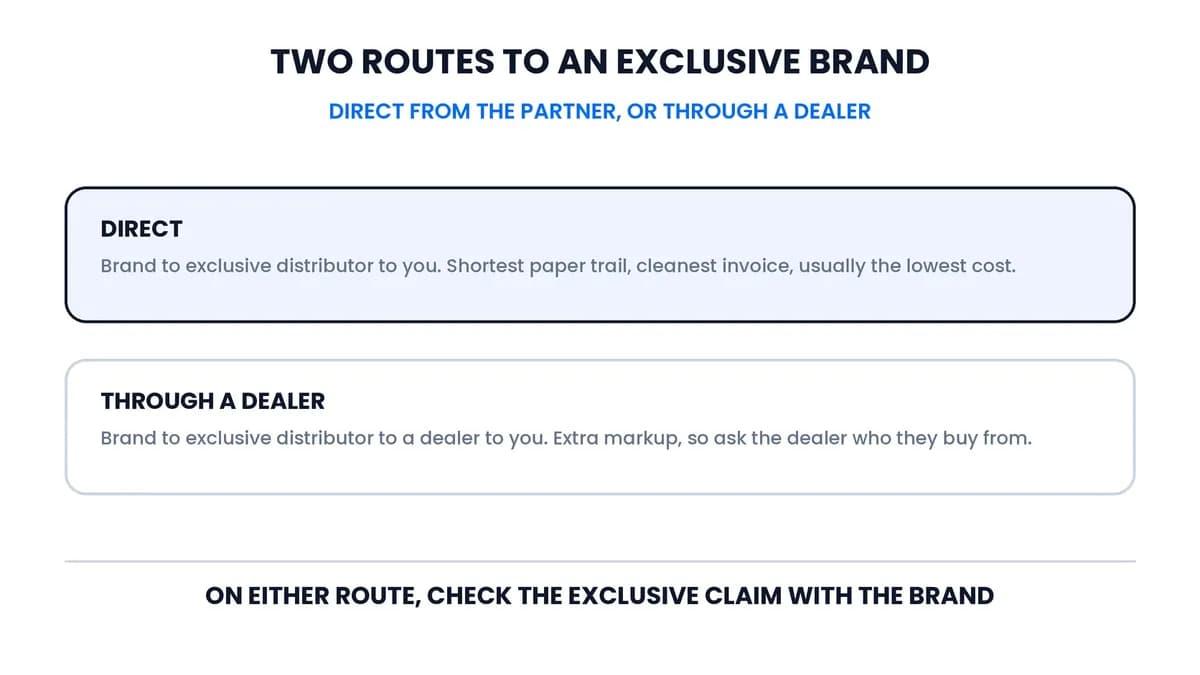
Route 1: Apply to the Distributor Directly
Buying direct gives you the cleanest invoice and usually the lowest cost. The hard part is that they don't need your business. No competitor is chasing your account, so they can be strict about who they approve, and many are careful with marketplace sellers. Send full documents and say plainly where you sell. If you're vague about selling online, the "no" only arrives later, after your first order.
Route 2: Buy From a Dealer That Buys From Them
If the distributor won't open an account for a business your size, a smaller dealer that buys from them may. You'll pay the dealer's markup on top. Before you order, ask the dealer in writing who they buy from. If they won't name it, don't buy, because without that name you can't show where the stock came from.
On either route, be wary of a supplier that calls itself the only source to justify a higher price. Check that claim with the brand before you pay extra. Most brands aren't exclusive, and for those, comparing saves money: search a product free and compare cost and stock from the distributors in our network that carry it, before you apply to any of them.
Can a Reseller Get Exclusivity?
Sometimes, though usually not as the brand's distributor. Becoming a brand's exclusive distributor means doing a distributor's job. You would commit to buying large amounts, keep stock for a whole area, sell to other stores and often help with the brand's marketing. A brand that already has distributors would have to rewrite those deals to give you the rights. For most resellers, it isn't the right goal.
The more realistic option is exclusive selling rights on one channel, such as a single marketplace. Some smaller brands, especially ones without much of an online presence, will agree to let one reseller be their only seller there. In return they'll want an accurate listing, steady stock, their pricing policy followed and a set minimum order.
If a brand offers you a deal like this, get these points in writing:
- Which channels and marketplaces it covers
- How long it lasts, and what ends it early, such as a missed minimum or a pricing breach
- Whether the brand still sells directly, and where
- What the brand will do about other sellers (it can stop supplying them, but it can't take back stock they already bought)
An exclusive deal ties you to the brand as much as it ties the brand to you. You take on the work of the whole channel, and if the brand ends the deal, you lose the line. Ask a lawyer to read any exclusivity contract before you sign it.
If You Sell on Amazon: An Exclusive Deal Doesn't Give You Brand Registry
Your contract with the brand doesn't change who holds Brand Registry. It stays with the trademark owner, as we explain in Brand Registry vs brand authorization. Before you sign, ask how the brand will deal with other sellers on the listing, and what access it will give you.
One Company to Win Over, Nobody to Compare
When a brand has an exclusive distributor, you have one company to win over and nobody to compare it with. Find that out before you plan your buying around price, and before you pay extra to a supplier for exclusivity it can't prove. If you can't find an authorized distributor for a product at all, submit a request and our team will look for one that carries it, with an answer within 30 days either way.
Frequently asked questions
01What are the three types of distribution?
02What is an example of exclusive distribution?
03How to become an exclusive distributor?
04What is the difference between exclusive and selective distribution?
The B2B SupplierHub Team
Wholesale & sourcing
Stop hunting suppliers by hand. Type a UPC instead.
B2B Supplier Hub shows the suppliers in our network carrying a product on one page: wholesale cost, stock, and retail price side by side. Free to search, no card required.