
B2B Supplier Hub
How to Find Who Distributes a Product (2026 Guide)
-1200x627.webp&w=3840&q=75)
Some products are on every retail shelf in the country and still impossible to trace to a supplier. No directory lists them. No search turns up a distributor. The shelf proves someone is moving the product at wholesale. Finding that someone is the problem. Most resellers give up here or overpay a middleman. Both cost more than they should, because the supplier isn't hiding. They're just not on the part of the internet you're searching.
Here's the playbook we use to trace a product's distribution when the searches come up empty, the signs that tell you a product genuinely can't be sourced, and at the end, a way to hand the whole hunt to someone else.
Why a Product Can Be Everywhere at Retail and Nowhere in Your Searches
Wholesale distribution runs on relationships, and most of it never makes it onto the searchable web. A regional distributor doing nine figures a year might have a website that hasn't changed since 2014, a catalog that exists only as a PDF in a sales rep's inbox, and no reason to care whether Google can find them. Their customers already know who they are.
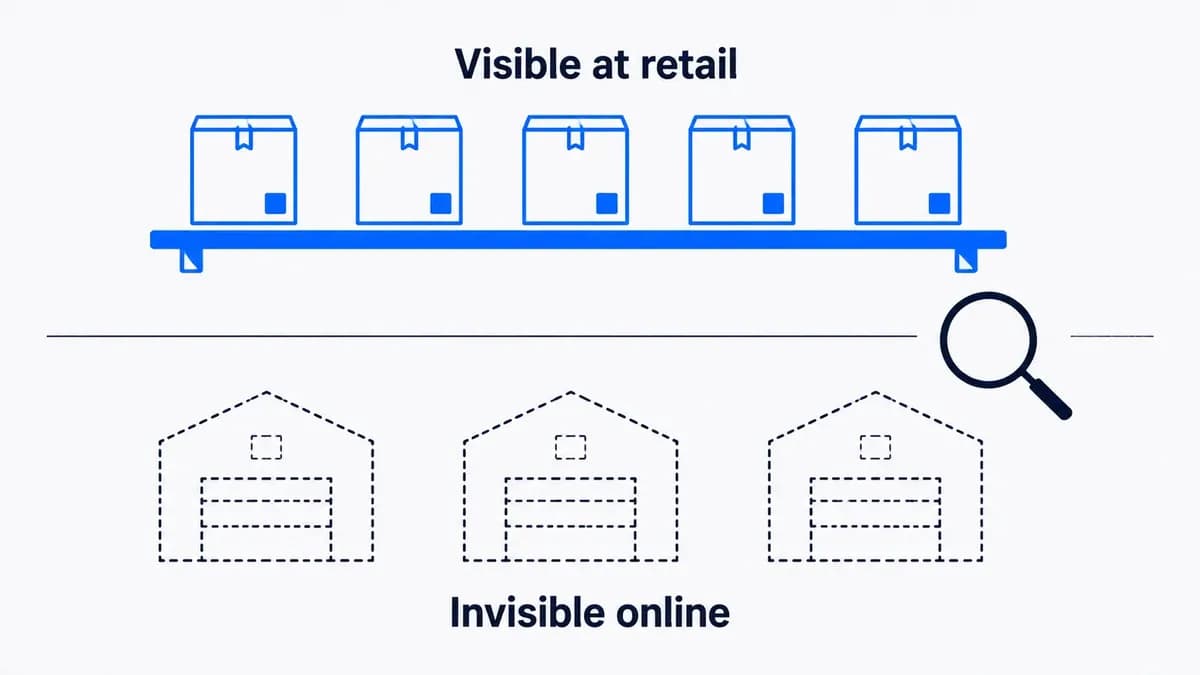
Brands make it worse on purpose. Many keep their distributor lists off the public web, because publishing them invites a flood of reseller inquiries from people they know nothing about. The private list is the filter.
So the fact that a product returns nothing in your searches tells you almost nothing about whether it can be sourced. It tells you the path runs through relationships and documents, not search results. The playbook below is how you walk that path.
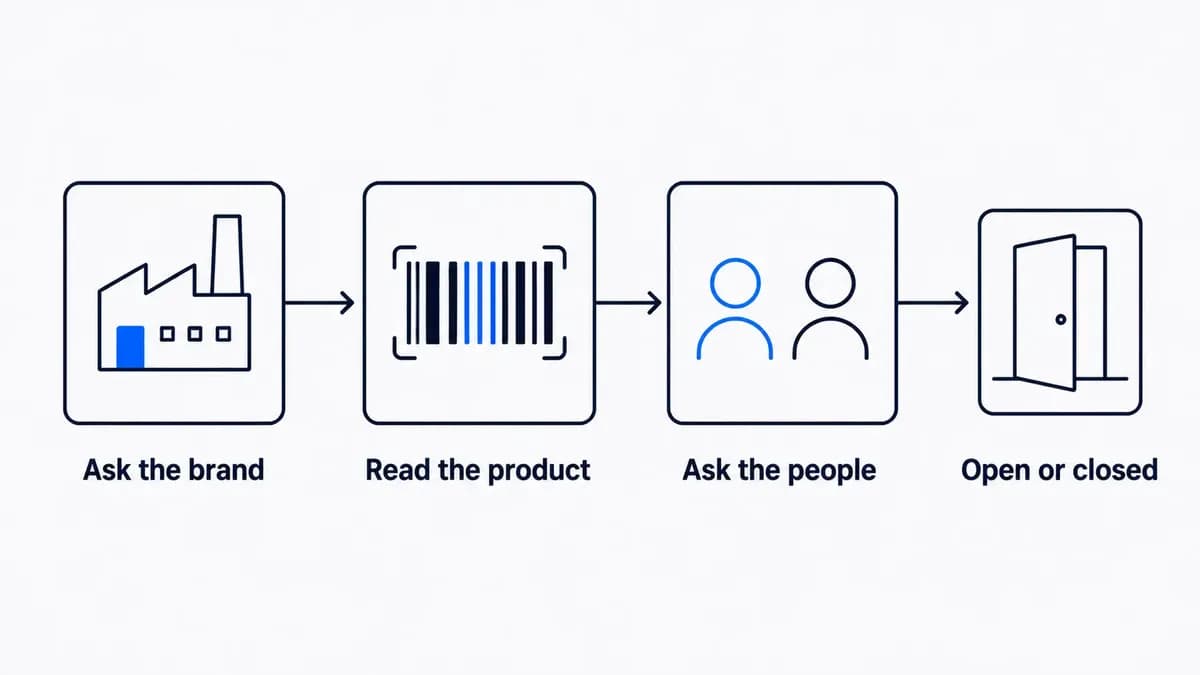
Step 1: Start From the Brand, Not the Product
The brand knows exactly who distributes its products. Your job is to get that answer out of them, and it's easier than most resellers assume. Start with the brand's own website but skip the consumer pages. Look for "Where to Buy," "Become a Dealer," "Wholesale Inquiries," or a dealer locator. A dealer locator is more useful than it looks: it's a map of the brand's distribution footprint. If the locator shows independent stores across the country, those stores are being supplied by someone, and that someone is who you're hunting.
If there's no useful page, email the brand's sales contact directly. The question that works: "I run a wholesale resale business and I'd like to carry your products. Which distributors serve my region?" Brands answer this more often than you'd expect, because routing resellers to distributors is literally what their distribution network is for. A non-answer is also information, and we'll come back to what it means in the closed distribution section.
Two supporting tactics belong inside this step rather than standing on their own. Trade show exhibitor lists stay online long after the show ends, and almost nobody uses them: search the major show in the product's category, filter exhibitors by that category, and cross-reference the distributor names against the brand's dealer footprint. And category trade associations publish member directories that include distributors who have no other web presence. Neither tactic finds the supplier by itself. Both give you names to test against what the brand told you.
For the fuller version of the brand-first method, we've written a dedicated step-by-step guide to finding the authorized distributors for any brand.
Step 2: Read the Product's Own Paper Trail
The product itself carries distribution evidence most resellers never look at.
Check the packaging, or photos of it, for a "distributed by" line. Plenty of products, especially in food, health, and imported goods, name the distributor right on the label because labeling rules often require it.
Use the UPC properly. A UPC's company prefix identifies the brand owner, and you can look it up in the GS1 database. Be clear about what this does and doesn't do: it will not hand you a distributor. What it does is tell you who to ask. That matters more than it sounds, because it catches the cases where the brand on the box is a white label and the real owner is a company you've never heard of, with a completely different distribution setup. Now your Step 1 email goes to the right company instead of a guess.
Then search the MPN, in quotes, combined with the words "distributor" or "wholesale." Part-number searches cut through the retail SEO noise that buries product-name searches. A distributor's stale product page, a dealer's price sheet PDF, a forum post from another reseller: any of these can surface a name that never appears in a normal search.
If you're running this trail on products, you already know sell, you're doing reverse sourcing, and it's worth doing systematically rather than one frustrating product at a time.
Step 3: Talk to the Layer That Already Moves the Product
When the documents run out, the answers live with people, and two kinds of people know exactly who distributes a product. The first is manufacturer's rep groups. Reps are independent agencies that sell a portfolio of brands into distributors and retailers across a territory. They sit between everyone in wholesale, which is why they know who carries what. They are easy to find once you know they exist, through rep association directories and brand websites that list "sales representatives" by region, and they will usually tell you who distributes a line, because connecting buyers to their brands is their whole business. This is the most underused tactic in the entire playbook.
The second is the retail channel that already stocks the product, and here you need honesty about the odds. A store owner has no obligation to hand you their supply chain, and if you look like tomorrow's price competition, they won't. This conversation works in a narrow case: when you genuinely operate in a different channel or region, when you're buying something from them anyway, and when you ask casually rather than extract. An independent shop owner who isn't threatened by you will often name their distributor without a second thought. A chain store employee never will. Know which conversation you're walking into and skip this tactic entirely if the honest answer is that you'd be competing with the person you're asking.
When the Answer Is Genuinely "You Can't": Closed Distribution
Some products cannot be sourced by you, no matter how well you hunt, and recognizing this early saves weeks.
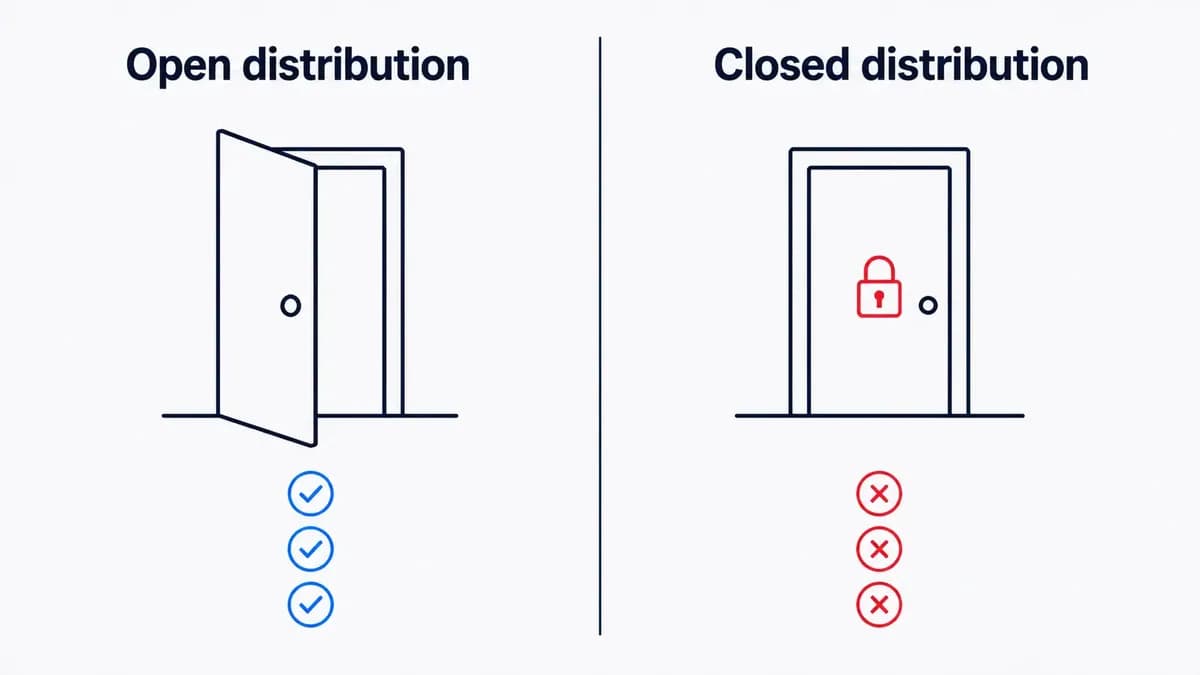
Closed distribution takes a few forms: brands that sell direct only, brands with exclusive distribution agreements locked to one partner, and authorized networks that aren't accepting new resellers in your category or channel. The signs show up early if you look for them. No dealer program page anywhere. Wholesale inquiries that route to a contact form and die. Distributor names that never surface in any of the steps above, for a product that's been at retail for years. A brand that answers your Step 1 email with "we're not adding partners at this time."
When you hit these signs, believe them. The alternative path that tempts resellers here is the gray market: buying from someone who isn't authorized to supply you. That path has its own serious costs, and we've covered exactly what they are and how to recognize what you're buying into.
A no is a real answer. Getting to it in two days instead of three weeks is a win, even when it doesn't feel like one.
Running the Hunt Yourself vs. Handing It Off
Everything above works. The honest cost is time: a full trace on one product takes anywhere from a couple of hours to a couple of weeks of on-and-off chasing, and it doesn't scale. Running this playbook on one product you're committed to is a good use of an operator's time. Running it on fifteen winners from last quarter is not.
That's the split worth being clear about. Do it yourself when it's one product you really believe in, when you want the relationships that come from the hunt, or when you simply enjoy the chase. Hand it off when it's a list, not a product.
Handing it off is what Sourcing Requests on B2B Supplier Hub exist for. If a product isn't in our network, submit a request and our team does the hunting: outreach, vetting, and onboarding a verified distributor who carries it. This is the same team that built Leverify, with ten years in wholesale distribution. You hear the outcome within 30 days, either way. If distribution is closed, we tell you that too.
Either way, the worst option is the one most resellers default to: giving up on a proven product because the supplier didn't show up on page one.
Sourcing Request submission is free on every plan. Submit your first request →
Frequently asked questions
01How do I find out who distributes a specific product?
02Why can't I find a wholesale supplier for a product that's sold everywhere?
03Can I ask a brand directly who their distributors are?
04Is it OK to buy from a middleman if I can't find the real distributor?
05What does closed distribution mean?
The B2B SupplierHub Team
Wholesale & sourcing
Stop hunting suppliers by hand. Type a UPC instead.
B2B Supplier Hub shows the suppliers in our network carrying a product on one page: wholesale cost, stock, and retail price side by side. Free to search, no card required.