
Wholesale Economics
Amazon Q1 Restock Planning for Wholesale Sellers
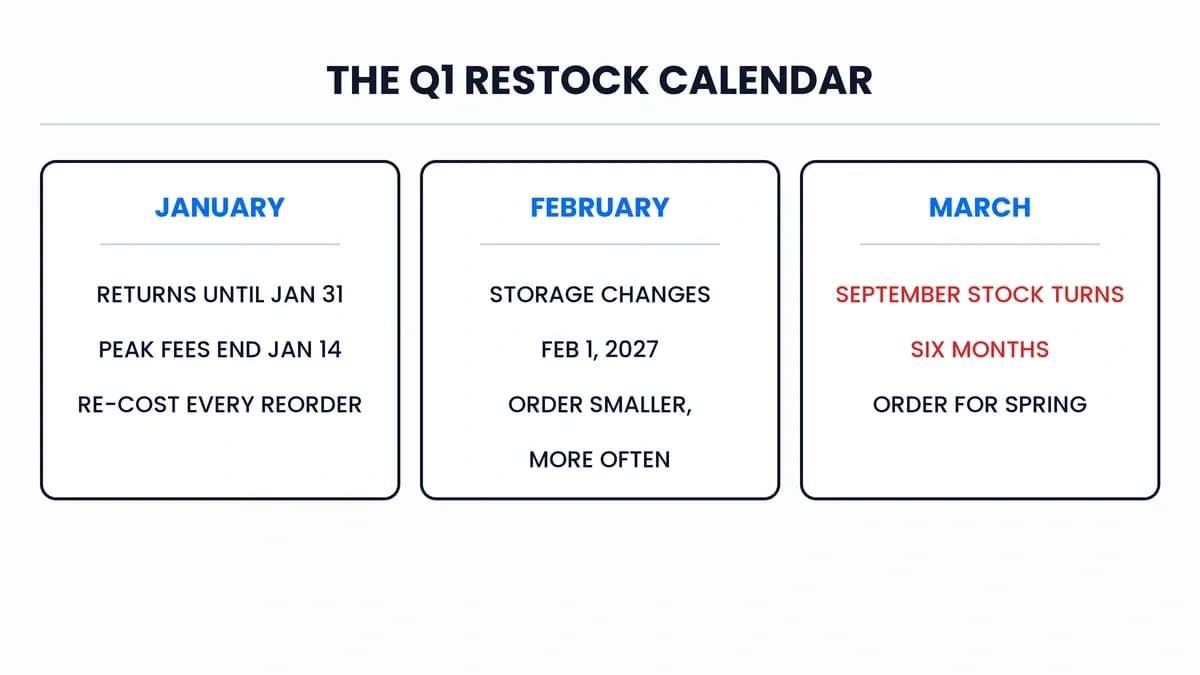
Q1 is when wholesale sellers find out what Q4 really left behind. Holiday returns keep arriving until January 31. Supplier prices can change. And sales drop from the December peak, all in the same few weeks. Amazon Q1 restock planning means ordering with all of that in view. The table below is the short version.
Month | What happens | What you order |
|---|---|---|
January | Returns come back, sales drop, some suppliers reset prices | Only proven sellers, after re-costing |
February | Amazon's 2027 storage changes start February 1 | Normal reorders on products that turn fast |
March | Stock bought in September nears six months old | Spring and Q2 products, and fix slow stock |
Below, we go through each month, then Amazon's restock limits and its 2027 fee changes.
Why January Sales Drop So Hard
The drop shows up in government data, not just your own reports. Look at the Census Bureau's monthly retail figures for nonstore retailers. That's the category that includes online sellers. Sales fell from $147,951 million in December 2025 to $109,039 million in January 2026. That's about 26% in one month, before seasonal adjustment.
Your own numbers won't match that. But if December was a big month for you, December's restock signals will look strong. Reorder in January at December's pace and you can end up with too much stock just as sales fall.
Returns add to it. Amazon told sellers that items bought between November 1 and December 31, 2026 "can be returned until January 31, 2027." Amazon says this "will apply every year," whether you use FBA or ship orders yourself. So some of what you sold in December comes back in January. Some of it goes back into your sellable stock.
January: Count What You Have Before You Order
Don't reorder from a December report. Start with what you actually have.
- Check sellable stock after returns. Look at what's come back and what's still on its way back.
- Work out weeks of cover at January's pace. Use the last two or three weeks, not December's average.
- List what didn't sell in Q4. Those units are now your oldest stock, and they'll cost more to store the longer they sit.
- Note when peak fulfillment fees end. Amazon's Holiday 2026 notice says holiday peak fulfillment fees apply "from October 15, 2026, to January 14, 2027."
Then reorder only the products that still sell at January's pace. If cash is tight after Q4, this is the month to protect it. Our post on the Q4 inventory budget covers what January cash looks like at different sell-through rates.
Re-Cost Every Reorder in January
Your costs can move in January too. Our wholesale buying calendar covers when supplier prices tend to change during the year. For restocking, one part matters. A product you've reordered for months can come back more expensive, and nothing in your process will flag it.
So before each January reorder, check the current cost against what you paid last time. Run the profit again at the new cost. If it no longer works, look for another supplier now, before the order ships.
Re-costing is quicker when you can compare suppliers on the same product. You can search a product free and see real cost and real stock from every verified distributor in our network that carries it.
Amazon Restock Limits in Q1
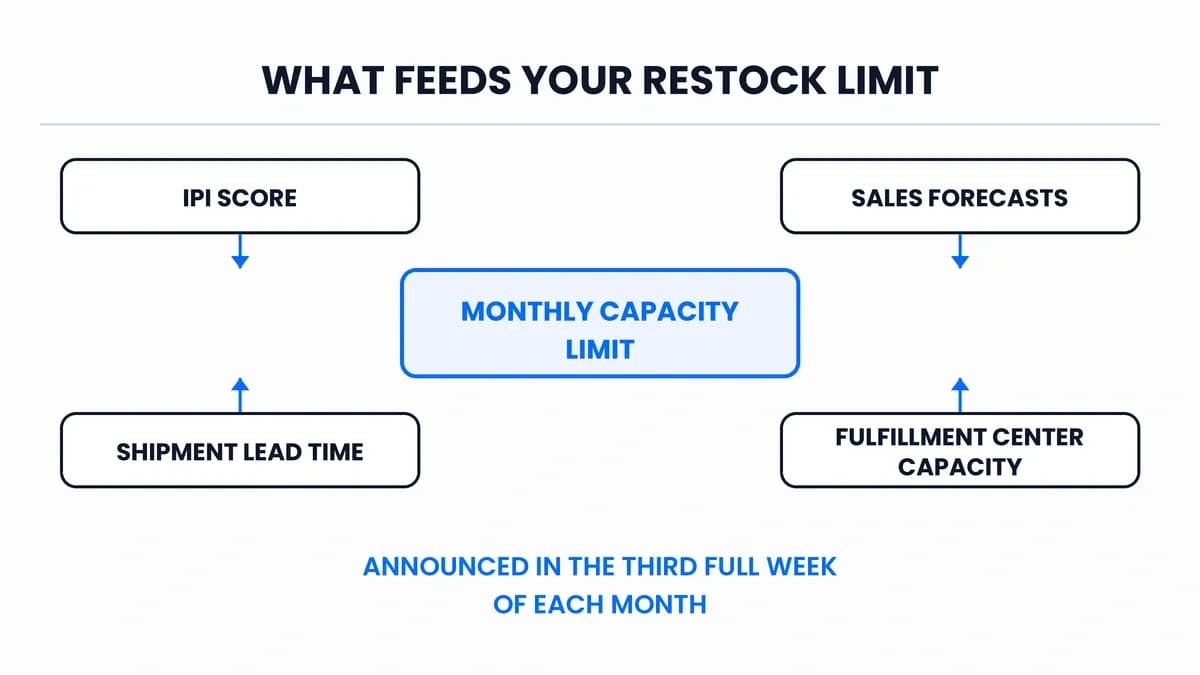
Amazon also limits how much stock you can send in. Since 2023, that's been one monthly capacity limit. Amazon's announcement of the system says limits are measured "in cubic feet (vs. number of units)." It also says "capacity limits for the upcoming month will be announced in the third full week of each month."
The same post says limits "are influenced by sellers' IPI scores, as well as other factors." It names those as "sales forecasts for their ASINs, shipment lead time, and fulfillment center capacity." IPI is your Inventory Performance Index. Amazon's FBA Inventory guide describes it as a score "which ranges from 0 to 1,000." It lists what helps the score: balanced stock against sales, avoiding excess and aged inventory, fixing listing issues and keeping popular products in stock.
That's why Q1 matters for the rest of the year. Unsold Q4 stock sitting into January can pull your IPI down. And your IPI is one input into how much Amazon lets you send later. So clearing slow stock in Q1 isn't only about storage fees.
For January planning, check your limit in the third full week of December. Amazon also gives estimated limits for the two months after that. If you need more space than you're given, Amazon's Capacity Manager lets you request it for a reservation fee you set.
February: Amazon's 2027 Fee Changes Land
Amazon announced its 2027 fee changes on November 5, 2026. Three parts of the 2027 fee update matter for Q1 restocking:
- Fulfillment fees rise. "On average, FBA fulfillment fees will increase by $0.19 per unit sold." Amazon says most changes take effect on January 15, 2027.
- The storage utilization surcharge goes. "Effective February 1, 2027, we'll eliminate the storage utilization surcharge." Amazon says this "will make it easier to stock up ahead of high-demand events."
- Aged inventory gets a single rate. Amazon will remove the aged inventory surcharge and "combine it with monthly storage fees into a single, age-based rate." Stock that turns in under six months gets "flat or lower fees." Aged stock pays more.
The new age-based rate card wasn't on that page when we checked. The page doesn't give it a separate start date either. So for now, plan on the direction. Fast-turning stock gets cheaper or stays flat, and slow stock gets more expensive. One more change from February 1: the low-inventory-level fee will only apply "when your inventory falls below 28 days of supply."
Put together, these changes reward ordering more often in smaller amounts. Keep enough stock to stay above 28 days of supply. But don't hold stock long enough for it to age.
The fee rise changes your profit too. Run your numbers again with the new fees before your February orders.
March: Watch Your Q4 Stock Age
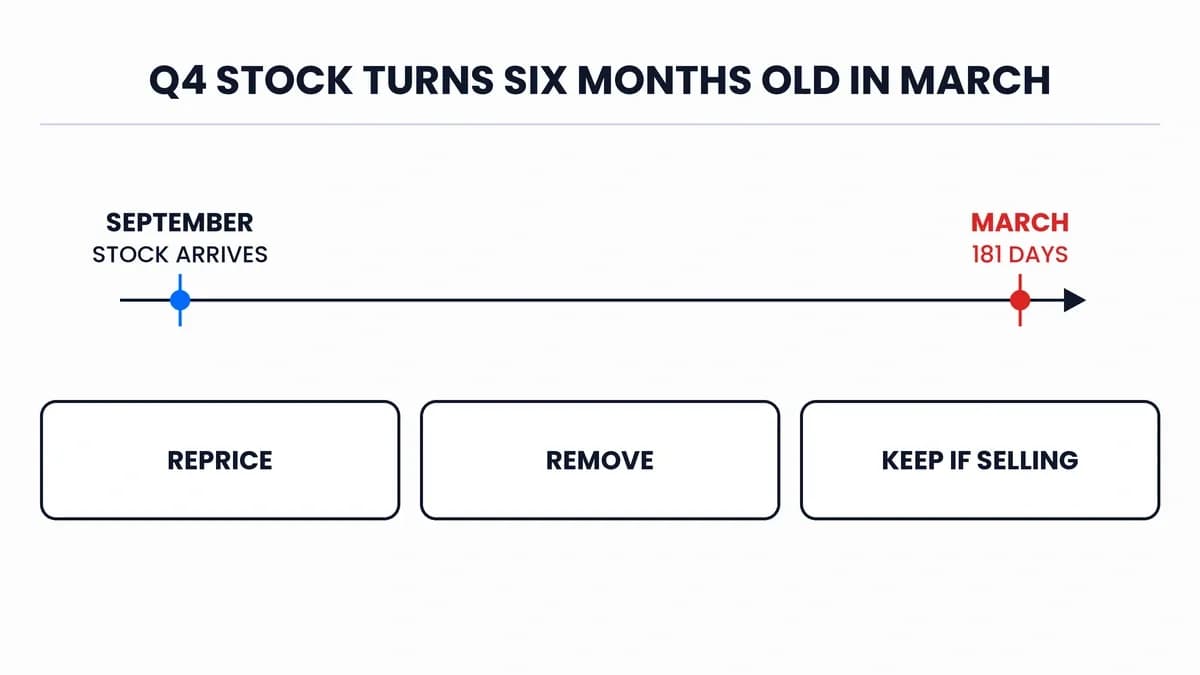
Stock that arrived at Amazon in September turns six months old in March. It's an easy date to miss.
Today, Amazon charges an aged inventory surcharge from 181 days. A post on Amazon's seller forums about aging inventory lists the rates from January 16, 2026. They start at "$0.50 per cubic foot" for 181 to 210 days and rise from there. Amazon plans to fold that surcharge into its new age-based storage rate. Either way, stock past six months costs you more each month it stays.
So in early March, pull a list of everything that arrived in September and hasn't sold through. For each product, decide: lower the price, create a removal order, or keep it if it's about to sell. Do it before the six-month mark.
March is also when you start ordering for spring and Q2. Size those orders on your January and February sales pace, not December's.
Amazon Q1 Restock Planning: The Takeaways
- Holiday purchases can be returned until January 31, 2027, so count stock after returns before you reorder.
- Reorder at January's pace, not December's.
- Re-cost every reorder in January, because supplier prices can change.
- Amazon sets monthly capacity limits, announced in the third full week of each month, and your IPI feeds them.
- Most FBA fee changes start January 15, 2027, with fulfillment fees up an average of $0.19 per unit.
- From February 1, 2027, the storage utilization surcharge ends. Aged stock moves to a single age-based storage rate.
- Stock that arrived in September turns six months old in March. Deal with it before then.
Plan Q1 Before December Ends
Do your Amazon Q1 restock planning in late December. Sales are still high then, so reorders look obvious. Set the January plan before the year ends, with returns, prices and the new fees in it. Then you won't be reordering off the wrong numbers.
Some products won't work at their old cost. If you need a new supplier for one, and nobody in our network carries it, you can Request a Supplier. Our team will look for one. Our Amazon wholesale roadmap covers how reordering fits into building the business.
Frequently asked questions
01How do Amazon restock limits work in Q1?
02When do Amazon holiday returns end?
03Should I reorder in January?
04What changes in Amazon fees in 2027?
The B2B SupplierHub Team
Wholesale & sourcing
Stop hunting suppliers by hand. Type a UPC instead.
B2B Supplier Hub shows the suppliers in our network carrying a product on one page: wholesale cost, stock, and retail price side by side. Free to search, no card required.