
Supplier Management
Questions to Ask a Wholesale Distributor Before Your First Order (Amazon Seller Guide)
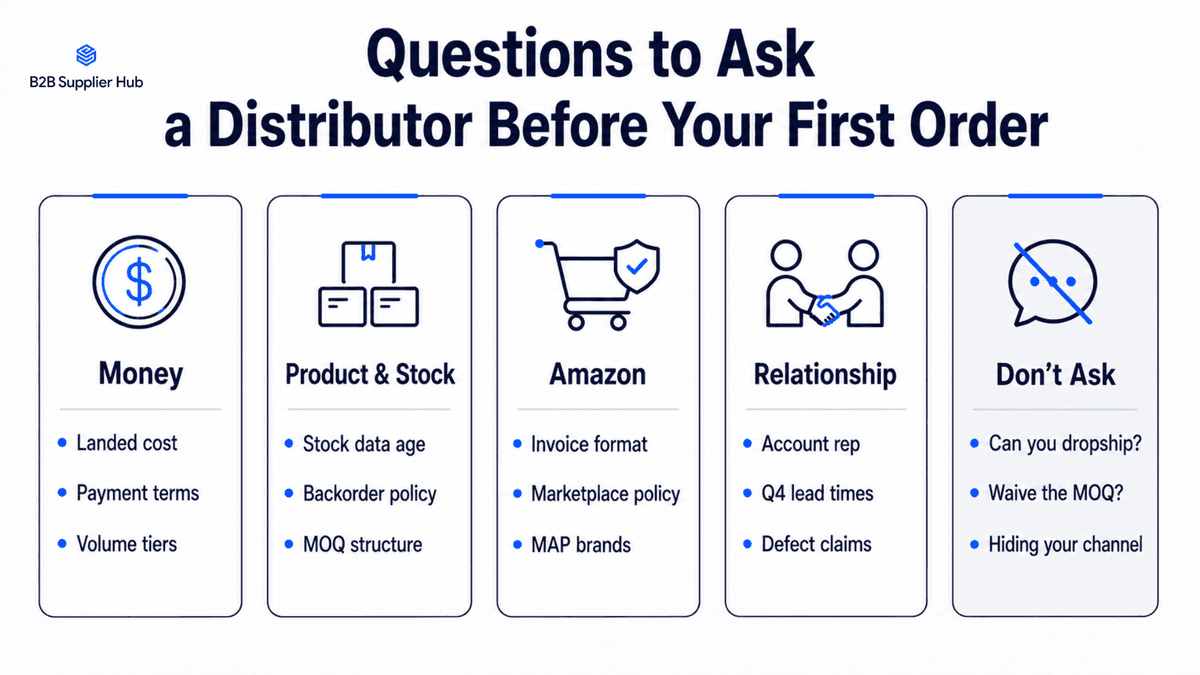
The first order with a new distributor is where sellers discover everything they should have asked about, usually after the money has moved. During that initial call, the rep is focused on securing your order, but your priority should be figuring out what it’s really like to work with this company. Taking just fifteen minutes to ask the right questions can save you from some costly surprises down the line.
This guide covers the questions that matter, organized by what each answer reveals. It assumes you have already verified the distributor is legitimate and authorized. If you have not done that yet, start with how to verify a supplier before wiring money, and come back.
Why Your First Distributor Conversation Reveals More Than Any Price Sheet
The price sheet lays out the cost of each unit, but the real story comes from the conversation, which reveals the true cost of the relationship. Each question you ask provides two insights: the answer itself and the way they respond—how fast, how detailed, and how comfortable they feel discussing it.
If a distributor answers cost and stock questions in plain numbers on the first call, you can generally expect that same transparency when issues arise with shipments. On the flip side, if they are vague about freight charges or invoice specifics while trying to win your business, don’t expect them to suddenly become clear once they have secured your business.
Take notes on both.
Pricing and Cost Questions to Ask a Wholesale Distributor
What Is My Total Landed Cost per Unit, Including All Fees and Shipping?
It’s a good idea to ask them to break down an example order for you: the unit cost, freight charges, any fuel surcharges, small-order fees, and handling costs. Some distributors might quote a low unit price but make up for it with hidden fees. Understanding this will help you see if the sheet price is the true cost and if they are used to buyers who do their homework.
What Payment Terms Do You Offer New Accounts and How Do They Improve Over Time?
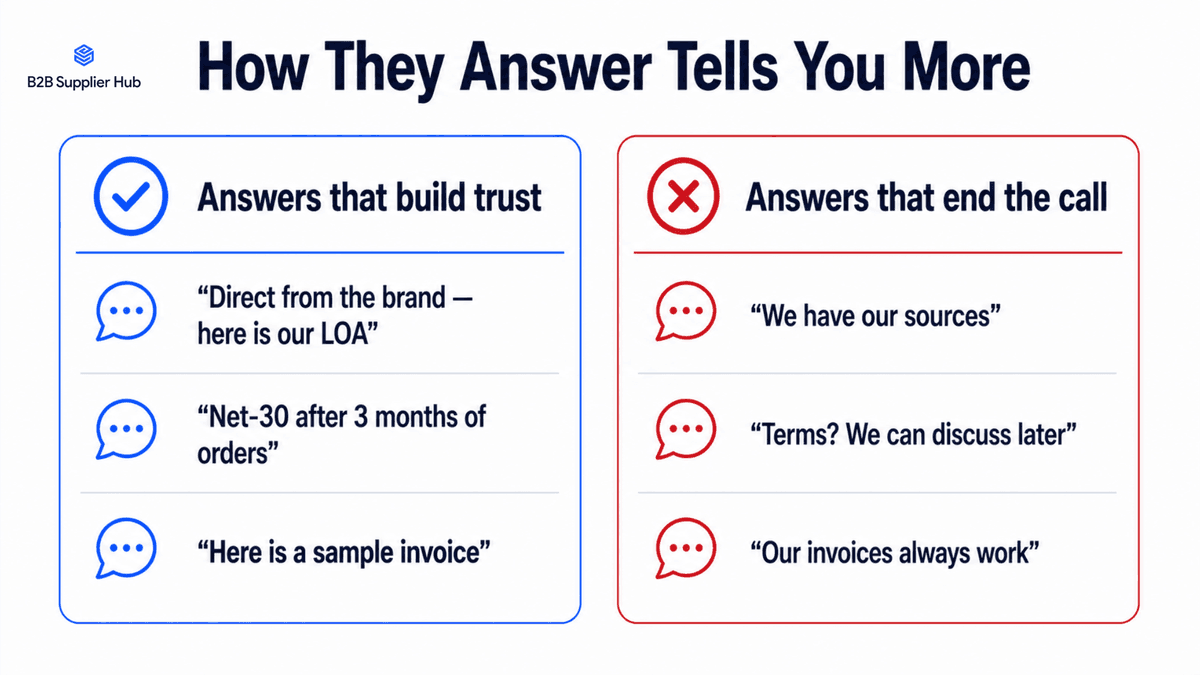
Most distributors will start new accounts on a prepayment or credit card basis, which is pretty normal. The key question is what it takes to unlock better terms: “After how many orders or what monthly volume would you consider offering Net-30?” This will give you insight into whether there’s a pathway to better terms and how they evaluate your account.
Remember, terms are crucial for working capital. A distributor with a slightly higher unit cost but offering Net-30 can be more advantageous than a cheaper one that requires upfront payment.
How Does Volume Pricing Work and at What Order Thresholds Does It Apply?
Ask about where the tier breaks are and what monthly or quarterly volume is needed to move you up a tier. This will reveal whether your growth with them is rewarded and how much flexibility there is in the price you were quoted. At this stage, you’re not negotiating yet; you’re just gathering information for when you do.
How and How Far in Advance Are Price Changes Communicated?
Some distributors will send updated price sheets with a two-week notice, while others might just invoice you at the new price. Knowing this will help you understand if you’ll be informed about a price increase before it impacts your margins on a live listing.
Can I pay the first order by credit card or ACH?
When you're placing an order with a new supplier for the first time, it's wise to choose a payment method that offers some recourse. A distributor who insists on a wire for the very first transaction is not automatically a problem, but it removes your safety net, and how you pay decides whether a first-order mistake is recoverable.
The caution is not theoretical: 74% of US organizations were hit by business email compromise attempts in 2025, according to the Association for Financial Professionals' 2026 Payments Fraud Survey, and the FBI logged over $3 billion in reported BEC losses in its latest Internet Crime Report. The classic version in wholesale is a fake "our bank details changed" email right before you pay. If bank details ever change, confirm by phone on a number you already have.
Inventory and Stock Availability Questions to Ask Before Ordering
How Current Is Your Stock Data, and How Often Is It Updated?
Is it a live feed, updated daily, or just a weekly export? Understanding this is crucial because it tells you how much you can rely on those numbers before making a commitment. A "500 in stock" figure that was accurate last Tuesday can lead to backorders if you're not careful.
What Happens to My Order When an Item Goes Out of Stock After I've Placed It?
Do they backorder it and ship it when it becomes available, send part of the order, or just cancel that line altogether? Is there a way to set a preference for how this is handled? This information is key because it shows whether a stockout on their end is something they manage proactively or if it catches you off guard during the busy Q4 season.
Is the Minimum Order Quantity Applied Per SKU or Across the Whole Order?
A $500 order minimum is very different from 50 units per SKU. What the answer reveals: how much capital gets locked into each product when you test it, which decides how many products you can afford to test.
Where Does Your Inventory Come From and Are You an Authorized Source for All Brands You Carry?
Direct from the brand, or through another distributor? A legitimate distributor names its source without hesitation. Second-hand supply means second-hand invoices, and it puts you closer to gray market territory than you want to be. Vague answers here end the conversation.
The Amazon-Specific Questions Most Wholesale Sellers Never Think to Ask
This is the section that separates sellers who have been burned from sellers who are about to be.
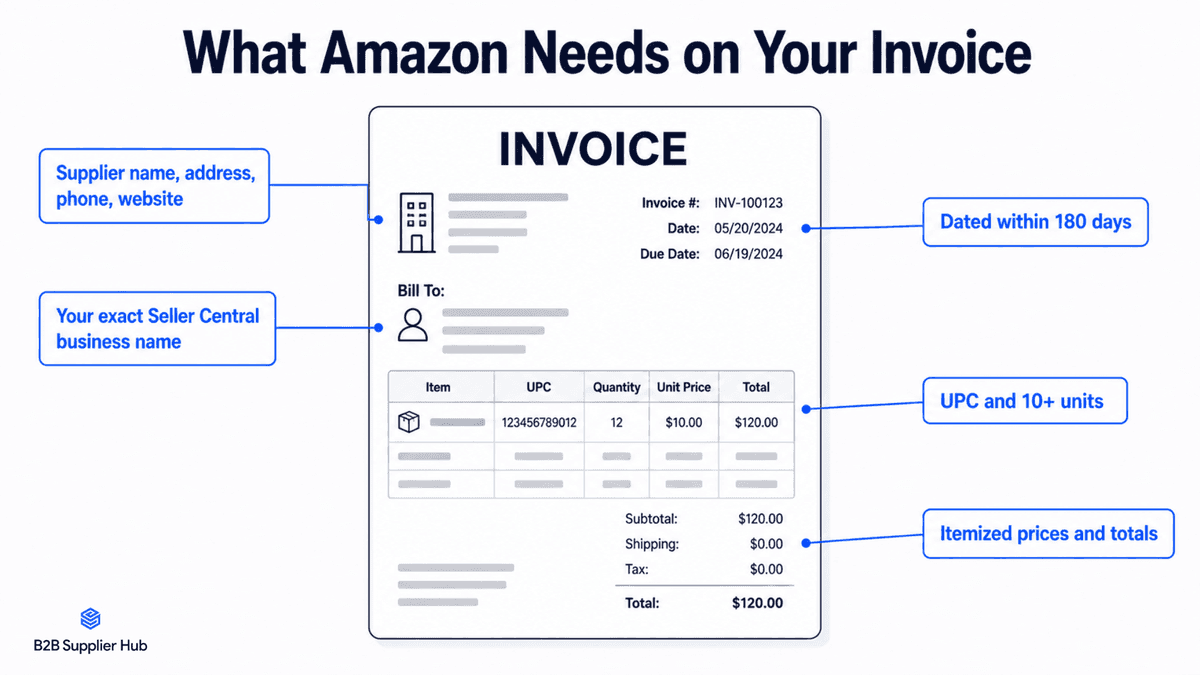
What Exactly Appears on Your Invoices, and Will They Pass Amazon's Review Requirements?
You need the distributor's legal business name and address, your business name exactly as it appears in Seller Central, itemized products with UPC or EAN, quantities, and dates. Amazon's documentation requirements are specific: for approvals, invoices generally must be dated within 180 days (some categories require 90), show at least 10 units of the product, and include the supplier's complete contact information.
Keep in mind that Amazon's reviewers will reach out to suppliers to confirm that the invoices are legitimate. If a supplier doesn’t have a website or has an unreachable phone number, that could be a red flag, even if the invoice itself is valid. It’s a good idea to ask for a sample invoice before placing your order. This will give you insight into whether their paperwork can pass Amazon's scrutiny, because having a genuine product paired with a weak invoice is still an approval problem.
Do You Have a Policy on Amazon or Marketplace Sellers and Will It Restrict My Account?
Some distributors are open to Amazon sellers, while others limit certain brands to physical stores only. Then there are those who might say yes during a call but later enforce a restricted brand list at checkout. It’s best to ask directly and request the restricted list if it exists. The response you get will show you which parts of their catalog are truly available to you.
Which Brands in Your Catalog Have MAP Policies and Where Can I Find Them?
It’s important to know the pricing floor before you start calculating margins, because any margin figured below MAP is just wishful thinking. A distributor who is well-versed in their MAP brands is likely one that maintains good communication with those brands, and that’s a positive sign.
For Gated or Restricted Brands, Can You Provide Written Authorization to Support My Amazon Application?
If a brand requires a Letter of Authorization or the brand's confirmation for Amazon, ask whether the distributor can facilitate that, or confirm you are buying from an authorized source that the brand will vouch for. Simply saying, "Our invoices always work," isn’t sufficient. You need proper documentation.
Logistics, Lead Time, and Account Management Questions to Ask Your Distributor
Who Manages My Account Day-to-Day After the Initial Onboarding Call?
Is it a dedicated representative, or will I be placed in a support queue? Both options have their merits, but it’s important to know who will be there when 200 units show up damaged. The answer will give you insight into how problem resolution is handled.
What Is Your Actual Lead Time and How Does It Change During Peak Seasons Like Q4?
Get the normal order-to-ship window, then ask how it moved last October through December. What the answer reveals: whether their fulfillment can keep up with seasonal demands or if it falters just when your sales are at their highest.
Where Do You Ship From and How Does That Affect My Delivery Timeline and Costs?
The location of your warehouses plays a big role in determining freight costs and transit times to your prep center or FBA. A distributor that’s just two zones closer can quietly beat a cheaper option when it comes to the total landed cost.
What Is Your Returns and Claims Policy for Defective or Damaged Shipments?
Ask about the claim window, any photo requirements, and whether you’ll receive credit or a replacement. What the answer reveals: whether a bad carton is a five-minute email or a three-week dispute.
Questions You Should Never Ask a Distributor on the First Call (And Why They Backfire)
The questions above make you look like an operator. A few questions do the opposite, and distributors screen them.
Do not open with "Can you dropship for me?" Do not ask them to waive the MOQ before you have placed a single order. Do not ask, "What is your best seller?" and expect them to build your business model. And do not hide that you sell on Amazon; distributors find out, and the account rarely survives the discovery. Sellers get approved by looking like a professional account worth having, and distributors are evaluating you on that first call, too.
How to Research a Wholesale Distributor Before You Ever Pick Up the Phone
Everything in this guide works. But it means a fifteen-minute call with every distributor, and half of it (cost and stock) should not need a phone call.
B2B Supplier Hub fixes that part. Search any product by UPC, name, MPN, or keyword and see real wholesale prices and live stock side by side before you reach out. Save the call for what only a conversation can answer: terms, policies, and what the supplier is like to work with.
Building for wholesale buyers and resellers in the US. Waitlist open at b2bsupplierhub.com.
Frequently asked questions
01What Questions Should I Ask a Wholesale Distributor Before Placing My First Order on Amazon?
02How Do I Verify a Wholesale Distributor Is Legitimate Before I Contact Them?
03What Payment Terms Can a New Amazon Seller Realistically Expect from a Wholesale Distributor?
04Should I Tell a Wholesale Distributor I Sell on Amazon—or Will It Hurt My Chances?
The B2B SupplierHub Team
Wholesale & sourcing
Stop hunting suppliers by hand. Type a UPC instead.
B2B Supplier Hub shows the suppliers in our network carrying a product on one page: wholesale cost, stock, and retail price side by side. Free to search, no card required.