
B2B Supplier Hub
Why Your Sourcing Request Gets Ignored (and How to Fix It)
Silence is the most common answer to a sourcing request. Think about what happens on the other side. Someone opens your request, reads it, and can't tell which exact product you mean. They're not going to spend a week guessing. They move on to the requests they can actually work with, and yours waits. You never get a rejection email. You just get silence, and you never find out why.
This happens everywhere, not just on sourcing platforms. It happens when you email a brand asking who distributes their products. It happens when you hand a research task to your VA. The quality of your ask decides the quality of your answer, every single time.
The good news is that writing a request that gets worked right away takes about five minutes. Here's what goes in, what stays out, and why each piece matters.
Why Vague Requests Sit
A sourcing request is really just a search instruction. Someone is going to take what you wrote and go looking. So everything you leave out becomes something they have to guess.
Take a request like "kitchen scales, good margin potential." Before the search even starts, the person working it has to guess four things: which scale, which version, how many you want, and what price would actually work for you. Every guess is a chance to spend days hunting the wrong thing. So, the vague requests wait, and the clear ones get worked first. The easiest way to see the difference is to look at the same request written twice.
The Same Request, Written Twice
Request A:
Looking for a supplier for kitchen scales, the digital kind that's selling well right now. Need good pricing. This is urgent.
Request B:
Product: digital kitchen scale, UPC 012345678905, silver, single unit pack. Reference listing: [link]. Target quantity: 200 to 300 units to start. Target cost: $8.50 or under. I sell on my own site and eBay, shipping from the East Coast.
Request A can't be worked. "Kitchen scales" covers hundreds of models. "Selling well right now" describes half of them. "Good pricing" means nothing without a number. Whoever picks this up has to write back and ask for everything Request B already gave, and every one of those emails adds days.
Request B starts the hunt in the first minute. The UPC names one exact product. The link confirms it. The quantity shows which kind of distributor fits. The target cost shows whether the search is even worth running. Same product, same person asking, completely different outcome.
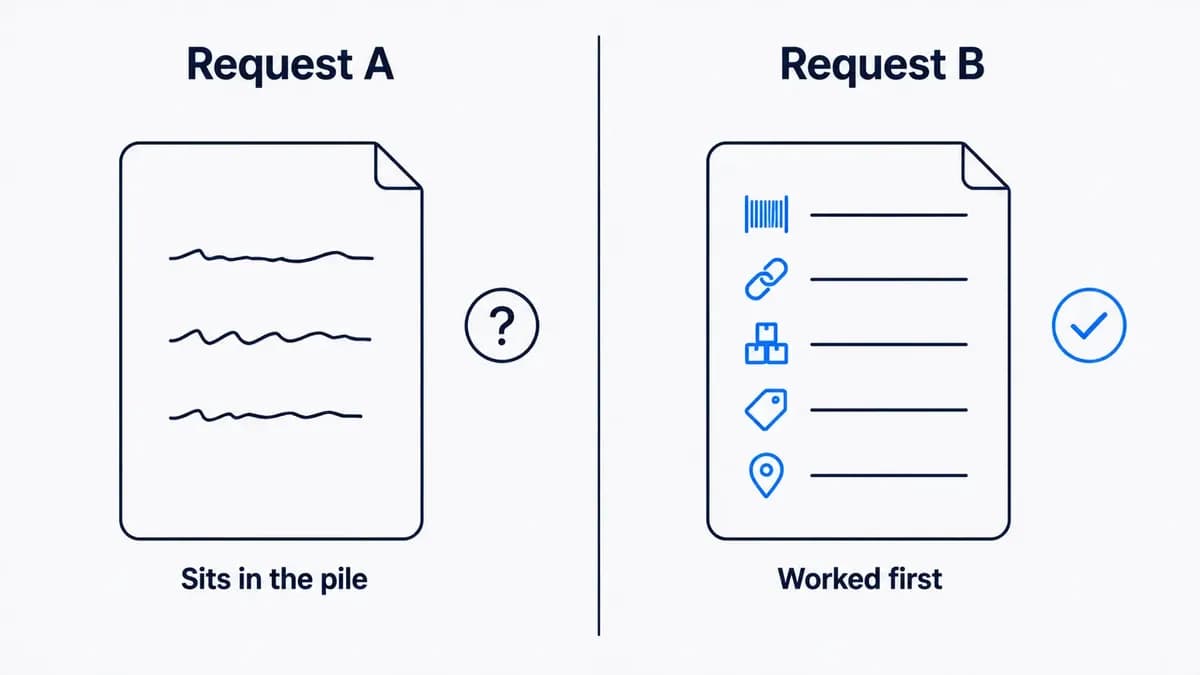
Everything in the rest of this post is just Request B, explained piece by piece.
What to Include in a Sourcing Request: The Exact Product
When it comes to identifying the product, the order is simple: UPC first, MPN second, product name last. A UPC is twelve digits that match exactly one product, in one variant, in one pack size. A product name matches a hundred things that look like it. When you give a UPC, nobody has to email you to confirm which product you mean, and that confirmation step is where the first week usually disappears.
If you can't find the UPC, the MPN, the manufacturer's part number, works almost as well. Both usually sit on the product listing, on the packaging, or in photos of the packaging. And if a name is truly all you have, at least add the brand, the model, and the variant details like size, color, and pack count. A small line like "the 3-pack, not the single" can save someone from ordering the wrong thing entirely.
Then add a link to the exact listing you want to match. One live link answers several questions at once: the exact variant, the current retail price, the pack setup, even the correct brand spelling. Just make sure you link the listing you actually mean, not one that looks similar, because the search will match whatever you linked.
One more note here. If you're doing this for products that already sell, you're doing reverse sourcing, and this same discipline applies whether you're asking a platform, a brand, or your own researcher. And if you want to run the hunt yourself first, we wrote a full playbook on how to find who distributes a product.
Be Honest About Quantity and Price
These two numbers do more work than everything else in your request combined. Your quantity tells the search which doors to knock on. A buyer who wants 50 units and a buyer who wants 5,000 units need completely different distributors, and pointing the hunt at the wrong tier wastes it. So, give a realistic range for your first order, not your dream number. Inflating your quantity to look serious backfires in the worst possible way: the truth comes out at ordering time, after all the work is done, in front of the exact supplier you wanted a relationship with.
Your target cost works differently. It's a filter, not a negotiation. It tells the sourcing side right away whether the economics can work, before anyone spends a week finding out. If the product wholesales nowhere near your number, you want to hear that on day one, not day twenty.
One thing to keep straight: a target is a target. Writing "$8.50 or under" doesn't mean the supplier who turns up will hit that number. It means nobody wastes time chasing suppliers who never could.
Add the Context That Changes the Search
A few optional lines can reroute a hunt entirely, so include them when they apply. Where you sell. Some distributors care which channels their products end up in. Knowing your channel upfront avoids finding you a supplier who won't sell to it.
Where you are. Shipping origin matters for freight math, and some distributors only serve certain regions. When you need it. If the product is seasonal and your window closes in ten weeks, say so. A supplier found in week twelve isn't a result. Who you've already tried. If you applied somewhere and got rejected, one line about it stops the search from knocking on the same door twice.
What authorization you hold. If you're already approved with a brand or carry related lines, that changes which suppliers make sense for you. None of these are required. All of them shorten the search when they apply.
What to Leave Out
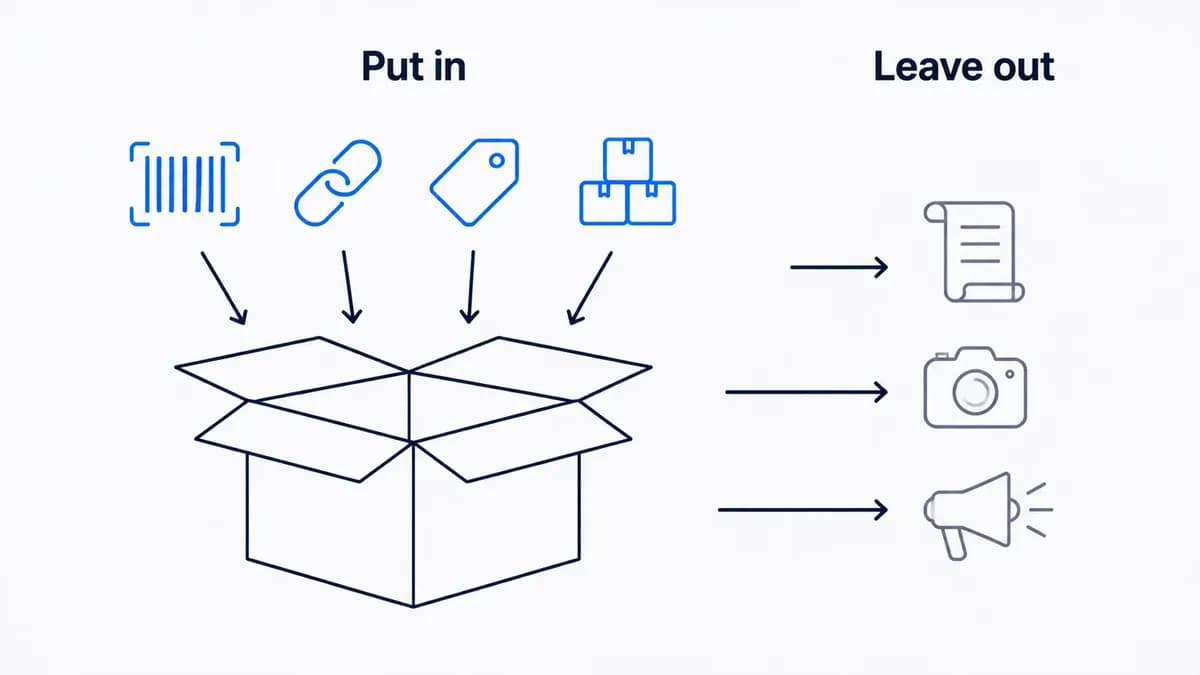
Most people get this part backwards. They assume a longer request looks more serious. It's the opposite. A tight request signals a serious operator. A bloated one signals homework being outsourced. So, leave out your business story. The search doesn't need your journey. It needs the product. Leave out screenshots of your revenue. Nobody working a sourcing request is verifying you. Numbers about the product help. Numbers about you don't.
Leave out the other four products. Each product is its own hunt with its own distributors, so bundling five into one request guarantees the whole thing moves at the speed of the hardest one. One request, one product. Submit the rest separately and let each run at its own pace. And leave out the pressure words. "Urgent" and "ASAP" add noise, not information. A real deadline with a real date is useful. Urgency without a date is just tone.
After You Hit Submit
A request written this way changes what happens next. On B2B Supplier Hub, a Sourcing Request written like Request B is exactly what our team hopes to open. The product is pinned down, the numbers are honest, the context is there. That means less back-and-forth before the hunting starts, and the hunting is the part that takes real time: outreach, vetting, and working to onboard a verified distributor who carries your product.
Either way, you'll know where you stand within 30 days. If a distributor joins, the product shows up in your search with full numbers. If distribution turns out to be closed, we tell you that too, and you move your capital to a product that can be sourced. Five minutes of writing a sharp request. Thirty days to a real answer. That's a better trade than most sourcing work ever offers.
Submitting is free on every plan. Submit a request →
Frequently asked questions
01What should I include in a supplier sourcing request?
02What if I don't know the UPC?
03Should I tell a supplier my target price?
04How many products should I put in one sourcing request?
The B2B SupplierHub Team
Wholesale & sourcing
Stop hunting suppliers by hand. Type a UPC instead.
B2B Supplier Hub shows the suppliers in our network carrying a product on one page: wholesale cost, stock, and retail price side by side. Free to search, no card required.