
Sourcing
7 Wholesale Supplier Scams Targeting Amazon Sellers in 2026
Supplier scams used to be easy to spot. Bad grammar, no website, prices that made no sense. If you had common sense, you were mostly safe.
That's over. The scams targeting Amazon sellers in 2026 have professional websites, warehouse photos, sample invoices, and sales reps who pick up the phone. Building a convincing fake business has never been cheaper, and the people doing it know exactly how wholesale sellers think. Worse, the most expensive scam on this list doesn't involve a fake supplier at all. It starts after you've found a real one.
In this blog, we are sharing 7 scams doing the most damage right now. They are listed in the order they'll come at you: some catch you while you're still searching, some when you start talking, some when you pay, and some after your business is already running. For each scam, we'll show you how it works, the warning sign that gives it away, and how to protect yourself.
Quick note: this is operator experience, not legal advice.
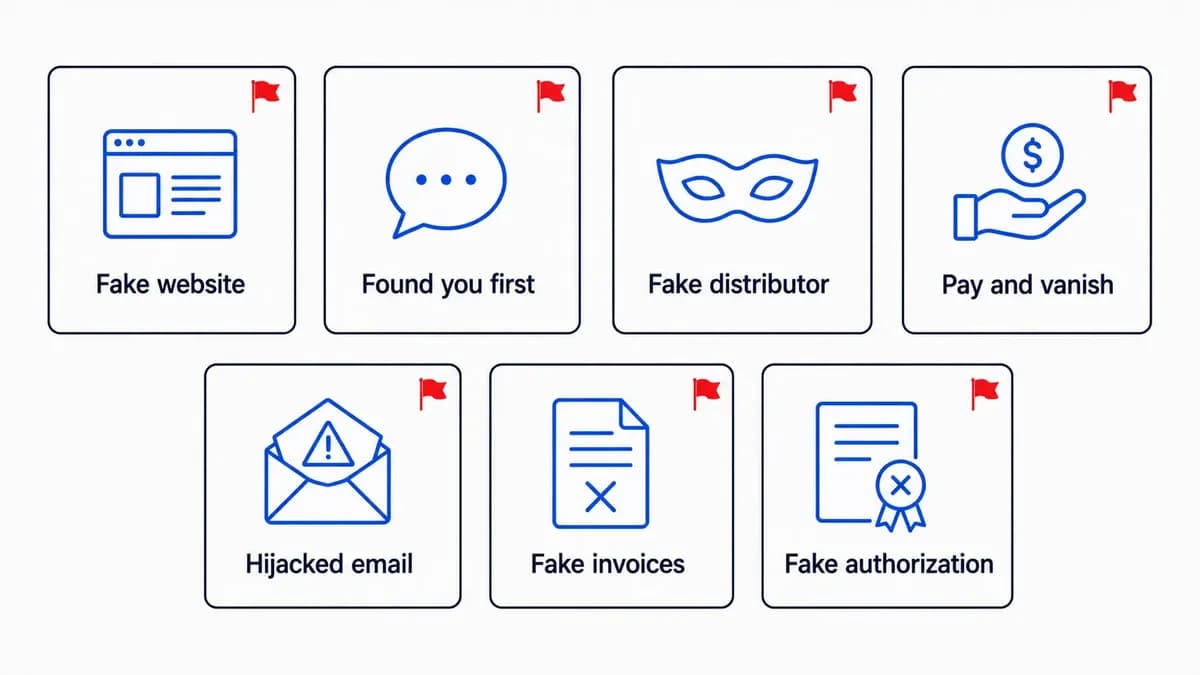
1. The Fake Distributor Website
How It Works
Someone builds a complete wholesale company that doesn't exist. The website looks professional, the catalog is full of brand names, and there's a warehouse address that checks out on Google Maps. The trick is that the address usually belongs to someone else, often a real logistics building where no such company rents space. You apply for an account, get approved fast, place an order, and the products never come.
The Warning Sign
The business doesn't exist on paper. Real distributors are registered companies. Search the company name on the Secretary of State website for their state. If nothing comes up, or the registration is three months old for a company claiming ten years in business, you have your answer. Also call the building at their address and ask if the company is actually there. It takes five minutes and scammers count on nobody doing it.
How to Protect Yourself
Run every new supplier through a real verification before your first dollar. We wrote the full checklist on how to verify a wholesale supplier before you wire money.
2. The Supplier Who Found You
How It Works
A "distributor" message you first. Maybe a DM on Instagram or TikTok, maybe a comment in a seller Facebook group, maybe a cold email that quickly asks to continue the chat on WhatsApp or Telegram. They have great prices, big brand names, and they're very friendly.
Stop and think about that for a second. Real distributors have retail customers lining up and application forms on their websites. They don't need to hunt for buyers in your DMs. The ones who do are either selling fakes or selling nothing.
The Warning Sign
The venue. If a supplier wants to move your conversation to WhatsApp or Telegram, walk away. Chat apps leave no business record, no paper trail, and no way to get your money back. There's no honest reason a US distributor needs to invoice you through a messaging app.
How to Protect Yourself
Just keep in mind this simple rule. You find suppliers, suppliers don't find you. And every conversation happens on a company email at the company's own domain, or it doesn't happen.
3. The Middleman in a Distributor Costume
How It Works
This one isn't always theft, which is why it catches so many people. It's a company that calls itself a distributor but doesn't actually distribute anything. Some charge a monthly "membership fee" just to see their catalog. Some sell you "exclusive supplier lists" that are built from free public information. Some really do ship products, but they're just buying from the actual distributor and marking it up before it reaches you.
In every version, the same thing is true: you're paying for access, not product. Real wholesalers make their money selling goods in bulk. If a company's main product seems to be the door fee, the door leads nowhere.
The Warning Sign
Ask which brands they hold direct accounts with, and watch what happens. A real distributor answers instantly, because those relationships are their whole business. A middleman gets vague. The other sign is in the numbers: if their "wholesale" price leaves you no room against the retail price, they're not the source. They're standing between you and the source.
How to Protect Yourself
Check the numbers before anything else. A supplier whose prices can't possibly work is answering your question for you.
4. The Prepay-and-Vanish
How It Works
The oldest one here, still running because it still works. You place an order, and suddenly there's a reason you need to pay the full amount right now. The product is back-ordered and prepayment holds your place. The price is only locked until Friday. Whatever the story, the pressure is the same: wire the money today. You do, and the tracking number never comes. The phone stops being answered. The website disappears a few weeks later.
The Warning Sign
Pressure plus an unrecoverable payment method. Wire transfers, Zelle, and crypto are the scammer's favorites for one reason: once the money moves, it's gone. A real distributor with a real warehouse doesn't need to squeeze a full prepayment out of a first-time customer by Friday.
How to Protect Yourself
With any new supplier, the payment method is your only real protection. Start small, and pay in ways that give you recourse. We covered which methods protect you and which don't: the safest ways to pay wholesale suppliers.
5. The Hijacked Distributor Email
How It Works
This is the one almost nobody warns sellers about, and it's the most expensive scam on this list. It doesn't involve a fake supplier. It starts after you've found a real one.
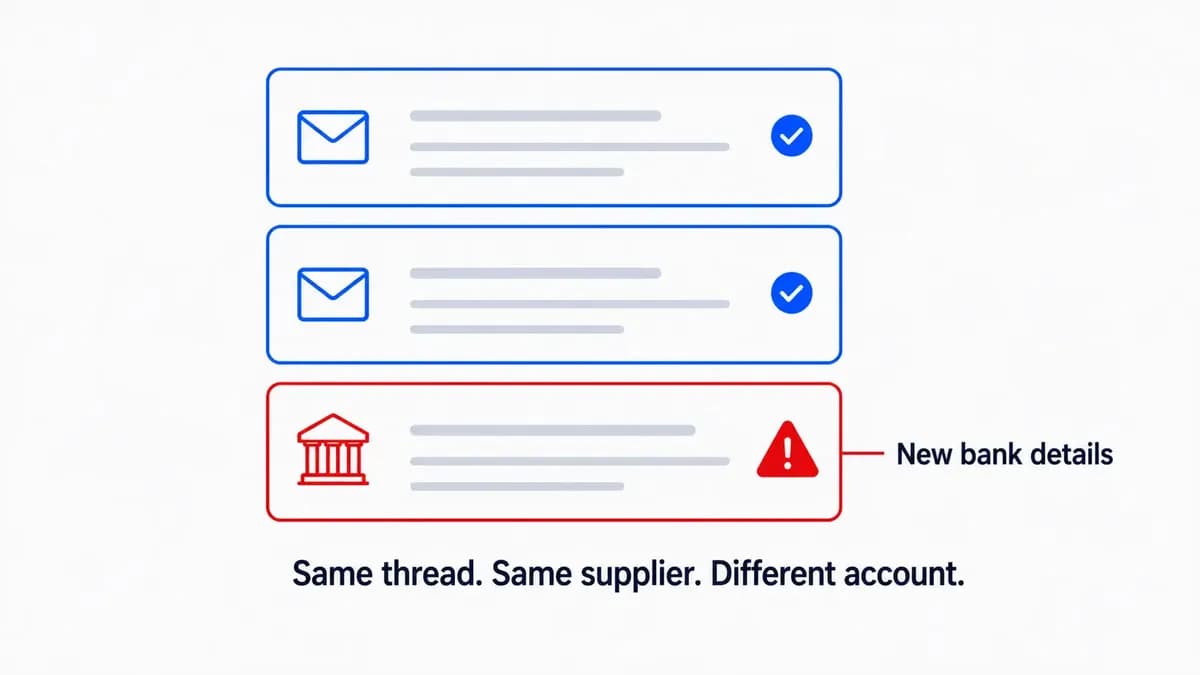
Criminals break into a distributor's email account or register a domain that's one letter off from the real one. Then they wait. They read the order threads, learn the invoice schedule, and pick their moment. One day you get an email in an existing conversation, about an order you actually placed: "Please note our banking details have changed. Use the account below for this invoice." Everything about the email looks right, because almost everything about it is right. You pay a real invoice to a fake account, and the money is gone before anyone notices.
This is not rare. The FBI's Internet Crime Complaint Center logged over $3 billion in losses from this family of fraud in 2025 alone, averaging about $123,000 per incident, and most of it moved by wire or ACH, the exact way wholesale sellers pay distributors. Criminals now pretend to be suppliers more often than they pretend to be company bosses. Your supplier's inbox is the target, and you're the payout.
The Warning Sign
Any change to payment details, ever. That's it. New bank account, new beneficiary name, new "updated" wire instructions. Treat every single one as a fraud attempt until proven otherwise.
How to Protect Yourself
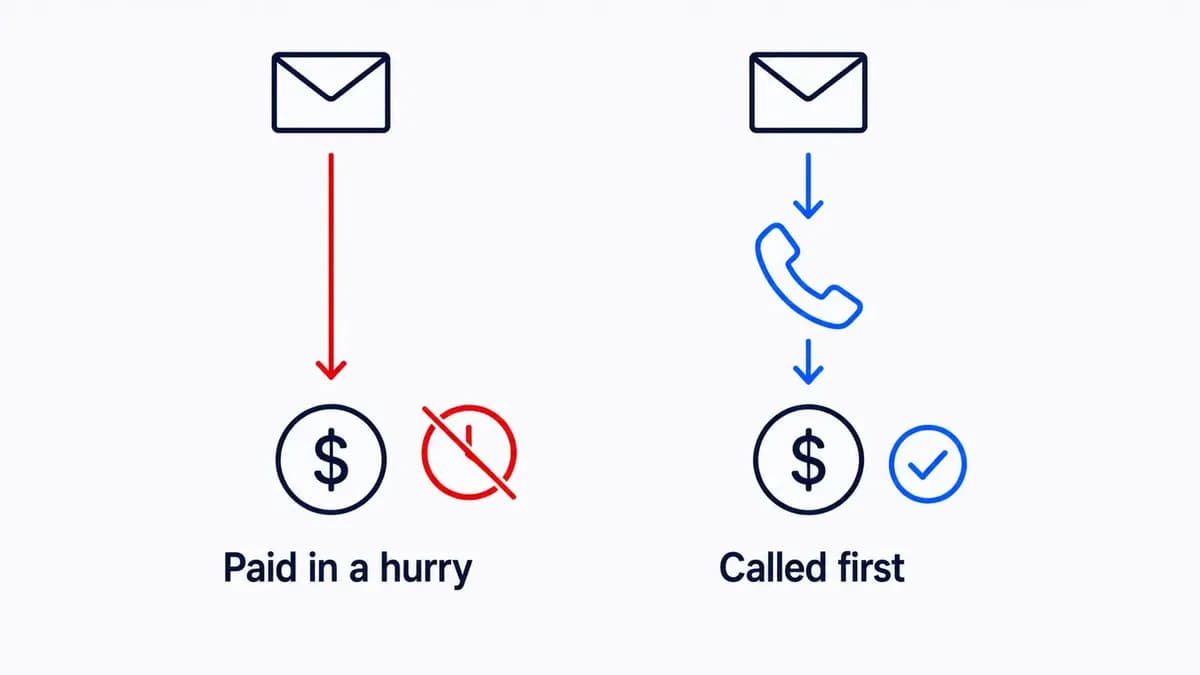
One habit stops this cold: verify any payment change by phone, using the number you already had on file, never the number in the email asking for the change. Thirty seconds on the phone against a six-figure loss. And if money has already moved, call your bank immediately and file a report at ic3.gov. Recovery is genuinely possible in the first 72 hours and drops fast after that.
6. The Fake Ungating Service
How It Works
You want into a gated category or brand, and a service appears offering guaranteed ungating for a fee. What they're actually selling is a forged or recycled distributor invoice for a purchase you never made. Sometimes Amazon's review catches it immediately and the fee is simply wasted. The worse outcome is when it passes, because now there's a fraudulent document permanently attached to your account, waiting for the day a complaint triggers a closer look. Sellers pay for these services thinking they bought a shortcut. What they bought is a time bomb.
The Warning Sign
Any service that provides the invoice is selling forgery. There's no legitimate version of that. A real ungating path always involves you actually buying products from an actual authorized distributor.
How to Protect Yourself
Buy real products from real distributors and submit real invoices. Slower, yes. But it's the only version where your account is still standing in a year.
7. The Fake "Authorized Distributor"
How It Works
A supplier claims to be an authorized distributor for the brands you want. They may even show you an authorization letter with the brand's logo on it. The products arrive and they're real products, which makes everything feel fine. But the authorization was invented, the letter was forged, and the goods came from somewhere outside the brand's approved chain. You find out when a complaint lands and Amazon ask you to prove your supply chain, and the paperwork you have traces back to nobody. This scam costs you twice: once for the inventory, and again for the account.
Amazon takes this seriously enough to pursue it in court. Its Counterfeit Crimes Unit has filed lawsuits against sellers and suppliers over exactly this kind of fraud.
The Warning Sign
Authorization you can't confirm with the brand itself. A letter from the supplier proves nothing, because the supplier wrote it. The brand's own list of authorized distributors is the only source that counts.
How To Protect Yourself
Ask the brand directly who their authorized distributors are. Most will tell you, because they want their products sold through the right channels. If your supplier isn't on that list, no letter changes that. We covered what happens when unauthorized inventory meets Amazon's enforcement in our guide to selling gray market goods on Amazon.
What Every Supplier Scam Has in Common
Read back through these and you'll notice the same shape in everyone. The scam asks you to pay before you know. Pay to see the catalog. Pay before the goods ship. Pay for the name, the list, the letter, the shortcut. Every scheme on this list lives in that gap between your money and your information.
That gap is the reason we built B2B Supplier Hub the way we did. You can search millions of wholesale products free and see the exact wholesale cost, real stock, and retail price from human-verified suppliers before you spend anything. The numbers come first, and you connect with a supplier only when they've convinced you. No system makes anyone scam-proof, and you should still verify authorization for the brands you sell. But when the pay-first step disappears, most of these schemes have nothing left to stand on.
How to Avoid Wholesale Supplier Scams: Slow Down
Here's something worth noticing about all seven of these scams. Every single one depends on you moving quickly. The fake website works because nobody stops to check if the company is registered. The prepay scam works because you wired the money before you had time to think. The fake bank details work because you paid the invoice without calling anyone first.
Which means the fix is almost embarrassingly simple: slow down whenever money is about to move. Take a day before your first order with a new supplier and check them out properly. If payment details change, call and confirm before you pay. If someone shows you an authorization letter, check with the brand before you believe it. A few minutes each time, that's all.
And if you ever feel silly for double-checking, remember that the people losing six figures to these scams are not careless. Most of them are careful sellers who got pushed to hurry, just once, at exactly the wrong moment.
Frequently asked questions
01How do I know if a wholesale supplier is legitimate?
02Do real wholesale distributors charge membership fees?
03What's the safest way to pay a new wholesale supplier?
04What should I do if a supplier scammed me?
The B2B SupplierHub Team
Wholesale & sourcing
Stop hunting suppliers by hand. Type a UPC instead.
B2B Supplier Hub shows the suppliers in our network carrying a product on one page: wholesale cost, stock, and retail price side by side. Free to search, no card required.