
Distributor Guides
Wholesale Tool Distributors in the US: How to Find Them
You open an application from a tools distributor and it asks for your store address, your showroom, maybe your sales territory. If you sell online, half the form doesn't fit.
That's because many wholesale tool distributors were built to supply hardware stores, lumber yards and contractor supply houses. Online resellers came later. Some parts of this channel are open to you and some only look open, so it helps to know which is which before you apply.
How the Tools Channel Works: Dealer Programs, Co-ops, and Distributors
Many tool brands run dealer programs. Instead of selling through any distributor who will carry them, they appoint dealers directly and sign an agreement with each one. The agreement often covers where you can sell, how you can advertise, and sometimes which territory is yours.
Independent hardware stores often buy through retailer-owned cooperatives. These are wholesale buying groups owned by their member stores. They carry a huge range, but they are set up to supply members, and membership usually means running a physical store.
Everything else moves through wholesale distributors: broadline hardware wholesalers, specialty tool houses, and plumbing, electrical and industrial supply distributors. This is where online resellers usually find their accounts.
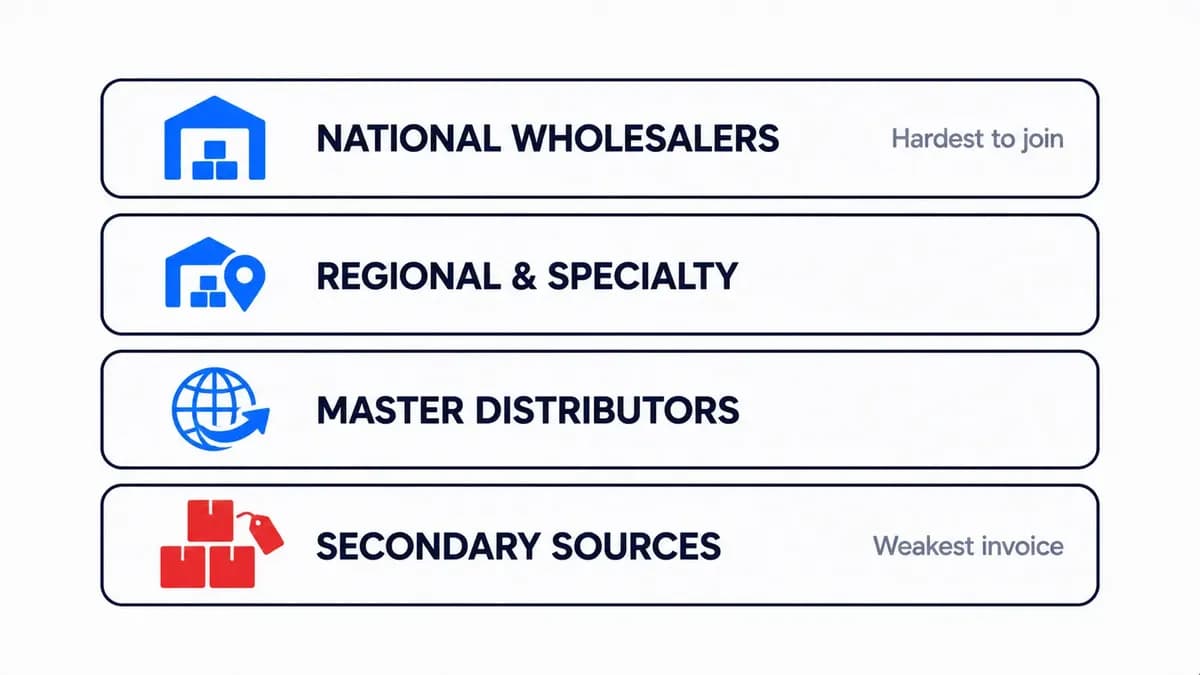
The Four Tiers of US Tools and Home Improvement Distributors
Tier 1: National broadline hardware wholesalers. They carry a very wide range across hand tools, fasteners, paint sundries and home goods. Approval is strict, and they prefer accounts that look like stores. If you do get in, their invoices hold up well because they buy straight from the brands.
Tier 2: Regional and specialty distributors. Tool houses, contractor supply distributors, and plumbing and electrical wholesalers that serve a few states. They are more open to new accounts, they know their lines well, and they are often the best first door for a reseller.
Tier 3: Master distributors and importers. Smaller and foreign tool brands often appoint one company to handle all US distribution. If a brand has one, that is usually the only legitimate source, and the brand's website will often say so.
Tier 4: Secondary sources. Closeout buyers and overstock sellers. The stock can be genuine, but buying from them does not make you an authorized reseller of the brand, and the invoice may not hold up if a brand or marketplace asks questions. Our post on what "authorized distributor" really means explains why.
Find Wholesale Tool Distributors
Start with the brand. Many tool brands list their distributors or dealers on their own website, or will tell you who covers your area if you ask. This is the most reliable source there is, because it comes from the brand.
Use the industry code. Hardware wholesalers in the US fall under one industry code: NAICS 423710, Hardware Merchant Wholesalers, which covers hardware, knives and hand tools. Many state business directories, chamber listings and lead databases let you filter by NAICS code. It's a quick way to build a list of real wholesalers in a region instead of the resellers that show up first in a web search.
Look at who supplies the stores. Contractor supply houses and independent hardware stores buy from regional distributors. The distributor's name is often on the delivery trucks, and staff will usually tell you who they buy from if you ask.
Work back from the product. If you already know which tools sell, start there. Find the product first, then find who carries it. Our guide to finding wholesale suppliers covers the wider search.
What Hardware Distributors Ask Resellers For
Because the forms were written for stores, some questions won't fit how you sell. Answer them honestly instead of forcing it.
"Store address" or "showroom." Give your business address and say plainly that you sell online, through which channels. Regional distributors that work with online sellers are used to this. If the form has no room for it, add a short note or call the rep.
"Sales territory." List where your customers are, not where your warehouse is. If you ship nationally, say so. That tells the distributor whether any of its dealer or territory rules apply to you.
"Lines you carry." Name the product types you already sell rather than a long wish list. Tool wholesale suppliers read a focused list as a sign you know the category.
The base paperwork is the same as anywhere else: registered business, resale certificate, business bank account. What usually decides it is how well you answer the store-shaped questions.
What "Best" Means in This Category
The biggest distributor in tools isn't always the best one for you. These three things usually matter more.
Territory. Dealer agreements and some distributor agreements define where you can sell. A distributor in another region may not be allowed to sell to you, or may only sell certain lines. Our guide to building a regional distributor territory map shows how to sort this out before you apply.
Pricing rules. Many tool brands watch advertised prices closely. Read the brand's pricing policy before you buy, and assume someone will check. Our post on MAP pricing and authorization covers how this works in practice.
Freight and ship-from location. Tools and building products are heavy. Many orders ship by pallet, and the freight bill can wipe out the price difference between two distributors. A distributor with a warehouse closer to you, or to your prep center, can be cheaper delivered even when its unit cost is higher. Compare what each order costs once it reaches you.
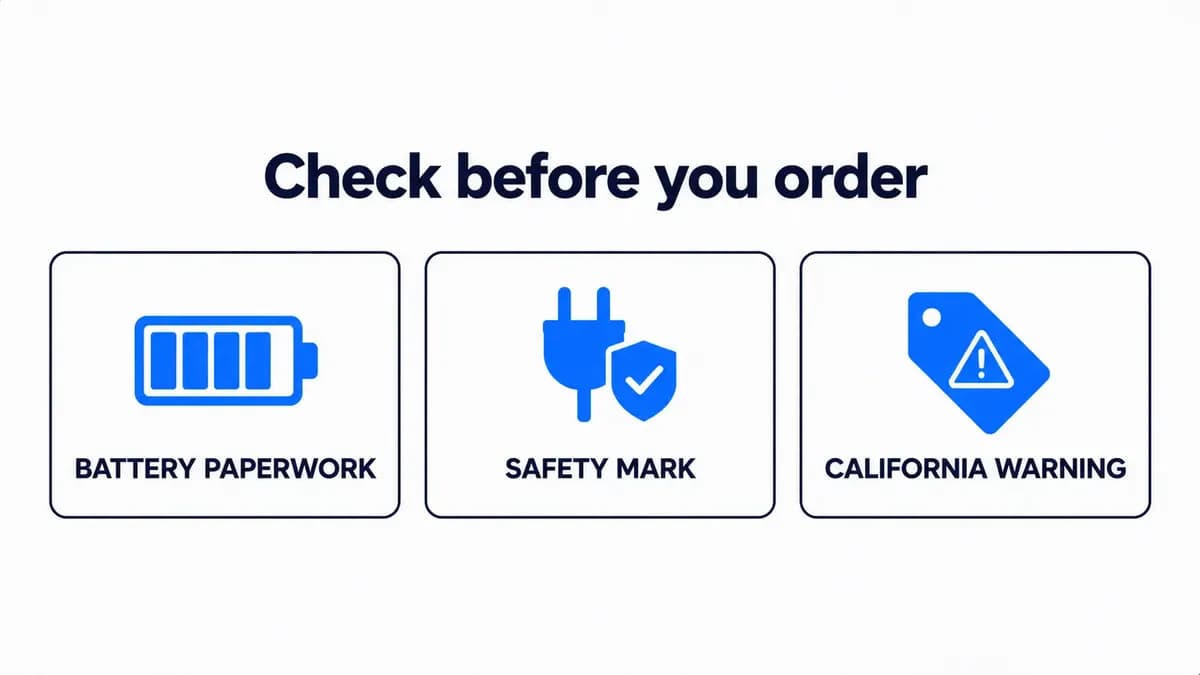
3 Product Checks Before You Order: Batteries, Safety Marks, Prop 65
This category has a few product rules that catch new resellers.
Batteries. Most cordless tools and their packs use lithium batteries, which come with shipping paperwork. The same battery documents we cover in our electronics distributor guide apply here, and a real distributor can get them from the brand.
Electrical safety marks. Corded tools, lighting, extension cords and electrical parts should carry a mark from a recognized testing lab. Under OSHA's program, that mark signifies that the lab tested and certified the product against safety standards. Ask which mark the product carries. Unmarked electrical goods from an unknown source are a reason to walk away.
California warnings. Many tools, plumbing fittings and building materials carry California Proposition 65 labels. The law requires businesses to provide warnings to Californians about significant exposures to listed chemicals. If you sell into California, ask the distributor whether the product already ships with the warning and whether your listing needs to show it.
These are practical questions to ask suppliers, not legal advice.
Compare Distributors Before You Apply
Applications in this category take time, and a rejection can make the second try harder. Spend them carefully.
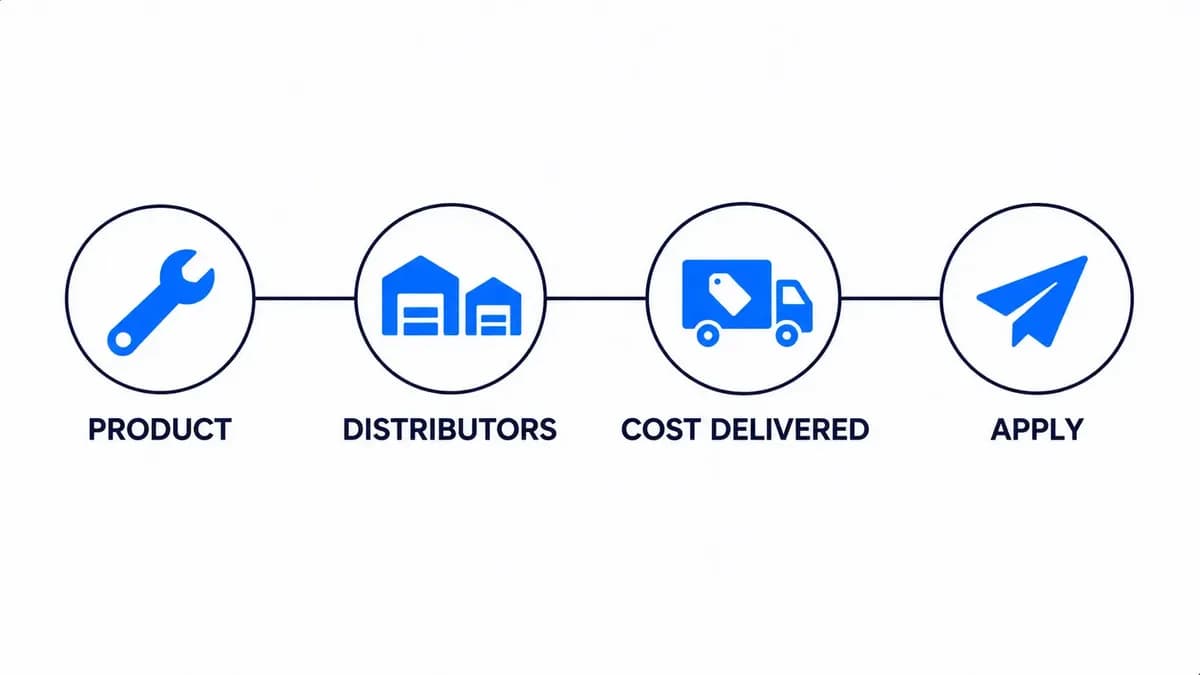
- Pick the products that already sell for you, or that you've proven elsewhere.
- Find which distributors carry each one and what they charge.
- Check stock, ship-from location and freight, not just unit cost.
- Apply to the one or two whose numbers work, with a clear note on how and where you sell.
The slow part used to be step two, because you had to be approved before a distributor would show you prices. You can now search a tool or home improvement product free and see real cost and stock from every verified distributor in our network that carries it, before you apply to any of them. When the numbers work, unlock that distributor and apply.
Start With the Product
A lot of the tools channel was set up for stores, and some of it will stay that way. That's okay. You don't need every door to open, just the right one or two.
The easiest way in is to start small. Pick a handful of products that already sell for you, find out which wholesale tool distributors carry them, and work out what each order really costs once freight is added. Then apply to the one or two that make sense, and answer the form honestly about how and where you sell.
If you want to see those numbers before you apply anywhere, you can search your products free and compare cost and stock from every verified distributor in our network that carries them. And if a product doesn't show up, submit a request and our team will find an authorized wholesale distributor who carries it, with an answer within 30 days either way.
Frequently asked questions
01How do I find wholesale tool distributors in the US?
02 Can I buy wholesale tools without a physical store?
03What is a tool dealer program?
04Why are tool brands so strict about pricing?
05Are hardware distributors for resellers different from those for stores?
The B2B SupplierHub Team
Wholesale & sourcing
Stop hunting suppliers by hand. Type a UPC instead.
B2B Supplier Hub shows the suppliers in our network carrying a product on one page: wholesale cost, stock, and retail price side by side. Free to search, no card required.