How to Find Wholesale Electronics Distributors in the US
The B2B SupplierHub Team··8 min read
Search for wholesale electronics distributors in the USA and half of what comes back is the wrong kind of company completely. The other half is a pile of names, with no way to tell who is real, who actually has stock, or whose invoice will hold up when it matters.
This guide maps out how electronics distribution works in the US, so you can tell the good doors from the wrong ones before you apply anywhere.
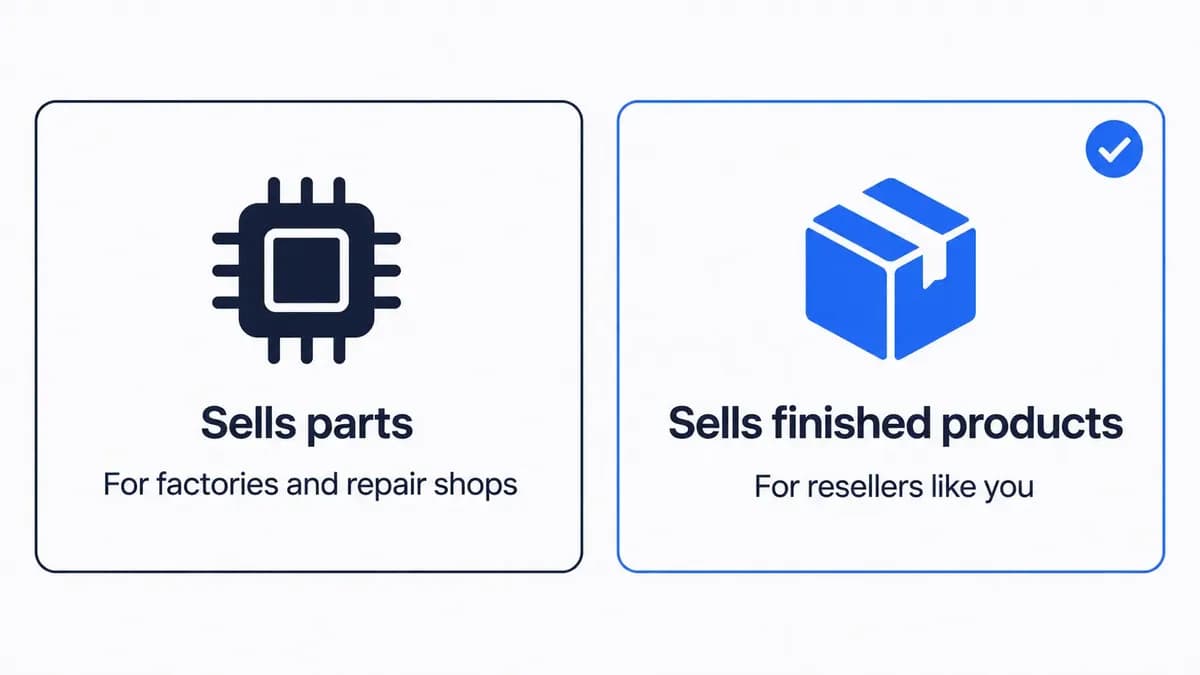
You need the other kind: distributors of finished products. The things a customer takes out of a box and uses. Here is a ten-second check. Open the catalog. If it lists parts by codes and technical numbers, you are on a parts site. Close the tab and move on. This one check clears out about half your search results before you waste a single application.
The Four Tiers of US Electronics Distributors
Electronics mostly moves through . The distributor holds the stock, gives credit, and carries many brands in one place. That is the door you are trying to open.
Frequently asked questions
Can a new reseller open an account with a major electronics distributor?
Usually not on day one. The giants want trading history and volume. Start with a specialty distributor in your niche, build a record, then move up.
What is the difference between an electronics distributor and a wholesaler?
A distributor buys from the brand and is usually authorized by it. A wholesaler just sells in bulk, from wherever they sourced. In electronics the difference decides whether the warranty holds and whether the invoice means anything.
Do I need to be an authorized reseller to sell electronics online?
For some brands, yes, even on your own website. For others, buying from an authorized distributor is enough. Check the brand's reseller policy before you buy stock, not after.
Does buying from an authorized distributor make me brand-authorized?
TB
The B2B SupplierHub Team
Wholesale & sourcing
Stop hunting suppliers by hand. Type a UPC instead.
B2B Supplier Hub shows the suppliers in our network carrying a product on one page: wholesale cost, stock, and retail price side by side. Free to search, no card required.
a two-step chain: the brand sells to a distributor, the distributor sells to resellers like you
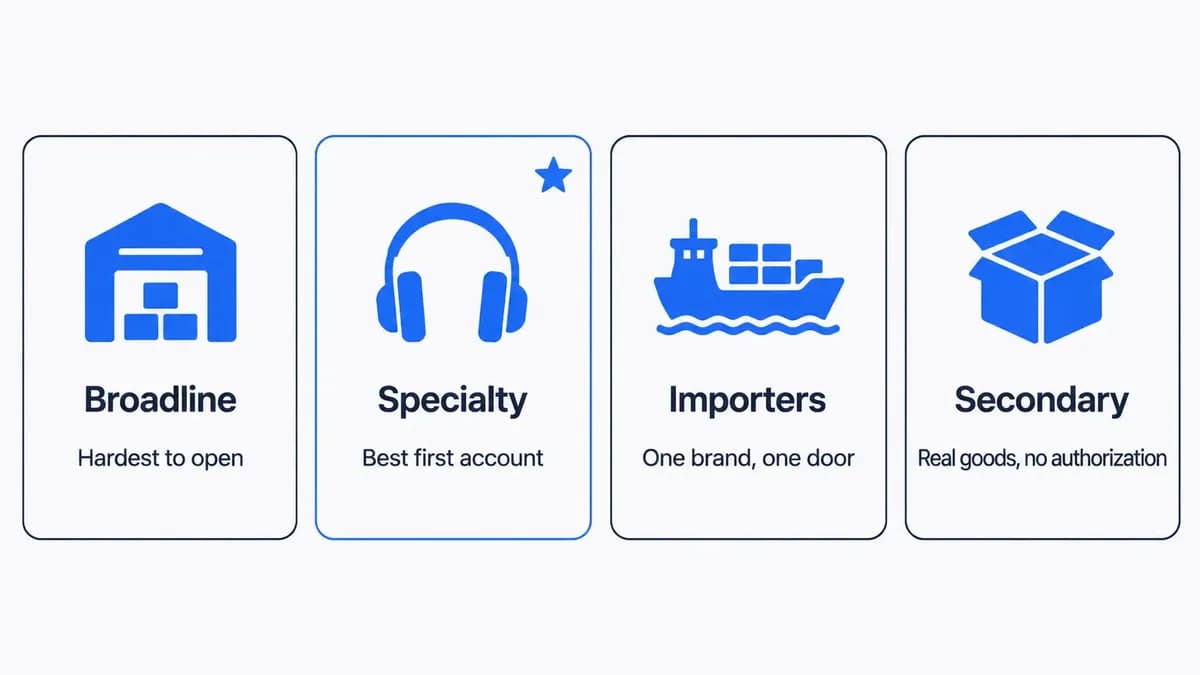
But not all distributors are the same. They come in four tiers.
Tier 1: Broadline distributors.
These are giants having thousands of products across every electronics category. They check new accounts hard, and smaller resellers often get a no, or get approved with poor pricing. In return, their invoices carry the most weight anywhere.
Tier 2: Specialty distributors.
These focus on one corner of electronics: audio, mobile accessories, networking, gaming, smart home. Accounts are easier to open, minimums are friendlier, and their stock runs deeper in their niche than any giant's. For most resellers, this is the right first account.
Any list of distributor names goes stale the day it is posted. So instead of a list, here is how to find them yourself.
Start from the brand, not from a list. Most electronics brands have a page on their website that names their distribution partners or tells resellers how to buy. That page is kept up to date by the one company that controls who is authorized. It is the most reliable list that exists. The full step-by-step is in how to find the authorized distributors for any brand.
Use directories only to build a shortlist. Industry directories and trade association member lists give you candidate names. That is all they give you. A name in a directory proves someone paid for a listing, not that they are real or authorized.
Read trade show exhibitor lists. The big consumer electronics shows publish who exhibited, and you can read those lists online without ever buying a ticket. Distributors pay a lot to be there, which filters out most fakes.
Work backward from the product. Instead of finding a distributor and hoping they carry good products, start with products that already sell and find out who carries them. More on this below, because it is the fastest of the four.
Whichever route you take, the account-opening process itself is the same as any wholesale category, and we walked through it in how to find wholesale suppliers.
What "Best" Actually Means In Electronics
In most categories, the best distributor is the one with the best cost. In electronics, there is a second thing that matters just as much: whether the products keep their warranty.
Here is what that means for you. You buy from the wrong tier. Your customer's warranty claim gets refused. That turns into a return, and the return turns into a bad review. The product was genuine the whole time. It just came through the wrong door. So when you talk to a new distributor, ask one question early: will my end customer get the manufacturer's warranty on this? A real distributor answers immediately. Hesitation is your answer too.
Here is a filter that sorts electronics distributors faster than any review check, and almost nobody uses it.
A huge share of electronics contains a lithium battery. Earbuds, power banks, smartwatches, smart home devices, anything rechargeable. All of it counts as Class 9 dangerous goods, which means paperwork travels with the product. Selling it usually needs a Safety Data Sheet. Shipping it needs a separate document called a UN 38.3 test summary, which proves the battery passed transport safety tests. And if you sell power banks through FBA, Amazon also requires a UL 2056 test report from a certified lab, and blocks the listing without it.
These documents matter on every channel, not just Amazon, because they are about moving the goods at all.
So before your first order of anything with a battery, ask the distributor: can you send me the SDS and the UN 38.3 summary for this exact model? A real distributor of real products gets these from the manufacturer and can send them over. A middleman usually cannot, because the manufacturer does not know they exist. One question, and you have learned more than an hour of research would have told you.
Start with products that already sell. Your own winners, or products doing well on your channel.
See the numbers before you apply anywhere. Search any product free and see real cost and real stock from every verified distributor in our network carrying it, side by side, with a freshness date on every listing.
Apply only where the numbers win. And before you do, ask your two questions: does the warranty hold, and can they send the battery documents.
If nobody in our network carries it, submit a request and our team will go find an authorized distributor who does. It is free on every plan, and you get an answer within 30 days, either way.
The old way to find electronics distributors was to collect names and apply to all of them, one form and one wait at a time. The faster way starts at the other end. Take a product that already sells, search it free, and see the cost, the stock, and the freshness of the numbers from every verified distributor in our network carrying it. Compare, ask the warranty and battery questions, and apply to the one that wins. And when a product comes back empty, send it to our team, and we will find the distributor for you, free, with an answer within 30 days either way.
No. The distributor is authorized to sell to you. Whether you are authorized to resell the brand is a separate decision the brand makes. This mix-up is behind most rejected invoices.
Do I need battery documents if I do not use FBA?
Yes. The SDS and UN 38.3 summary are about transporting the goods safely, so they apply however and wherever you sell.