
Distributor Guides
Why ChatGPT Can't Tell You a Brand's Distributors
Can ChatGPT find wholesale suppliers? It can give you company names. It can't reliably tell you which of those companies a brand has authorized, whether they will sell to you, or what they charge. If you buy from a name it got wrong, you may end up with stock you can't prove came from the brand.
AI is still useful for sourcing. Just treat every company name it gives you as a lead you need to check.
What You Get When You Ask ChatGPT for a Brand's Distributors
Try it with a brand you already buy. Ask ChatGPT, Perplexity, or Gemini something like this:
List the authorized US wholesale distributors for [brand name]. Include each company's name and website.
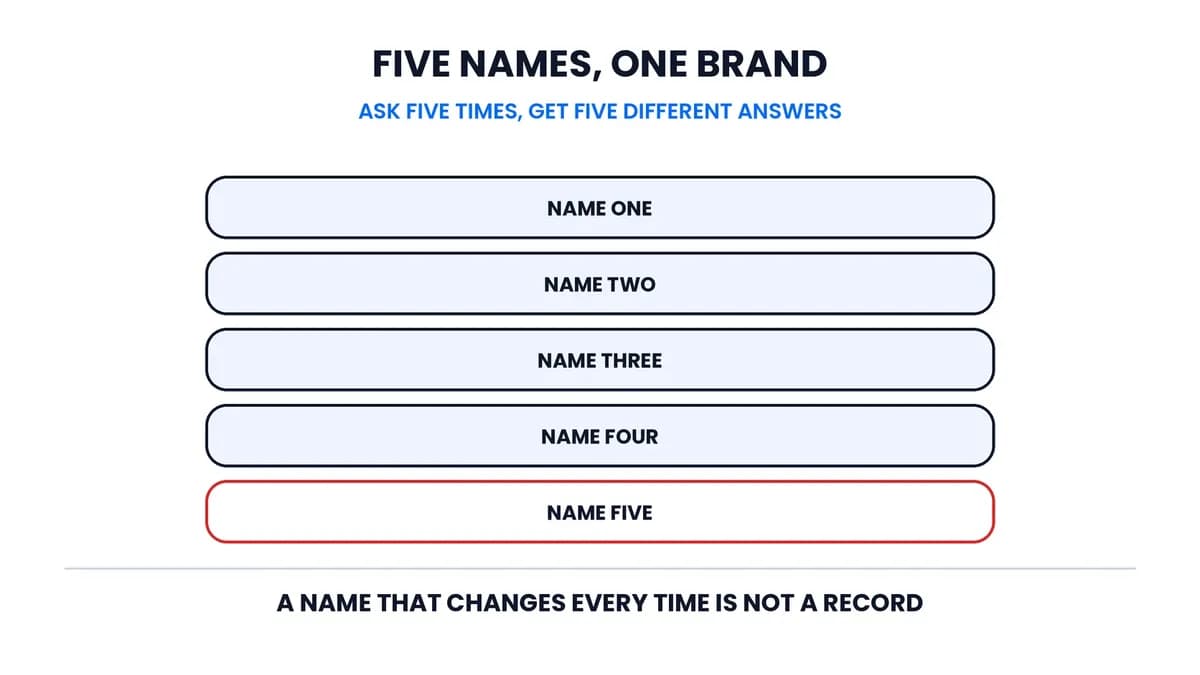
You'll get a neat list with names, websites, and short descriptions. Some of the names may be right. The problem is that the list doesn't tell you which ones. When you check each company, it will land in one of five groups:
What the company is | How to spot it | Safe to buy from? |
|---|---|---|
Authorized distributor | The brand lists it or confirms it | Yes, if it will open an account for you |
Business seller the brand hasn't confirmed | Has an account application, but isn't on the brand's list | Only after the brand confirms it |
Store that sells to the public | Anyone can buy without opening an account | No. Your invoice would show a retail source |
Reseller with no link to the brand | Sells to businesses, but can't say where its stock comes from | Usually not |
Company that doesn't exist or has closed | The website doesn't load, or nothing matches the name | No |
Stores are the easiest to mistake for distributors. They really do sell the brand, so the answer looks right. But a store that sells to the public isn't a distributor. If you buy from one, your invoice shows a retail source, and that usually won't pass a brand or marketplace check.
Resellers with no link to the brand buy from wherever is cheapest. Their products may be genuine, but they usually can't show where the goods came from. Our post on authorized distributors, middlemen, and gray-market sources explains why that matters.
The last group is plain mistakes: companies that don't exist or have closed. These answers are easy to trust because they look complete. A tool gives a company name, a website, and a short description, something like "a national distributor of sporting goods." But the website doesn't load or belongs to a different business, and a search for the company name turns up nothing that matches. Nothing in the answer tells you which names are real, so the only way to know is to check each one.
If you sell on Amazon: the invoice from your supplier is usually what you show to get approved for a restricted brand or category. A name from an AI tool is a weak place to start that paper trail. Our guide to brand authorization for Amazon sellers explains what Amazon asks for.
Why AI Tools Get Distributor Lists Wrong
1. The Real List Isn't Public
A brand's distributors are the companies it has signed agreements with, and those agreements are private. Some brands publish a list. Many don't, and the lists that exist change when a brand adds or drops a distributor. An AI tool can only use what it learned in training or can find online. So it fills the gap with what is public: stores that advertise the brand, resellers with product pages, and old directory listings.
2. It Guesses Instead of Saying "I Don't Know"
OpenAI's own research shows that how language models are trained and tested rewards guessing over admitting they aren't sure. OpenAI's help center says ChatGPT can sound confident even when it's wrong, and Google says Gemini can present inaccurate information as fact. So when you ask ChatGPT to find distributors for a brand, a wrong answer reads just like a right one.
3. Web Search Doesn't Fix It
AI tools that search the web still get simple questions wrong. In a March 2025 test by the Tow Center at Columbia Journalism Review, eight AI search tools were asked where news articles came from. They gave wrong answers to more than 60% of the questions, and the tools tested included ChatGPT Search, Perplexity, and Gemini. In an October 2025 study led by the EBU and the BBC, 45% of answers from ChatGPT, Copilot, Gemini and Perplexity had at least one significant problem.
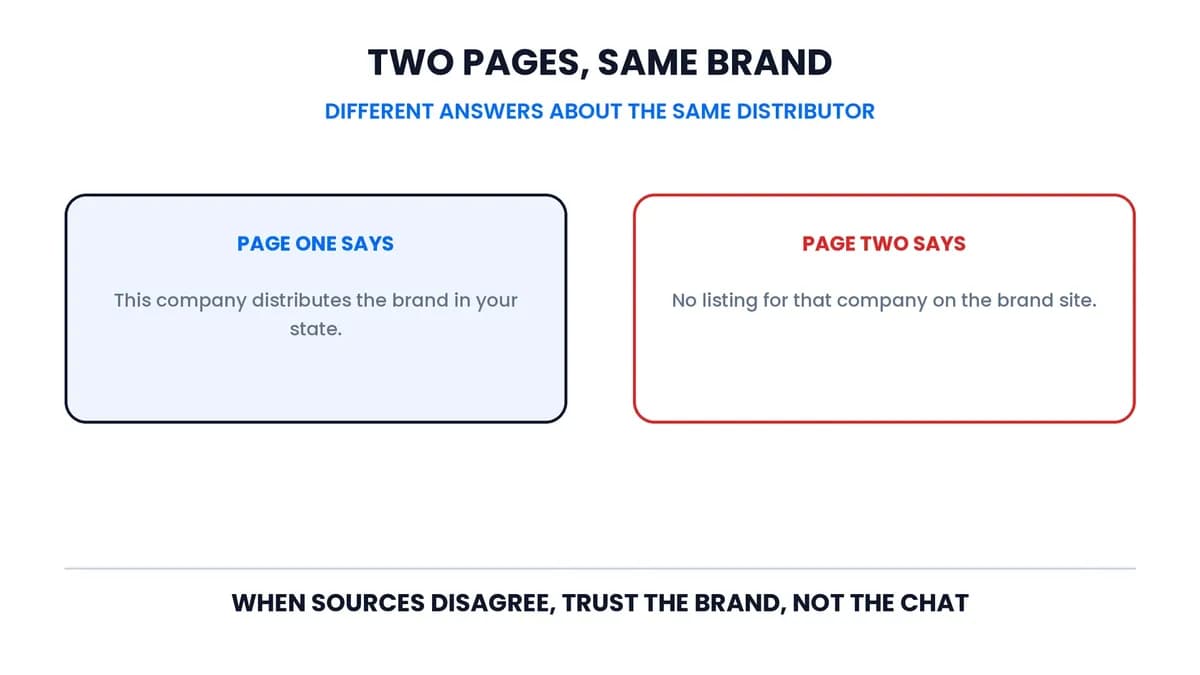
Those tests were about news, which is public. Distributor agreements mostly aren't. A source link doesn't settle it either. A tool can link to a brand's "where to buy" page, which lists stores, and still call those stores distributors.
4. Even a Correct Name Is Only a Starting Point
Say a tool names a real authorized distributor. You still don't know its cost, what it has in stock, its minimum order, or whether it opens accounts for resellers like you. Many distributors only share prices after they approve your account, so you would have to apply and wait just to see what they charge.
How to Use AI for Sourcing Safely
AI tools are good at the work around sourcing, such as:
- writing the email that asks a brand's sales team who its US distributors are
- summarizing a long "where to buy" page or distributor policy that you paste in
- explaining the columns in a distributor's catalog
- making a list of questions to ask before your first order
Most ChatGPT prompts for wholesale suppliers that people share online just ask for a list. If you do ask an AI for supplier names, ask it to show where each name came from:
List possible US wholesale distributors for [brand]. For each one, give a source link, say whether the source shows it is a distributor or a store, and write "not sure" if you can't confirm it.
The answers still won't be reliable, but the weak ones become easier to spot. Then run every name through four checks before you contact anyone:
- Does the company exist? Look for a working website, a business address, and a phone number. Our guide on how to verify a wholesale supplier lists the warning signs.
- Does it sell to businesses? A distributor has an account application and usually asks for a resale certificate. If anyone can buy without opening an account, it's a store.
- Does the brand confirm it? Ask the brand's sales team or check its distributor list. Our guide on how to find the authorized distributors for a brand shows where to look.
- Will it sell to you, and at what cost? Ask about account rules, minimum orders, and whether it sells to online resellers.
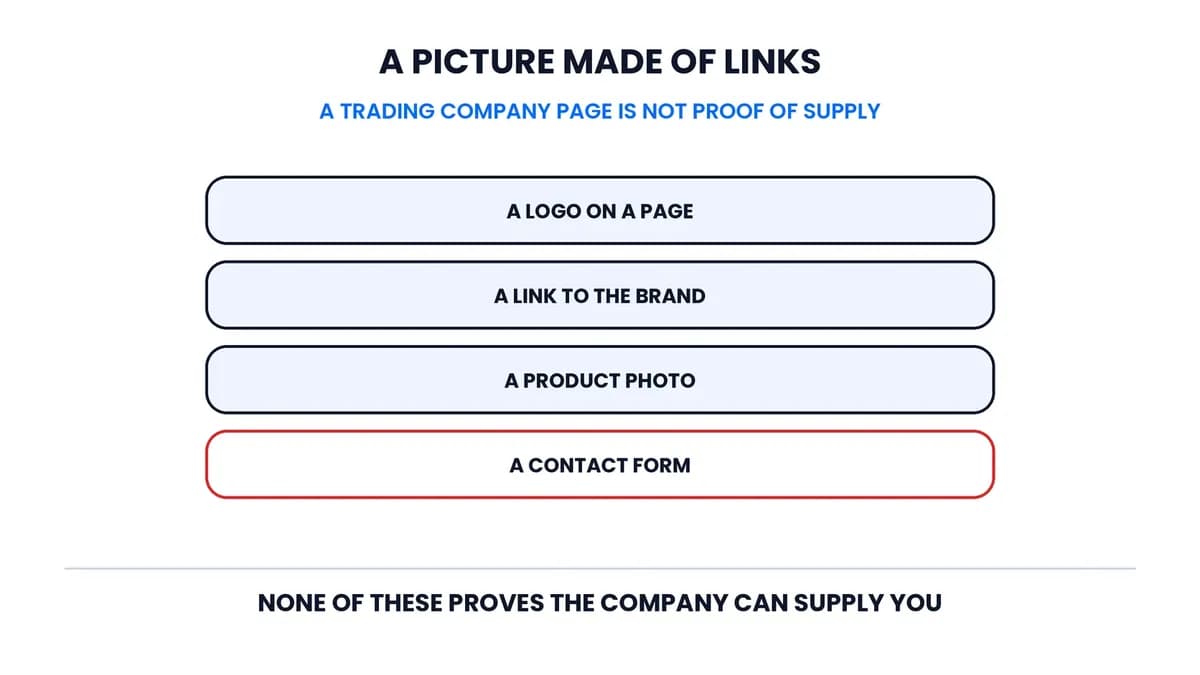
The same goes for other AI tools for wholesale sourcing, including sourcing apps that have added AI features. Before you trust a supplier name from any tool, ask where the name came from. A name pulled from random web pages has the problems above. A name that comes with the supplier's own catalog, and a date on the price and stock, is one you can check.
3 Better Ways to Find a Brand's Distributors
Three sources beat a chatbot.
Ask the brand. It knows who it signed. Its sales team, distributor list, or "where to buy" page is the most reliable answer, even if it takes an email and a few days.
Read the product. The packaging, the "distributed by" line, and the company code in the barcode can all point you to the right company. Our guide on how to find who distributes a product walks through each one.
Search by the numbers. On B2B Supplier Hub, you can search a product for free by UPC, product name, or model number. You see real cost and real stock from the verified distributors in our network that carry it. You can compare them on one screen and unlock a supplier only when the numbers work. You can also browse brands carried by verified distributors in our network. If a product isn't in our network yet, Request a Supplier puts our team on finding an authorized wholesale distributor for it.
Treat Every Name as a Lead, Not an Answer
It can give you names to start with, and you should treat them as leads. Use AI to write emails and organize your research. Get the answer to "who does this brand authorize?" from the brand, from the product, or from a search that shows real numbers. If you've tried all three and still can't find a distributor, submit a request and let our team find an authorized wholesale distributor for you.
Frequently asked questions
01Is ChatGPT accurate for supplier research?
02Can AI find wholesale distributors?
03How do you find wholesale suppliers?
04Where do wholesale sellers get their products?
05How is AI being used in wholesale distribution?
The B2B SupplierHub Team
Wholesale & sourcing
Stop hunting suppliers by hand. Type a UPC instead.
B2B Supplier Hub shows the suppliers in our network carrying a product on one page: wholesale cost, stock, and retail price side by side. Free to search, no card required.