How to Find the US Distributor for an International Brand
The B2B SupplierHub Team··8 min read
Sooner or later, most wholesale resellers find a product that sells well in the US but comes from a brand that isn't American. Maybe it's a German tool brand or a Japanese electronics brand. You go looking for whoever sells it wholesale here, and the brand's website only lists dealers in Europe. The contact form never gets a reply, the one email address you find bounces, and after two weeks you still don't know if anyone in the US carries it.
We've been there. There are only three ways a foreign brand's products reach US resellers, and once you know which one a brand uses, the name you're after is usually written in a public record. This post explains the three ways, shows you where to find the importer's name, and warns you about a paperwork mistake that catches a lot of resellers on their first foreign brand. If the brand is American, the road is shorter, and our guide to finding who distributes a product covers it.
The Three Ways an International Brand Reaches US Resellers
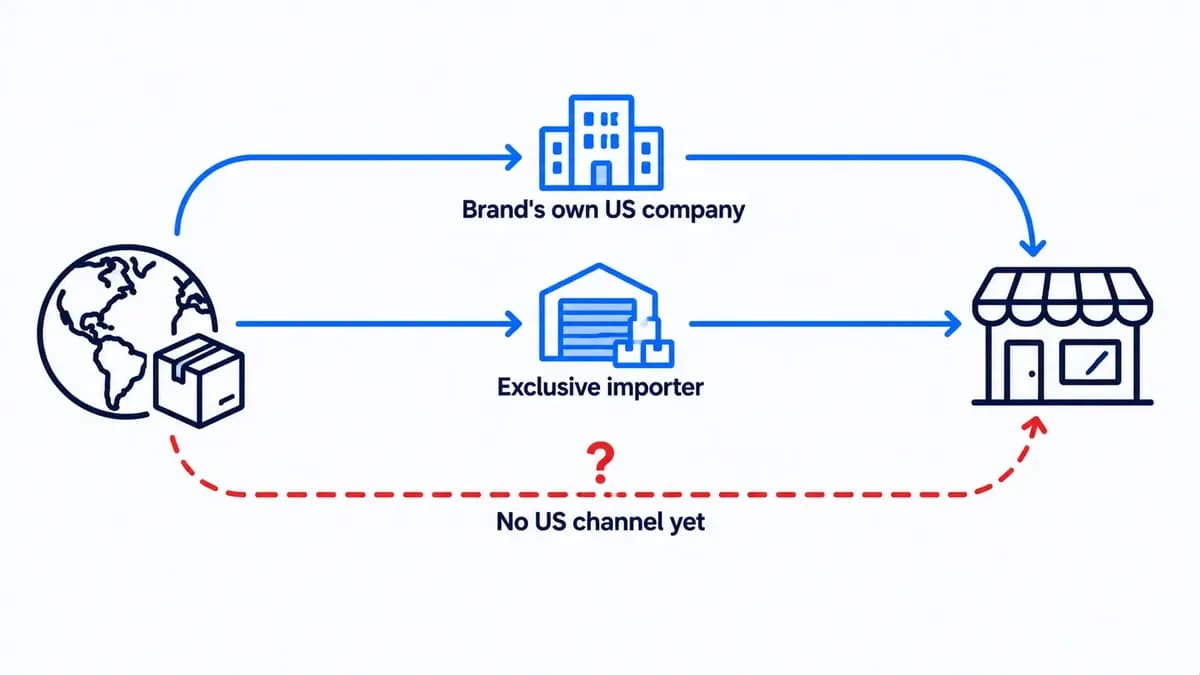
Before you fill in a single application, work out which of these three you're dealing with.
The first way is the brand's own US company. Many foreign brands open a US subsidiary and let it act as their distributor. It's so common that US tax rules use it as a worked example, with . You'll recognize it by the brand's name with "USA," "North America," or "Inc." attached and a US address underneath. Just don't assume every US office sells wholesale. Some only handle marketing and support while someone else handles the trade, so the first question to ask any US office is who invoices wholesale accounts.
Frequently asked questions
How do I find the US importer for a brand?
Search public US import records with the brand as the shipper and look for the US company that keeps receiving its shipments. Then double-check with the "imported by" line on the product and the current owner of the brand's US trademark.
Is a brand's US subsidiary a distributor?
Often it is. Many foreign brands set up a US company that acts as their exclusive distributor. Some US offices only handle marketing, though, so ask who invoices wholesale accounts before you assume.
Will an invoice from the brand's European distributor pass Amazon ungating?
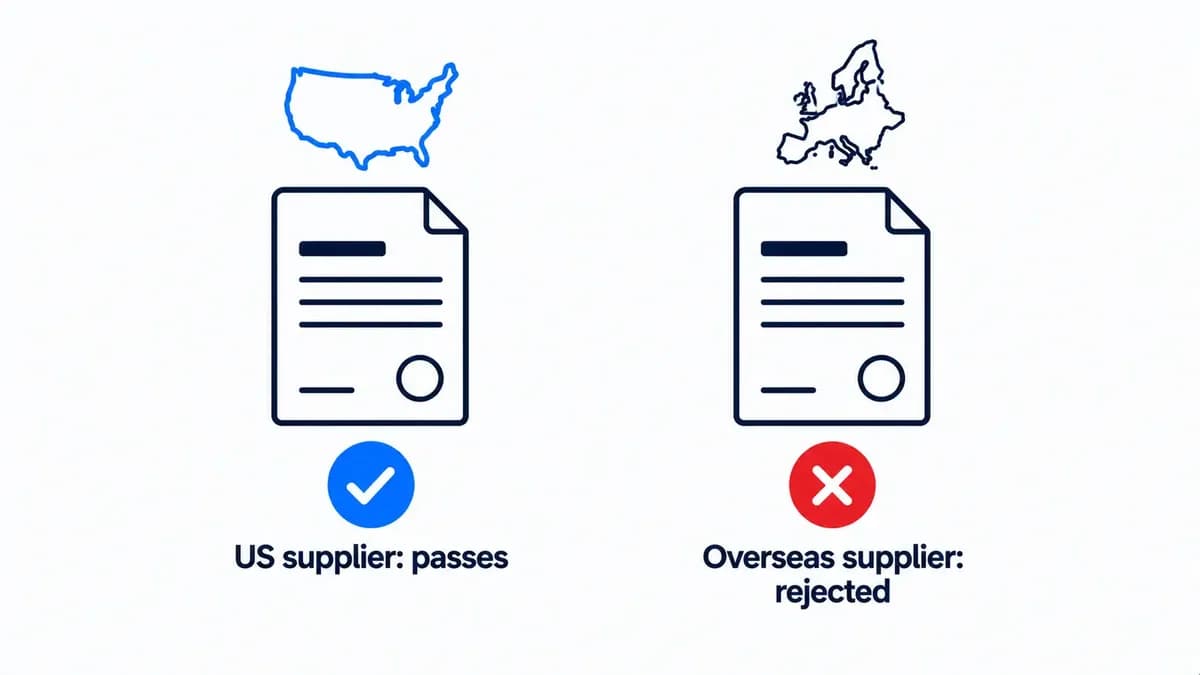
It often fails. The invoice can be genuine and still be rejected because the supplier is outside the US. Buy from the brand's US importer or one of its authorized US distributors instead.
TB
The B2B SupplierHub Team
Wholesale & sourcing
Stop hunting suppliers by hand. Type a UPC instead.
B2B Supplier Hub shows the suppliers in our network carrying a product on one page: wholesale cost, stock, and retail price side by side. Free to search, no card required.
a US corporation serving as the exclusive distributor for its foreign parent
The second way is an independent exclusive importer. If the brand has no US company, it usually picks one US business to bring the product in and sell it to the trade. People call that business the exclusive importer or the master distributor, and exclusive means what it sounds like: one distributor per territory, and for a foreign brand the territory is usually the whole country. We have written about the tiers under a master distributor, and about how to find a brand's authorized distributors once you know who sits at the top. Knowing the importer's name doesn't get you an account with them, though. Exclusive importers protect the brand's pricing, and many are cautious about marketplace sellers.
The third way is that there's nobody yet. Some brands have no US channel at all. The units you see on Amazon are parallel imports, usually from one seller who buys overseas and ships them in, so there is no wholesale path to find. If you're tempted to do the same, remember you'd become the importer of record, and the customs entry, the duty, the US labeling rules, and the gray-market risk would all land on you. The duty-free shortcut has closed as well. The $800 de minimis exemption was suspended for every shipping mode from June 24, 2026 and ends for good by law on July 1, 2027, and it only ever covered shipments under $800 anyway. So when you compare an importer's price with an overseas one, compare it with what the goods would really cost you landed, not the number on the foreign invoice.
How to Find the US Importer for a Brand in Public Shipping Records
Every ocean shipment that enters the United States comes with a bill of lading, and those records are public. Each one lists the shipper and the consignee, and there are free search tools that organize them by company name.
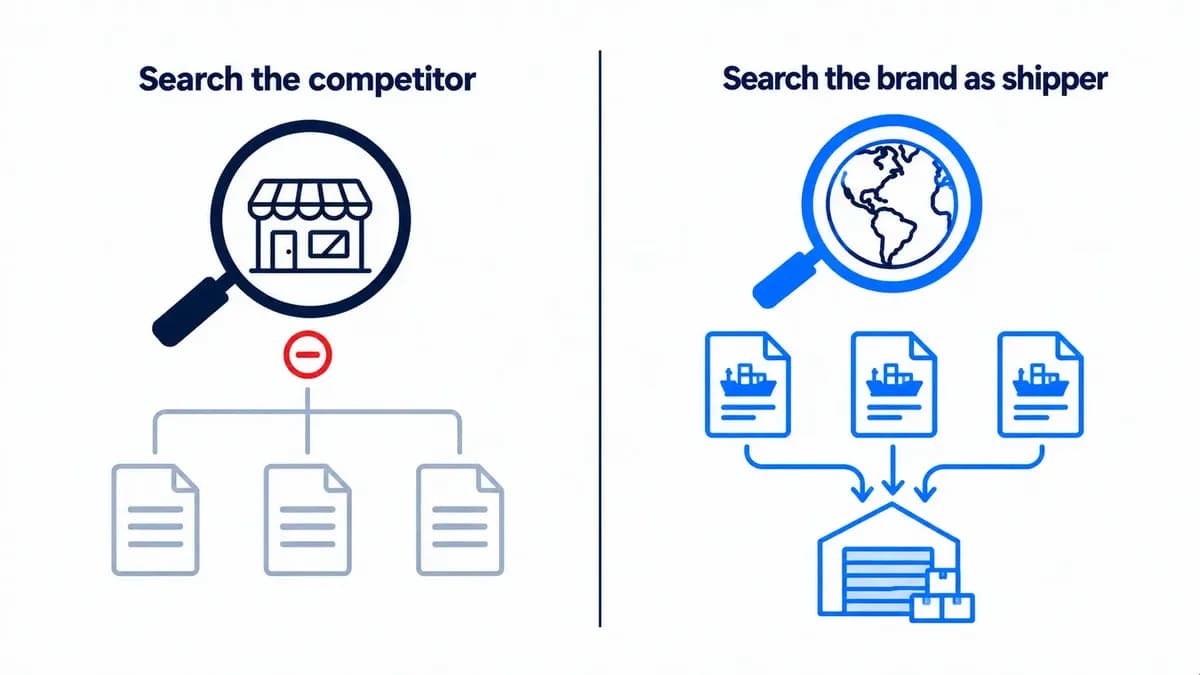
Most resellers try these records once, search for a competitor, find nothing, and give up on them. That's because a US reseller buying from a US distributor never shows up in import data, which we explained in the competitor sourcing post. With a foreign brand, you search the other way around. Put the brand in as the shipper, then look at which US company keeps receiving its shipments. That repeat consignee is the importer. If it has the brand's own name, you're looking at a US subsidiary. If it's a different company, you've found the exclusive importer.
Three things to keep in mind. The data only covers ocean freight, so a brand that flies its goods in won't appear. A freight forwarder or a warehouse can be listed as the consignee, so check who the company really is. And a name in a shipping record is a lead, not a verified supplier, so it still needs the same checks you'd give any distributor.
The product gives you a way to double-check. On electronics, the FCC ID on the label leads to the company responsible for its US authorization, and compliance information supplied with the product. On tools and sporting goods, look for the "imported by" or "distributed by" line on the box. If the packaging tells you nothing, the label and barcode trail in this post gets you to the brand, and from the brand to the importer.
What an Exclusive Importer is, And Why There's Usually Only One
An exclusive importer holds the right to bring a brand's products into a territory and sell them to businesses there, and in return the brand promises not to appoint anyone else. That's why the search above nearly always turns up one name instead of five.
Why a Genuine European Invoice Can Still Get Rejected
Suppose you can't get an account with the US importer, so you buy from the brand's distributor in Europe instead. You get a genuine invoice, use it to apply for the brand on Amazon, and it comes back rejected. The invoice wasn't the problem. Where it came from was.
Sometimes you go through the shipping records, check the trademark owner, read the box, and there's still no US name anywhere. That usually means the brand has no US channel, but it's hard to be sure on your own.
Two things are worth trying before you give up. Email the brand's export manager rather than the general inbox and ask one plain question: who handles wholesale for the United States? The export team deals with the US partner, so they usually know. And check whether the US consignee you found is really a distributor or just one marketplace seller, because if it's a seller there's no wholesale path through them. Once you have an importer's name and want to know who serves your region under them, this post on finding distributors near you picks up from there.
If none of that gets you anywhere, submit a request through Request a Supplier. You tell us the product, and our team finds an authorized US distributor who carries it, verifies their business and catalog, and brings them onto the platform. It's free on every plan, and you get an answer within 30 days either way. Sometimes that answer is that no US distributor exists yet, which is worth knowing before you spend another month searching.
Compare The Numbers Before You Apply
A foreign brand can have more than one wholesale source in the US, because regional distributors often buy from the national importer and resell. Their costs and stock can be quite different, and applying to the first one you find, then waiting weeks just to see a price, is how a lot of resellers end up paying more than they need to for years.
So before you apply anywhere, search the product free and see real cost and real stock from every verified distributor in our network carrying it, on one screen. If the numbers work, unlock the supplier and connect with them directly. If they don't, you've saved yourself an application. The search takes away the wait to see the numbers, not the approval, and with an exclusive importer that approval can still be a real conversation. At least you'll be having it with the right one.
What is an exclusive importer?
A company that holds the sole right to bring a brand's products into a country and sell them to the trade. For most foreign brands there is one for the whole US, and it sits at the top of that brand's supply chain here.