
Distributor Guides
What Is a B2B Wholesale Distributor? How Distribution Works
A B2B wholesale distributor is a company that buys products in bulk from brands and sells them to businesses, not consumers. It stores the stock, breaks large factory runs into case-size orders, and ships to resellers and retailers. For a reseller, it is usually the closest legitimate source to the brand.
That is the short answer to "what is a B2B wholesale distributor." The longer answer matters more to you as a reseller. Most pages on this topic are written for distributors, or for people selling software to them. This one is written from the reseller's side of the counter, where the real question is simple: who am I actually buying from, and does it change anything? It does, mostly because of the paper that comes with the box.
What Does a Wholesale Distributor Do? Follow One Case.
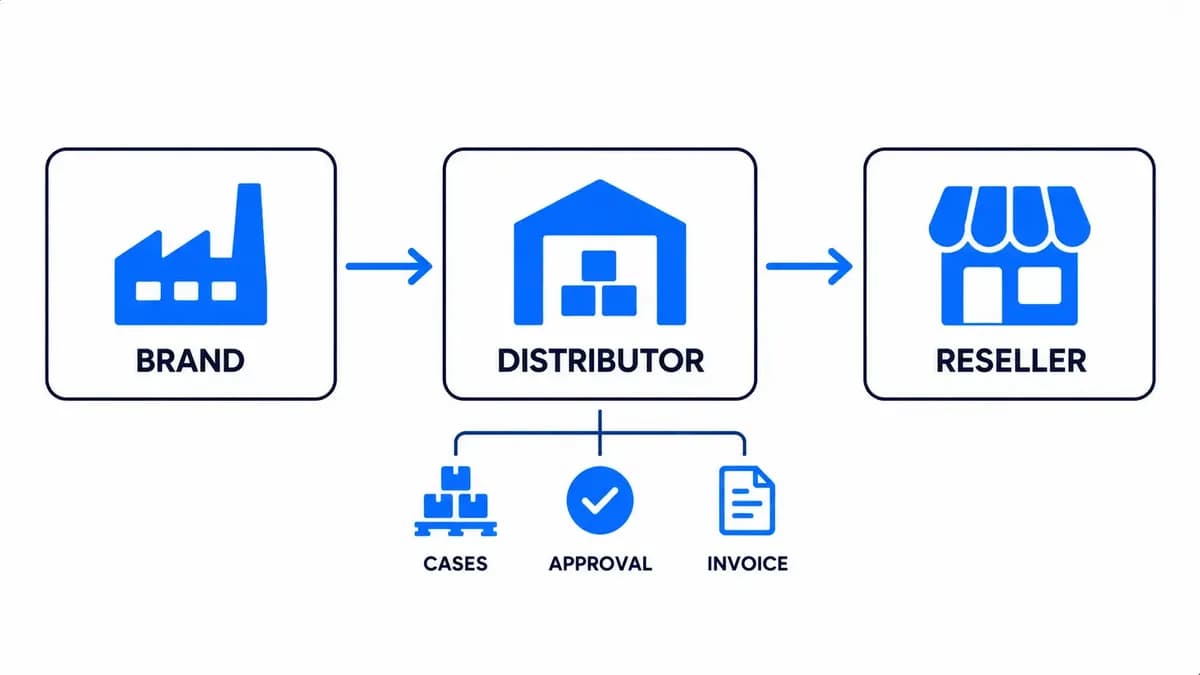
The easiest way to see what a B2B distributor does is to follow one product from the brand to your shelf.
A brand finishes a production run. It does not want to sell that run one case at a time to thousands of small stores. So it sells pallets to a small group of B2B wholesale distributors, usually under a written agreement that says what they can sell and to whom.
The distributor puts those pallets in a warehouse. Now it does the work the brand skipped. It splits pallets into cases. It checks new business customers and approves some of them. It gives approved accounts payment terms. It ships orders in the quantities a reseller can actually afford.
Then you place an order. The case arrives with an invoice that carries the distributor's name, address, and your account details. That invoice is the record of where your stock came from.
The government's description of the wholesale trade sector puts the core of it plainly: businesses that wholesale goods "generally without transformation." The product leaves the warehouse as it arrived. What the distributor adds is quantity, timing, credit, and paperwork, and those four things are the whole service.
Why B2B Distribution Exists
From the outside, a distributor can look like a layer of extra cost between you and the brand. In practice, it is how the brand reaches you at all.
The scale explains it. US merchant wholesalers recorded $817.5 billion in sales in August 2026, and wholesale trade employed about 6.1 million people in September 2026 (a preliminary figure). Brands cannot run that many small accounts themselves. They would need the warehouses, the credit checks, the collections team, and the customer service for every reseller in the country.
So the brand keeps a short list of accounts it trusts and lets distributors carry the rest. That trade is why most new resellers will never buy direct from a brand, and why the distributor is usually the right first stop.
How Do B2B Distributors Make Money?
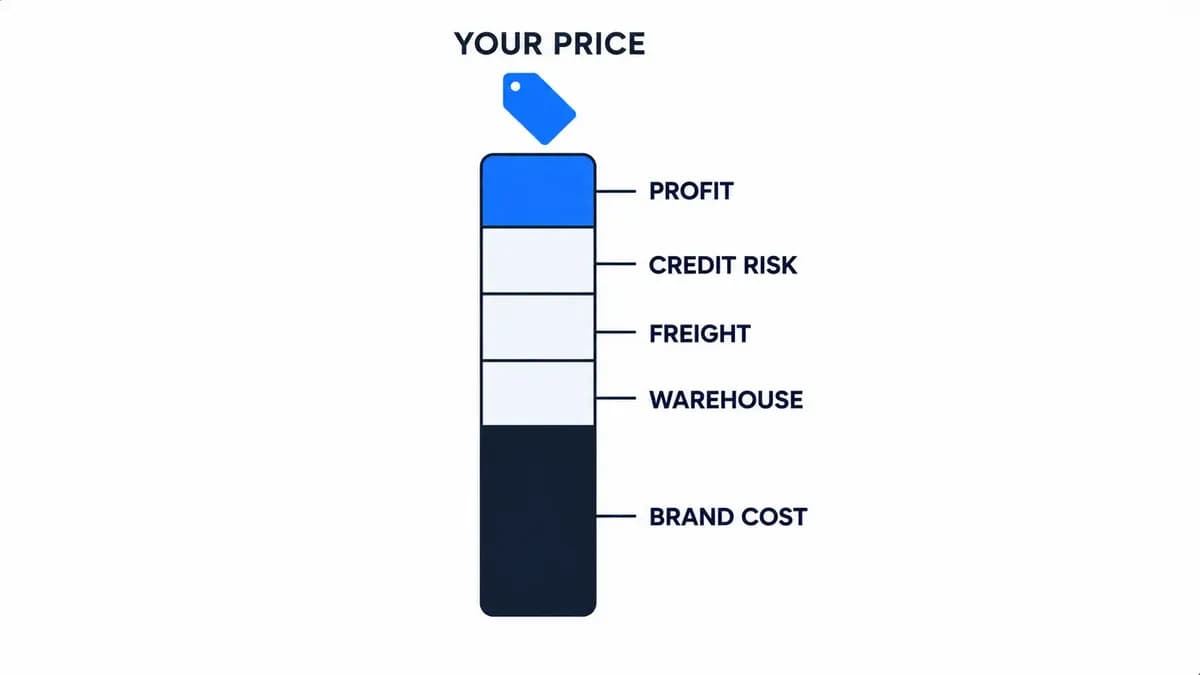
The main source is the spread. A distributor buys at the brand's distributor price and sells at a higher price to you. That gap has to cover the warehouse, the staff, the freight in, the credit risk of every account on terms, and still leave a profit.
Distributors also earn in ways a reseller rarely sees. Brands often pay for volume or for hitting targets. Some distributors charge for freight, small orders, or special handling. Payment terms play a part too. Some distributors charge late fees, and every account on terms ties up their cash, which is why they give terms only after you have a track record.
This explains something that confuses many resellers. Two distributors can carry the same product at different costs, and both can be honest. One may buy at a better tier, run leaner, or want your category more. The only way to know which one is cheaper for you is to put their numbers side by side.
Types of Wholesale Distributors a Reseller Will Meet
The same BLS sector breakdown splits wholesale into merchant wholesalers and agents or brokers. Merchant wholesalers buy and hold the stock. Agents and brokers arrange sales for others. As a reseller, you will almost always buy from the first kind.
Inside that group, four differences matter in practice:
- Position in the chain. A master distributor buys from the brand and sells to other distributors. An authorized distributor sells to resellers. A sub-distributor buys from another distributor. Our breakdown of master vs authorized vs sub-distributors covers which ones fit a reseller.
- Breadth. Broadline distributors carry many categories. Specialty distributors go deep in one, and often know it better.
- Reach. Some ship nationally. Others cover one region, and a brand may have different distributors for different territories.
- Who they sell to. Some welcome online resellers. Some only serve physical stores. You find out when you apply.
If the words themselves are the problem, our post on B2B distributor vs wholesaler vs vendor sorts out what each label means.
B2B Wholesale vs Retail: Why the Rules Feel Different
Buying wholesale for the first time feels unfriendly if you expect it to work like a store. It is built for businesses, so it asks business questions.
You will usually need a registered business, a tax ID, and a resale certificate before a distributor shows you real prices. You buy in case quantities, not single units. Returns are narrower, and payment terms come only after the distributor trusts you. These are the same checks the brand would run if it sold to you directly. Our guide to what distributors look for before approving a seller covers the documents in detail. This is general information, not tax or legal advice; your state's rules decide what you need.
What a Distributor Means for Your Invoice
When a brand, a marketplace, or a customer asks where your stock came from, the answer is your invoice. An invoice from a real distributor ties your product to a source the brand recognizes. An invoice from a retailer, a liquidator, or an unknown middleman may be perfectly real and still not prove much. Our post on authorized distributors vs middlemen vs gray market explains where that line falls.
If you sell on Amazon: your invoice is usually the first document you are asked for when you apply to sell a restricted brand or answer an authenticity complaint. A distributor invoice helps, but where a brand requires its own approval, the invoice alone will not cover it. Our brand authorization guide for Amazon sellers covers what passes and what does not.
How to Tell If You’re Buying From a Real B2B Distributor
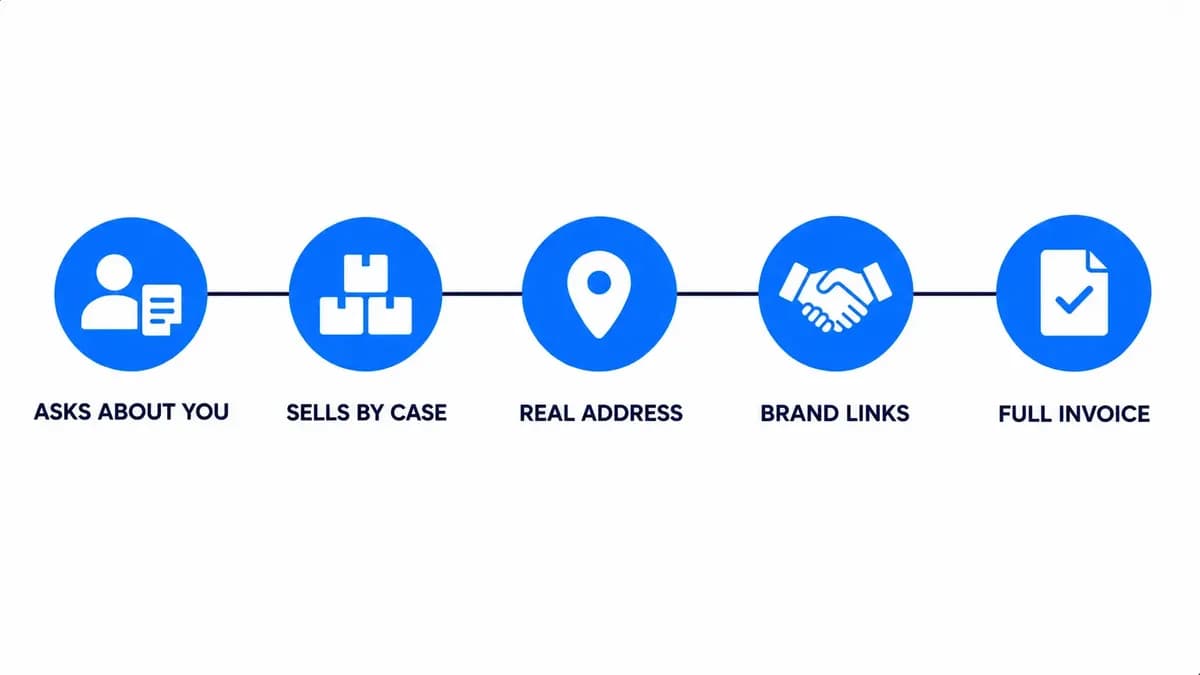
The plain wholesale distributor meaning tells you what to look for. A real one behaves like a business that holds stock for brands. Before your first order, check five things:
- They ask about you. A real distributor wants your business details and resale certificate before it shows full pricing.
- They sell by the case. Unit-by-unit pricing to anyone is a retail pattern.
- They have a real address. A warehouse or business address you can confirm, not only an email.
- They can name their brand relationships. A brand you contact can often confirm them.
- The invoice is complete. Legal company name, address, date, product details, and quantities.
There is also a faster first check. You can search a product free on B2B Supplier Hub and see real cost and real stock from every verified distributor in our network carrying it, before you apply to any of them. You unlock a supplier's name only when the numbers work for you, and then you deal with them directly, with no commission.
What Is a B2B Wholesale Distributor to a Reseller?
Put simply, it is the business that turns a brand's pallet into a case you can buy, and the name on the paper that proves where that case came from. Pick distributors by both: the cost and stock on the screen, and the source behind the invoice.
If you can't find who distributes a product you already sell, submit a request to find an authorized wholesale distributor. Our team looks for a verified distributor who carries it, free on every plan, and you get an answer within 30 days, either way. And when you already know the product, the B2B wholesale suppliers in our network show you their cost and stock before you pay for a single name.
Frequently asked questions
01Can a normal person buy from a wholesaler?
02Do you need an LLC to be a wholesaler?
03How do B2B distributors make money?
04What are the main types of wholesale distributors?
The B2B SupplierHub Team
Wholesale & sourcing
Stop hunting suppliers by hand. Type a UPC instead.
B2B Supplier Hub shows the suppliers in our network carrying a product on one page: wholesale cost, stock, and retail price side by side. Free to search, no card required.