
Supplier Management
How to Build a Three-Supplier Bench for Your Top Amazon SKUs

After 2020, the world's biggest supply chains quietly rewrote one of their oldest rules. For decades, the smart play was one supplier per item, which led to better pricing and simpler management. Then everything broke at once, and by 2024, 73 percent of supply chain leaders in McKinsey's global survey were sourcing critical items from more than one supplier.
They didn't do it because backups are cheap. They did it because they'd finally priced what a single point of failure actually costs. A wholesale reseller runs the same risk in miniature: every top SKU tied to one distributor is a profitable product with a single point of failure built in.
The fix is not complicated, but it does need to be deliberate. It is called a bench: three qualified suppliers for each of your most important SKUs, set up before you need them. One carries the volume. One stays warm. One exists purely so a bad week never becomes a bad quarter.
This blog walks you through how to build that bench in 60 to 90 days: which SKUs deserve one, what each of the three seats is for, and how to keep the whole thing running without wrecking your margin.
Why Relying on One Supplier for a Winning SKU Is a Quiet Liability
The shift among big companies wasn't a one-year panic. Back in 2020, only 55 percent of supply chain leaders had a dual-sourcing strategy; four years and several crises later, nearly three in four did, and in McKinsey's 2024 survey, nine out of ten companies said they had run into supply chain problems that year. Companies with entire procurement departments concluded that a single source for anything important is a risk they are no longer willing to carry.
A wholesale reseller faces the same risk in smaller, more personal ways. Your distributor runs out of your top SKU and can't say when it's coming back. A price increase lands with two weeks' notice and erases your margin.
Your account gets put on allocation during Q4, exactly when you need depth. A representative leaves, and the new one doesn't return emails. None of these are rare events. Any one of them, hitting a product that carries a big share of your profit, does real damage.
And the cost of an empty listing is bigger than most sellers assume. A landmark retail study by Thomas Gruen and Daniel Corsten found that out-of-stocks cost retailers roughly 4 percent of annual sales and that shoppers facing an empty shelf often buy from a competitor instead of waiting. Online, the shelf next door is one click away. Every day your winner sits unavailable, a competing seller is collecting the sales, the reviews, and the sales-rank momentum you spent months building.
This post is about the fix, not the full argument for why single-supplier dependency is so dangerous. That argument deserves its own piece. Here, we are building the structure.
Which SKUs Actually Earn a Supplier Bench (and Which Don't)
First, let’s talk about filters. Building a bench isn’t just a walk in the park; it comes with real costs like applications, minimum orders, and the time you need to build relationships with suppliers you might not even buy from right away. If you try to put that effort into every single SKU in your catalog, you’ll end up stretched too thin and won’t finish anything. The bench is meant for the products that really matter.
To find those key products quickly, ask yourself two questions. First, which SKUs are responsible for about the top 20 percent of your profit? Remember, we’re talking profit here, not just revenue. Second, for each of those SKUs, if it suddenly became unavailable for 30 days starting today, would that be just a minor inconvenience or a serious blow?
A steady product with a modest margin might be easy to replace, but a product that contributes significantly to your monthly profit? That’s a different story.
For most sellers this filter produces a short list of 5-15 SKUs. That's the point. A bench for twelve products is something you can actually build this quarter. But a bench of two hundred? That’s a plan you will abandon by week three.
The Three Seats on Your Supplier Bench and What Each One Is For
A bench is not three interchangeable suppliers. Each seat has a different job, and you evaluate each one against different questions.
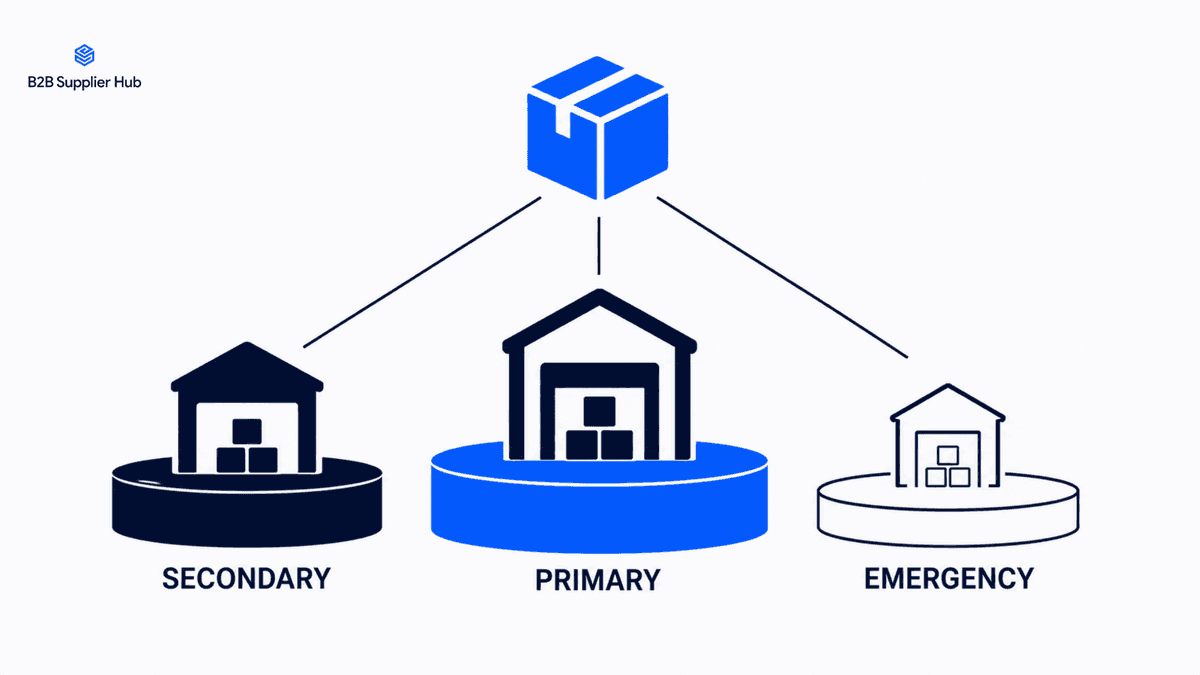
Seat One: The Primary Supplier You Order From Most
This is your best combination of landed cost, stock depth, and reliability, usually the supplier you already have a solid relationship with. They handle most of your volume, because volume is what earns you better pricing and priority when stock runs low. Building a backup plan doesn’t mean you should compromise this relationship. In fact, having alternatives can make you a calmer, better customer.
Seat Two: The Secondary Supplier You Keep Warm
This is the seat most sellers get wrong, if they fill it at all. The secondary is not a name in a spreadsheet. It is an approved, active account you order from regularly, even if it's only once a quarter and even if the prices are a little higher than your primary supplier’s.
So, why go with a supplier that costs more? Because a backup you’ve never actually purchased from isn’t really a backup; it’s just a phone number.
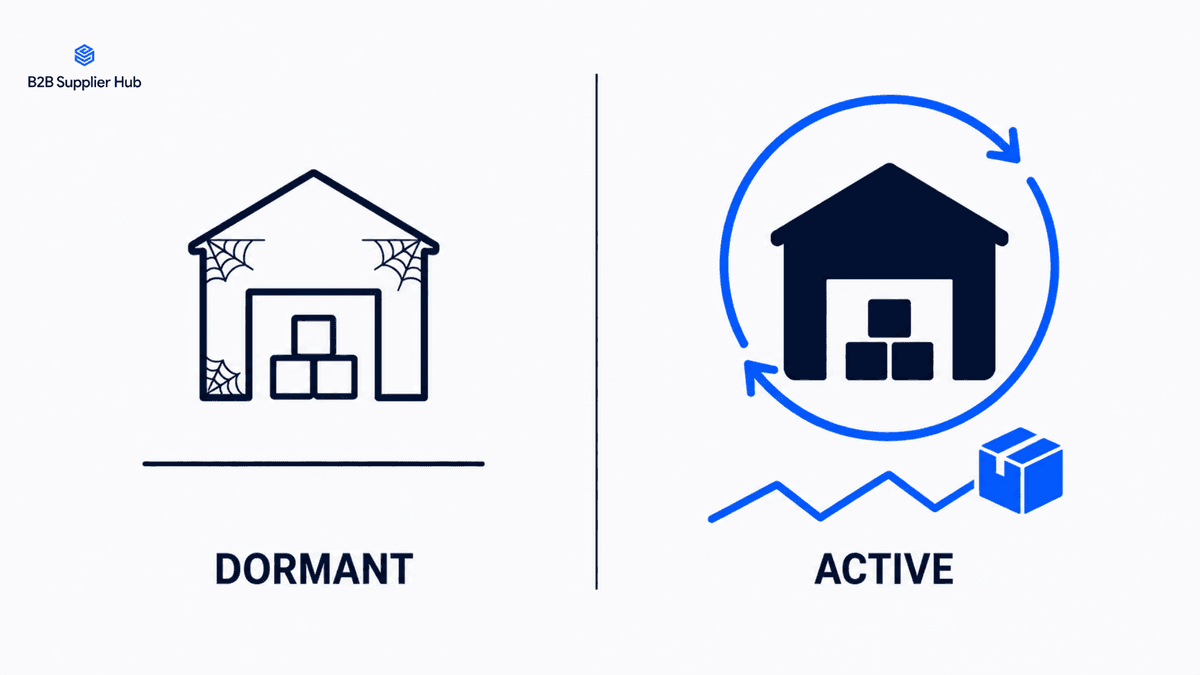
That account might have gone inactive, the pricing you were quoted last year could be outdated, and the person who set you up might no longer be there. By placing small, regular orders, you keep the account active, ensure the pricing stays current, and maintain your status as a valued customer.
They'll be ready to assist when you need them most. Think of the price difference between your primary and secondary suppliers as an insurance premium, a small, known expense that shields you from a potentially much larger, unexpected cost.
Seat Three: The Emergency Source You Hope to Never Use
The third seat is definitely lighter. This supplier is verified and approved; you’ve taken care of the paperwork and confirmed they actually have the product, but you might never place an order with them.
Their prices could be significantly higher. And that’s okay. The emergency seat is there for those times when both your primary and secondary options fail simultaneously: think of a manufacturer allocation squeeze, a widespread shortage, or a Q4 where everyone runs out of stock. In those moments, having a worse margin on available inventory is far better than having a perfect margin on absolutely nothing.
What’s crucial for this seat is that the approval process is already complete. Distributor applications can take weeks to process. If you wait until a crisis hits to handle that paperwork, your best option could be sitting idle the entire time. Taking care of it now means your emergency plan is just an email away.
Building the Bench: A 60 to 90 Day Sequence Step by Step
Here's the whole process, in order. It's boring, and it works.
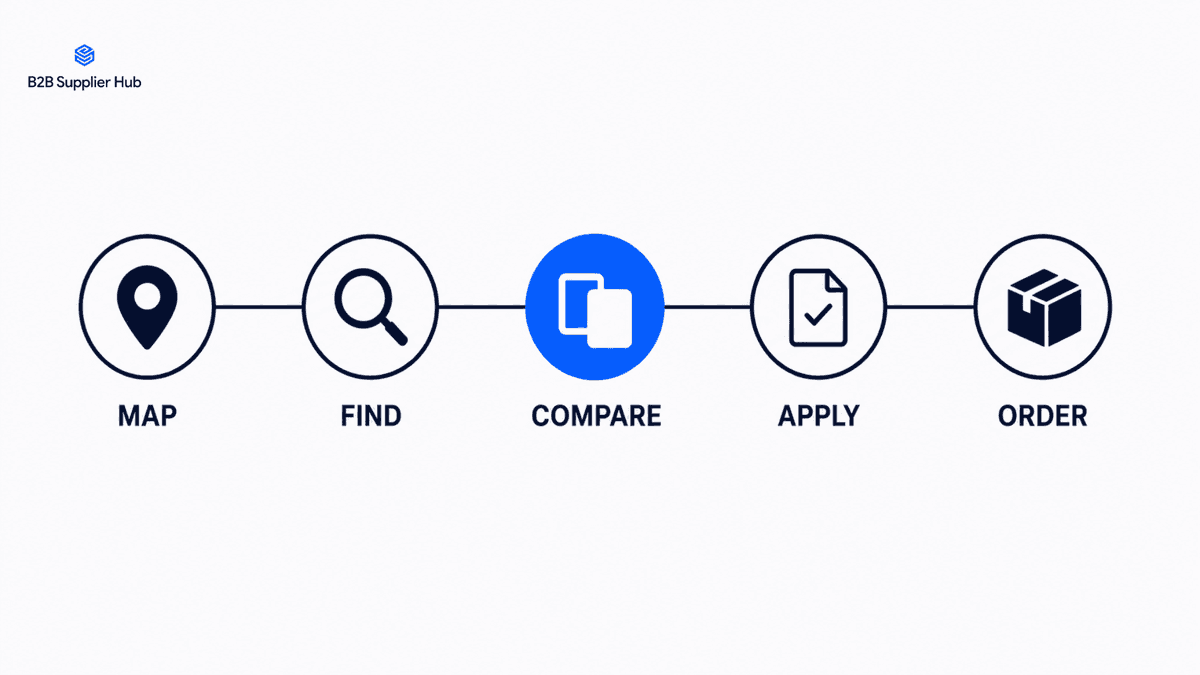
Week 1: Identify Which SKUs Qualify for a Bench
Map what you have. Pull your short list of bench-worthy SKUs and write down the current source for each. Most sellers discover the problem right here: eight winners, and six of them lean on the same single distributor.
Weeks 1 to 2: Approach a Second Authorized Distributor
Find the candidates. For each SKU, the question is: Who else carries this exact product, at what cost, with real stock behind it? If your candidate list is thin, widen it with our guide to finding wholesale suppliers for Amazon FBA. This is reverse sourcing, starting from a proven product and working backward to its suppliers, and it has traditionally been the slowest step, done through trade-show conversations and cold emails.
It's also the step B2B Supplier Hub was built to shorten: search any product for free and see the actual numbers, wholesale cost, live stock, and retail price for matching suppliers in our network side by side. You compare candidates on the numbers first and connect with a supplier only when one is clearly worth pursuing.
Weeks 2 to 4: Place a Small Test Order with the Secondary Supplier
Compare before you commit. Line up your candidates against your primary: unit cost, stock depth, where they ship from, payment terms, and how their catalog fits the rest of your business. A supplier who carries eight of your SKUs is worth more than one who carries one. Our step-by-step framework for comparing wholesale suppliers covers the full scorecard, and this list of questions to ask a distributor before your first order will save you an awkward surprise later.
Weeks 3 to 8: Identify and Vet an Emergency Source
Take your time with the application process and remember that getting approved by a distributor is a significant hurdle, not just a mere formality. It can take a while for applications to be processed, and you might face some rejections along the way.
Just because a supplier carries your product doesn’t mean they’ll sell it to you. Prepare for some bumps in the road; our guide on how to get approved by wholesale distributors walks through what they look for. And before any first order, run the supplier verification red flags check.
Weeks 6 to 12: Finalize and Maintain the Full Bench
Place the qualifying order. Once the secondary approves you, order something real. It doesn’t have to be big; just make it real. This one order tells you their actual fill rate, actual ship speed, actual invoice quality, and all the details that a price sheet just can’t show you. Plus, it transforms the account from just paperwork into a genuine relationship.
Every quarter, take a moment to review the bench. Spend about fifteen minutes on each SKU: Is the primary still offering the best deal? Has the pricing for the secondary changed? Is the emergency source still stocking the product? Benches can become outdated without anyone noticing. A quarterly check helps keep everything in line. Onboarding a new wholesale supplier in 90 days is a great achievement if it is done with proper filters.
What a Three-Supplier Bench Actually Costs You
A bench isn’t exactly free, and pretending it is would be misleading. When you split volume, your primary source ends up with a bit less, which can really impact tier pricing. Plus, the secondary’s quarterly order can tie up cash inventory you might have bought cheaper elsewhere. And let’s not forget, those applications can take hours that you could be using for something that pays off quicker.
Now, let’s balance that with the other side: just one 30-day stockout on a top SKU can lead to lost sales, a drop in rank, and a competitor sliding into your spot, and that usually costs more than a whole year of bench maintenance. Big companies faced this exact dilemma in the years following 2020, and they’re still dealing with it.
In McKinsey's 2025 survey, 82 percent of companies reported that tariffs were messing with their supply chains, and dual sourcing was one of the most popular solutions. The takeaway is clear: building resilience is something you invest in gradually, before you actually need it.
A Three-Supplier Bench Is Insurance, Not Overhead
If you remember four things from this blog, make them these.
First, the bench is for your winners, not your whole catalog. Protect the SKUs whose absence would genuinely hurt, usually a list of 5-15, and let the rest ride on a single source.
Second, the three seats do different jobs. The primary carries volume. The secondary stays warm through small, regular orders. The emergency source is pre-approved and may never be used. Three suppliers you've never ordered from is not a bench; it's a list.
Third, the price gap on your secondary is an insurance premium, not a mistake. You are paying a small known cost to remove a large unknown one. That's not inefficiency; it's the same trade the world's biggest supply chains have been making since 2020.
And fourth, the approval is the bottleneck, so do it early. Finding who else carries your product has become the fast part. Getting approved to buy from them still takes weeks, which is exactly why the bench has to be built in calm weather. The sellers who handle a supplier failure well aren't quicker in a crisis. They just finished the paperwork before the crisis arrived.
Frequently asked questions
01How many suppliers should I have for one product?
02Should I tell my main distributor I'm using a backup supplier?
03Is it worth paying more to a second supplier?
04How often should I order from a backup supplier?
05What if I can't get approved by a second distributor for my product?
The B2B SupplierHub Team
Wholesale & sourcing
Stop hunting suppliers by hand. Type a UPC instead.
B2B Supplier Hub shows the suppliers in our network carrying a product on one page: wholesale cost, stock, and retail price side by side. Free to search, no card required.