
B2B Supplier Hub
Why Some Products Have No Distributor for You
Sometimes you can't find a distributor because there isn't one for you to find. The brand sells direct, or through a single locked partner, or only to accounts you'll never qualify as. This post is about spotting that fast, so you can stop hunting products that were never gettable and put the time somewhere it pays off.
The problem is that a locked product and a merely hard-to-find one look the same at first: both give you an empty search. But one is worth chasing and the other isn't. The signs below tell you which one you're dealing with.
Identify the Brand and Its Parent Company
Before you can figure out how a product is distributed, you have to know exactly who makes it and who owns them. Sounds basic, but this is where a lot of dead ends quietly begin. A UPC or a competitor's listing gives you a product. It doesn't always give you a clean brand, and brands almost always sit under a bigger parent company that decides how everything gets sold.
So start simple. Look at the packaging or the brand field on the listing, then go find the parent. Search the brand name along with "parent company" or "owned by," and check the footer of the brand's own website for a corporate name. This step matters for two reasons. First, distribution rules are usually set at the parent level, not the individual brand. Second, that parent's other brands are going to be your best backup plan if this one turns out to be a wall. If you can't even get from the product to a clear brand, that's a slightly different puzzle, and we walk through it in what to do when no distributor seems to carry your product.
Once you know the brand and its parent, you can read the signs that follow.
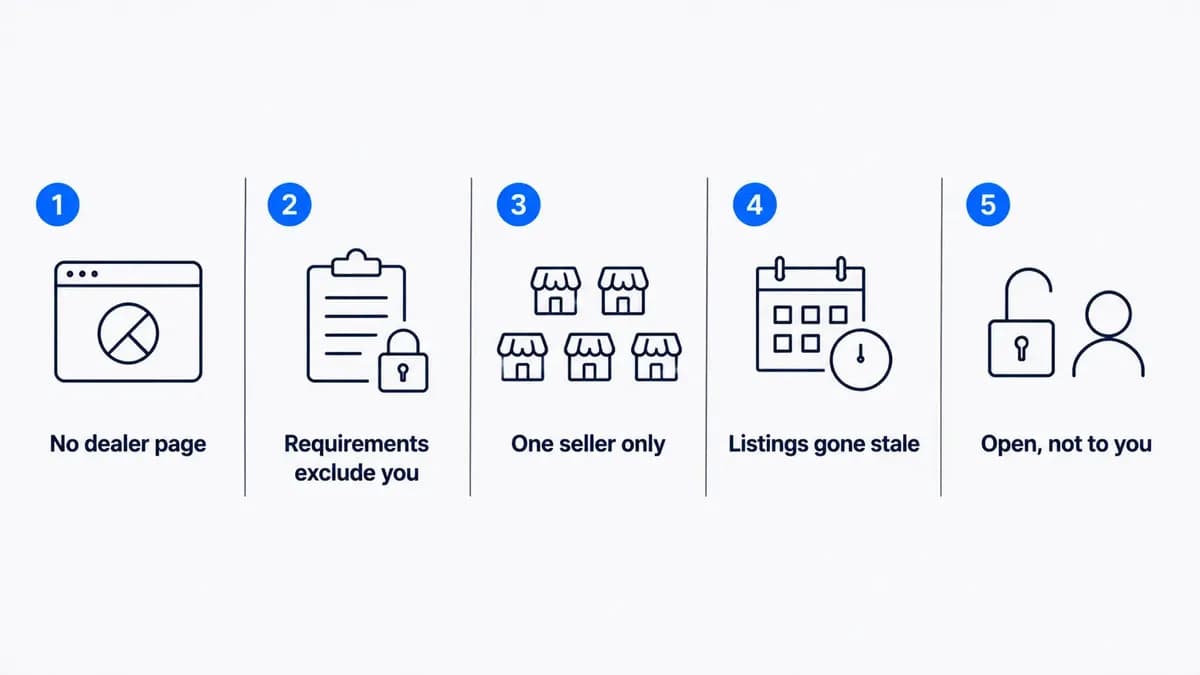
The 5 Signs of Closed or Locked Distribution
Locked distribution shows up in a few different shapes, and each one leaves a mark. Here's what to look for, more or less in the order you'll run into them.
There's no "become a dealer" page anywhere. Brands that actually want resellers make it easy to find them: a dealer application, a wholesale inquiry form, a "where to buy" page. When a brand's site has none of that, it's usually on purpose. Companies that run closed or exclusive distribution already picked their partners, sometimes just one, and they're not looking for more. That's the classic locked setup: selling rights handed out by contract to a small group, with no way in.
There's a dealer program, but the requirements are clearly built to keep you out. A physical storefront. Minimum territory commitments. Trained service staff. Ten years in business. This is selective distribution, and it means the brand does sell through wholesale, just not to accounts like yours. An open application form isn't the same as an open door. Our guide to brand authorization tiers breaks down how brands think about these layers of access.
Every seller you find turns out to be the same company. Look at who's actually selling the product online. If every listing traces back to the brand itself or to one single company, then it's either direct-only or a one-partner deal. Direct-only brands don't have a wholesale channel at all. You can't track down a distributor that was never appointed in the first place.
The listings exist, but they're old. You dig up the product in a distributor's catalog from two years ago, but stock is zero everywhere and nobody calls you back about it. Distribution that used to exist can get pulled. Brands drop partners, take lines in-house, or end relationships, and those old catalog pages hang around long after the deal behind them is gone.
It's available wholesale, just not to you. This is the most common one, and honestly the most annoying, because the distribution isn't closed in general. It's closed to your kind of account. The distributor carries the line but only sells it to brick-and-mortar shops. The brand allows wholesale but bans marketplace resale in its dealer terms. A regional distributor has it, but not in your region. If you're already approved with a distributor and still can't buy a certain brand from them, this is almost always what's going on.
One quick warning about a sign that looks more useful than it is. A brand selling on its own website at full price does not automatically mean closed distribution. Plenty of perfectly open brands hold their direct prices at full retail while distributors sell wholesale underneath them, usually because of MAP policies. So treat brand-direct pricing as a hint, never as proof on its own.
Why Gray Market Isn't the Answer
When the real channels are closed, gray market supply starts to look pretty good. Diverted goods, overseas versions, product that slipped out of an authorized channel somewhere up the chain. We've written a full piece on authorized distributors versus middlemen and gray market, so here's the short version: the shortcut costs more than the product you're missing. Invoices from unauthorized sources fall apart the moment they're questioned, warranty support disappears, and it's your account holding all the risk. A locked product is a closed door. Gray market is a door with an alarm behind it.
What to Do When a Product Is Locked: 4 Parallel Moves
Here's the order we'd work it. And the key is that these steps happen at the same time, not one after the other, so you're never sitting around waiting on any single one.
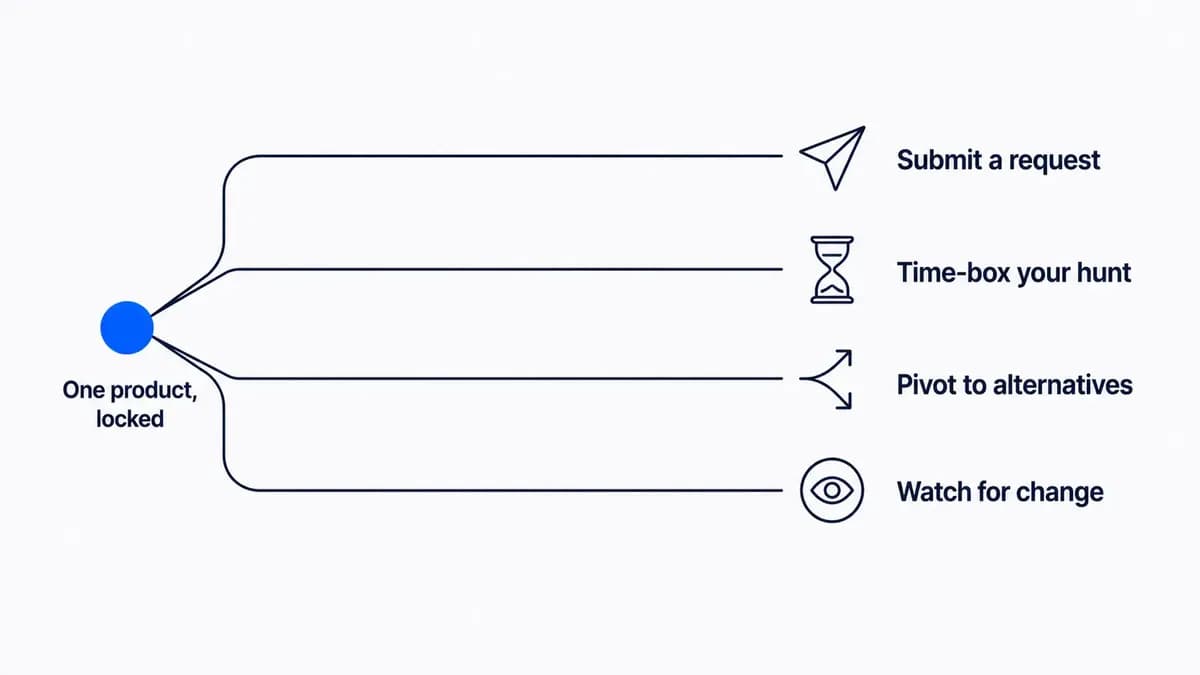
Submit a Sourcing Request First
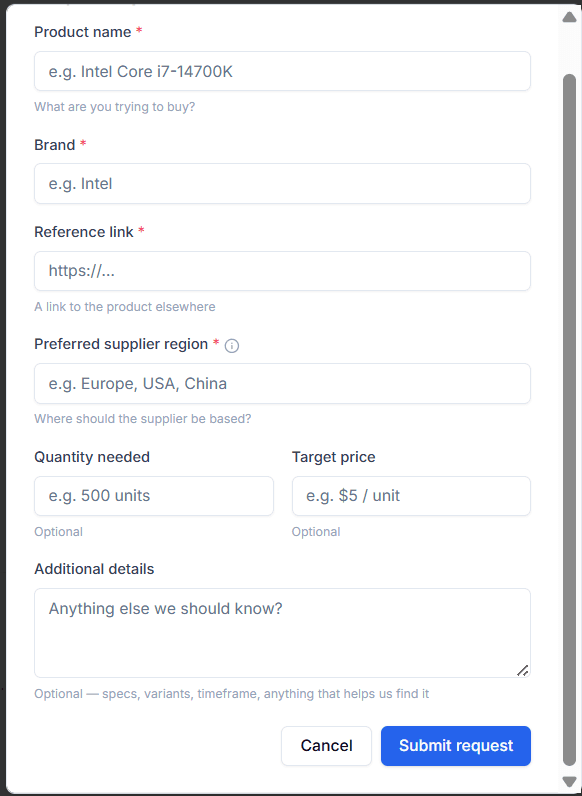
If you're on B2B Supplier Hub, a sourcing request is free to submit on every plan, and it runs in the background while you get on with everything else. Our team does the outreach, and you get an answer, either way, within 30 days. Sometimes that answer is "this one's closed," and that's genuinely worth having. It closes the question so you can stop pouring your own hours into it. Here's how the whole thing works if you haven't used it yet.
Time-Box Your Own Search
Decide up front how many hours this product is worth. A couple of focused hours running the checks above will settle most cases either way. If nothing's moved after that, the product goes on a shelf, not back onto your to-do list.
Pivot to Substitutes and Sister Brands
The people buying that locked product are buying similar things too. Hunt for substitutes in the same niche, and go check the locked brand's parent company, because big brand families often have sister brands with totally different distribution rules. One catch, though: run the same quick check on the substitute before you commit to it, so you don't just swap one wall for another.
Watch for the Channel to Reopen
Distribution isn't permanent. Brands loosen up after growth stalls, after they get bought, after a fight with their retail partners finally ends. Drop the product on a watchlist and check back once a quarter instead of once a week. Locked today doesn't mean locked forever, but it does mean locked this quarter, and your money should treat it that way.
Why Brands Use Closed Distribution
Once you've done the practical work, it helps to know that none of this is random. Tight distribution gives a brand control over its pricing, because fewer sellers means fewer price wars. It protects quality on products that need setup or support. It keeps loyal retail partners happy, since a shop that bet on the brand doesn't want forty marketplace sellers undercutting it. And it makes the rules easier to enforce, because you can police MAP across five partners but never across five hundred.
That's why pushing harder rarely works. A brand that built a small, tight channel on purpose isn't waiting for one more application to change its mind. Spotting the lock early beats fighting it.
The operators who handle this well aren't the ones who never hit a locked product. Everyone hits them. They're the ones who spot the wall in an afternoon, take the no, and move that time onto products they can actually buy. Anyone can spot a locked product. Fewer people are willing to drop it and move on.
Frequently asked questions
01What does closed distribution mean in wholesale?
02How do I know if a brand uses selective distribution?
03Can closed distribution change over time?
04Does a sourcing request work on closed-distribution products?
The B2B SupplierHub Team
Wholesale & sourcing
Stop hunting suppliers by hand. Type a UPC instead.
B2B Supplier Hub shows the suppliers in our network carrying a product on one page: wholesale cost, stock, and retail price side by side. Free to search, no card required.