
Distributor Authorization
How to Get Approved by Electronics Distributors: 5 Checks
An electronics distributor doesn't read your application the way you wrote it. You filled in a form. The person on the other side opens it next to a stack of brand agreements they signed, and reads your form against those agreements. That is why electronics distributor account requirements run longer than the ones you met at your last supplier, and why a clean resale certificate and a real EIN only get you as far as the first read.
This post goes through the electronics layer from that side of the desk. The base paperwork is covered in how to open a wholesale account and the general signals in what distributors look for before approving a seller.
Why Electronics Distributors Check More Than Other Categories
An electronics distributor approves you on behalf of the brands it carries. Under US federal antitrust law, a manufacturer may decide how many distributors it will have and who they will be, and it can stop dealing with a reseller that does not follow its resale price policy. Brands write channel rules into their distributor agreements, and a distributor can lose the line if its customers break them.
Three things make electronics stricter than most categories. Brands police advertised pricing harder, because the products are easy to compare across the web. Units carry serial numbers, so a problem unit can be traced back to the account that bought it. And warranty claims are expensive, so brands care where a unit was sold.
So the credit manager reading your form has one question in mind: could this account cost us a brand line? Each of the checks below comes back to that.
Electronics Distributor Account Requirements: The Base Layer
You still need the standard set: registered entity, EIN, state resale certificate matching the entity name exactly, business bank account, trade references if you have them. Most electronics distributors add a credit application and a signed terms document even if you plan to prepay. The checks below assume that layer is clean.
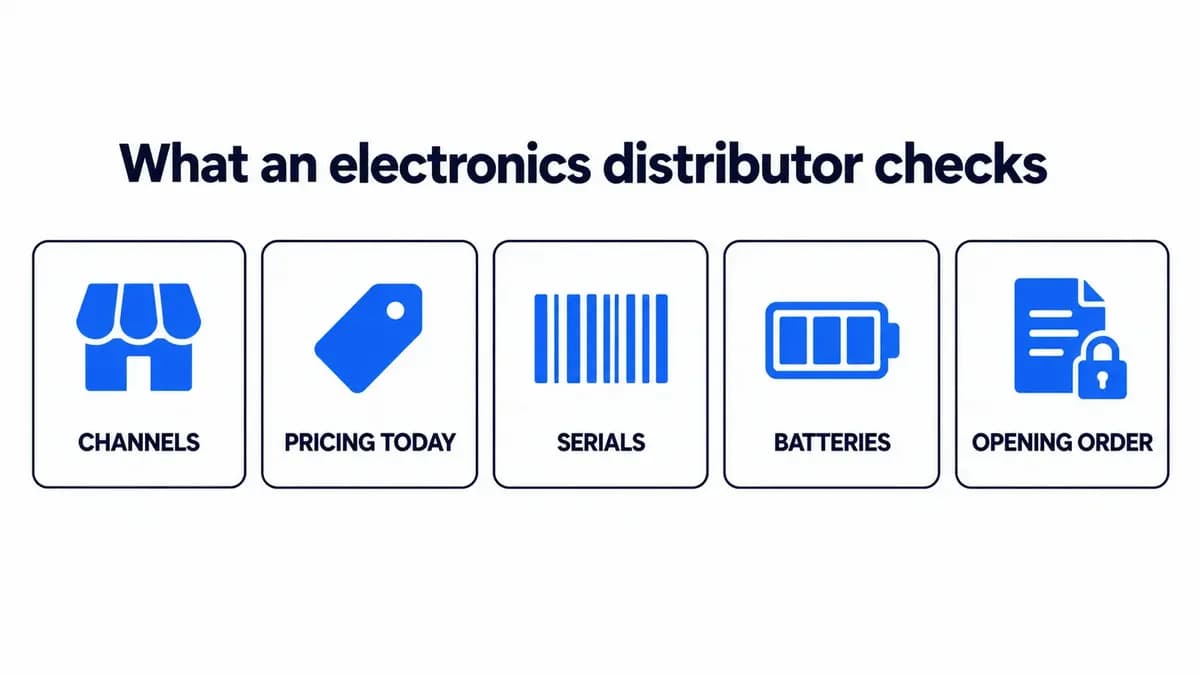
Check 1: Your Channel List, Brand By Brand
The first electronics-specific field is usually a plain question: where do you sell? A lot of resellers answer vaguely on purpose, and in this category that backfires. Many electronics brands run approved online reseller programs, and a distributor carrying such a brand may only sell to accounts the brand has cleared for a given channel. When you list your channels honestly, the distributor can tell you up front which lines are open to you and which need a separate brand approval. When you hide a marketplace and it shows up later in a serial trace, the account is usually closed.
What to write: every storefront, by channel, by name, then one sentence on the brands you intend to buy. A specific answer tells them you have done this before. A vague one makes them wonder what you left out.
Check 2: Your Pricing Today (MAP Before You Apply)
Before approving, the account manager will pull up your live listings and look at what you are charging today. If you are selling a brand they carry below its minimum advertised price right now, you have already answered the MAP question for them.
This catches resellers who assume the MAP policy is something they agree to after approval. In electronics, your pricing history is part of the application whether you sent it or not. Fix the floor on any brand you plan to buy through this distributor before you apply, and keep it fixed long enough to be seen.
Check 3: Serial Numbers, Warranty Region, And Where Your Units Go
Electronics distributors keep serial records on what they ship you, because that is how a counterfeit or diverted unit gets traced. Expect questions like: do you export, do you sell to other resellers, do you repackage.
If you sell US-region product to US customers through your own storefronts, say exactly that. The distributor needs to be able to show the brand that the units it sold you stayed in the warranty region and in a channel the brand allows. An account that cannot say where its units end up looks like a diversion risk, and diversion is what gets a distributor's line pulled.
Check 4: Batteries And Hazmat Readiness
Much of this category ships with lithium cells. Under US hazmat rules, each manufacturer and subsequent distributor of lithium cells or batteries must make a test summary available for products made since 2008. A real distributor can hand you that summary and the safety data sheet. A middleman often cannot.
From the distributor's side, the question is whether you can receive and move hazmat without creating a problem for them. If you ship into a marketplace fulfillment network, that network runs its own hazmat review, and the distributor's documents are what get you through it. A single line in your application saying you will ask for test summaries on any SKU that needs one shows you know how the category ships.
Check 5: Opening Order, Prepay, And Line Authorization
Electronics orders tend to carry higher ticket sizes, and opening order minimums often follow. Expect the first order to be prepaid, often by wire, and expect the distributor to size the account by what you put in the volume field. Be honest there. If you write a large number and then place a small first order, the account gets pushed down the rep's list faster than it would have if you had written the small number to begin with.
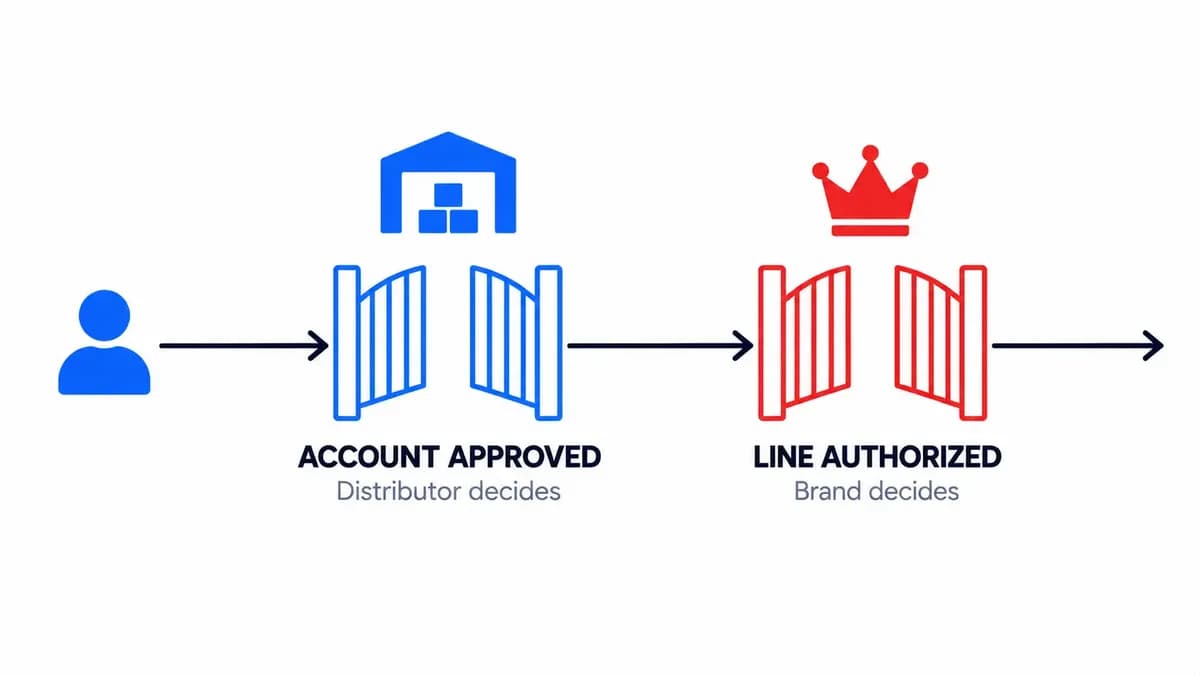
The part most new accounts miss is line authorization. Being approved as a customer does not mean every brand in the catalog is open to you. Restricted lines sit behind a second approval the brand controls; the distributor can only pass your request along. When the account email arrives, ask which lines you are cleared for before you build a buy plan.
How to Open an Account With an Electronics Distributor: The Sequence
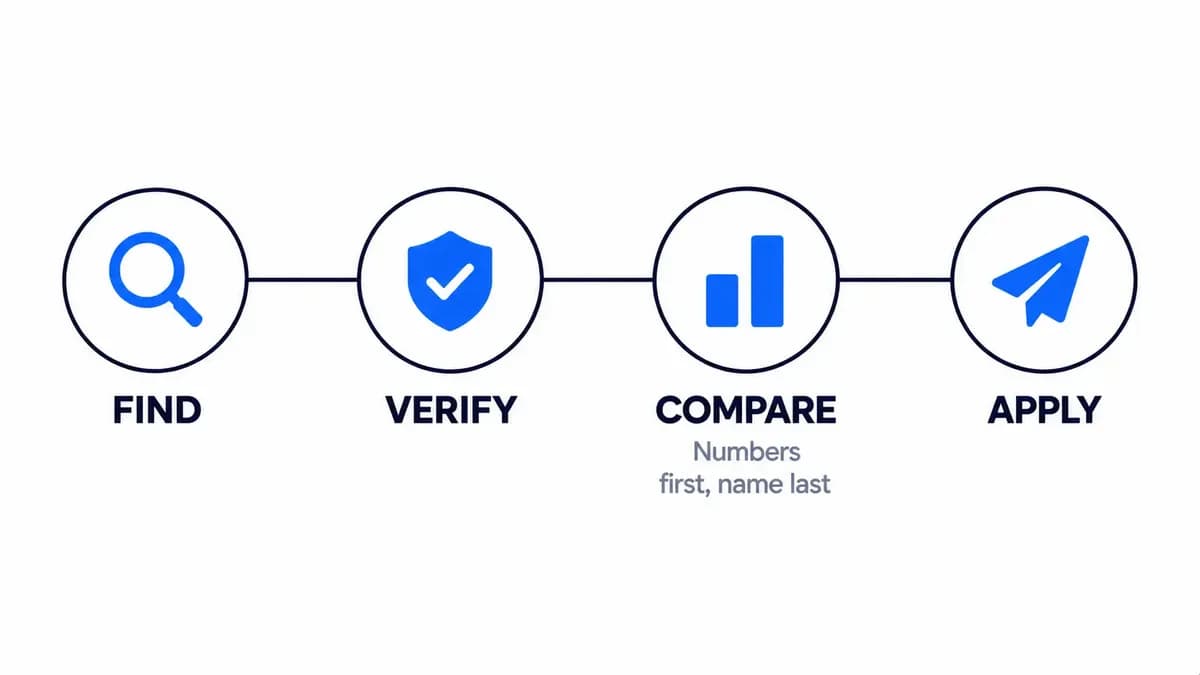
First, find the distributors that carry the products you already sell; the US electronics distributor guide explains the tiers. Second, verify your shortlist using how to verify an electronics wholesaler. Third, compare them before you apply to any of them.
The third step is the one that gets skipped, because comparing used to mean applying to each supplier in turn and waiting on each answer. You can now search a product free and see real cost and stock from every verified distributor in our network that carries it, with profit after selling fees next to it. Unlock the name and contacts of the one whose numbers work, then apply there. The approval itself still takes however long the distributor takes; you just no longer have to apply first to see the numbers.
5 Takeaways You Can Use Without Any Tool
- Treat the channel question as the real application. List every storefront and the brands you want.
- Fix your advertised prices on target brands before you apply, and leave them fixed long enough to be seen.
- Be able to say where your units end up: region, channel, no export, no resale to other resellers.
- Ask for the lithium battery test summary on any SKU that needs one. If a supplier cannot produce it, think hard about who you are buying from.
- After approval, ask which brand lines you are cleared for before you build a buy plan.
Read Your Application the Way They Will
Electronics distributor account requirements are long because the distributor answers to its brands. Read your own application the way they will and most of the checks become easy to pass. What no application can fix is applying to the wrong distributor, so compare the numbers before you spend an application on anyone. If the product you sell does not come up in a search, submit a request and our team will find an authorized wholesale distributor who carries it, free on every plan, with an answer within 30 days either way.
Frequently asked questions
01What do electronics distributors require to open an account?
02Can I get approved by an electronics distributor if I only sell on marketplaces?
03Does approval from a distributor mean I am an authorized reseller?
04Why was my electronics distributor application rejected when my paperwork was correct?
The B2B SupplierHub Team
Wholesale & sourcing
Stop hunting suppliers by hand. Type a UPC instead.
B2B Supplier Hub shows the suppliers in our network carrying a product on one page: wholesale cost, stock, and retail price side by side. Free to search, no card required.