
Supplier Management
Supplier Short Shipment? How to Find Who Owes You

Your order came in short. The usual fix is to email the rep and ask for a credit. That works if the warehouse made the mistake. It doesn't work if the carrier lost the boxes, or if the stock was gone before you ordered.
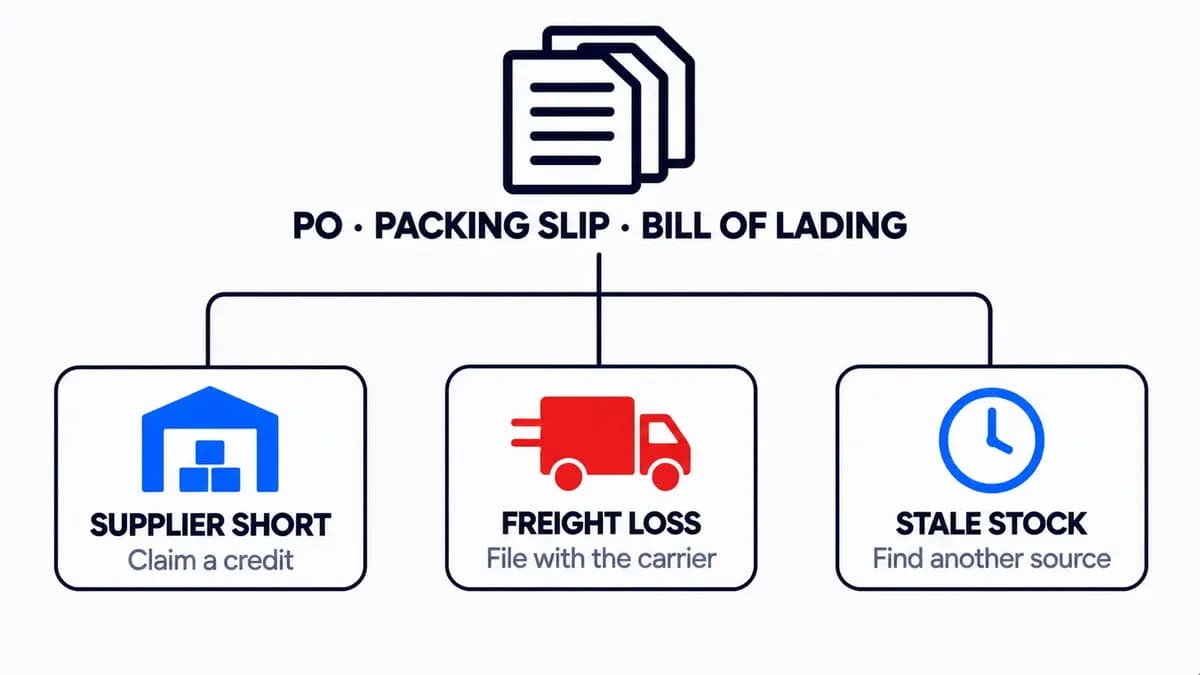
A supplier short shipment can happen in any of these three places, and each one has a different fix. Your paperwork will tell you which one you have.
Find Where the Units Went Missing: Check 4 Documents
Put four documents side by side: your purchase order, the packing slip, the invoice, and the carrier's bill of lading or delivery receipt. Where they disagree, starting with any packing slip discrepancy, tells you what kind of shortage this is.
The packing slip shows fewer units than your PO. The supplier shipped short and knew it. Usually the warehouse couldn't fill the line, and the missing units are either backordered or cancelled. Your question to the supplier is which one, and whether the invoice reflects only what shipped.
The packing slip shows the full quantity, but you received less. The units were billed as shipped and never reached you. Either the warehouse picked short, or the loss happened in transit. The carton count on the bill of lading settles it. If the carrier signed for the number of cartons you received, the shortage left the dock that way and it's the supplier's to fix. If the carrier signed for more cartons than were delivered, it's a freight claim.
Everything matches, and you're still short against the stock you saw. Nothing went wrong in shipping. The stock number you planned from was out of date or already spoken for. That's a planning problem, and the fix belongs in the next PO.
Why Distributor Stock Numbers Drift
Every stock number is a snapshot. The warehouse keeps selling after it's taken, and not only to you. The number can be wrong without anyone lying. Other accounts and the distributor's own reps are selling from the same stock. Units can be allocated to a large customer while still counting as on hand. A distributor with several warehouses may show combined stock while your order ships from one that has less. And each supplier updates its catalog on its own schedule.
That's why the last-updated date on a listing matters as much as the stock count. On B2B Supplier Hub, every listing carries a freshness timestamp so you can see how recent the number is before you build a PO on it.
How to Claim Credit for a Supplier Short Shipment
If the shortage is the supplier's, you want a short-ship credit, either as a credit memo or a corrected invoice. How fast you report it decides how easy that is.
Count on the day the freight arrives. If you use a prep center or 3PL, ask them to count against the packing slip before anything moves into storage. Note any visible shortage on the delivery receipt before signing, and photograph the pallet, labels and open cartons.
Then report it in writing. Under the Uniform Commercial Code, a buyer who has accepted goods must notify the seller of a breach within a reasonable time after discovering it. What counts as reasonable depends on the deal, and many distributors set their own reporting window in their terms of sale. Check yours, and assume it's short.
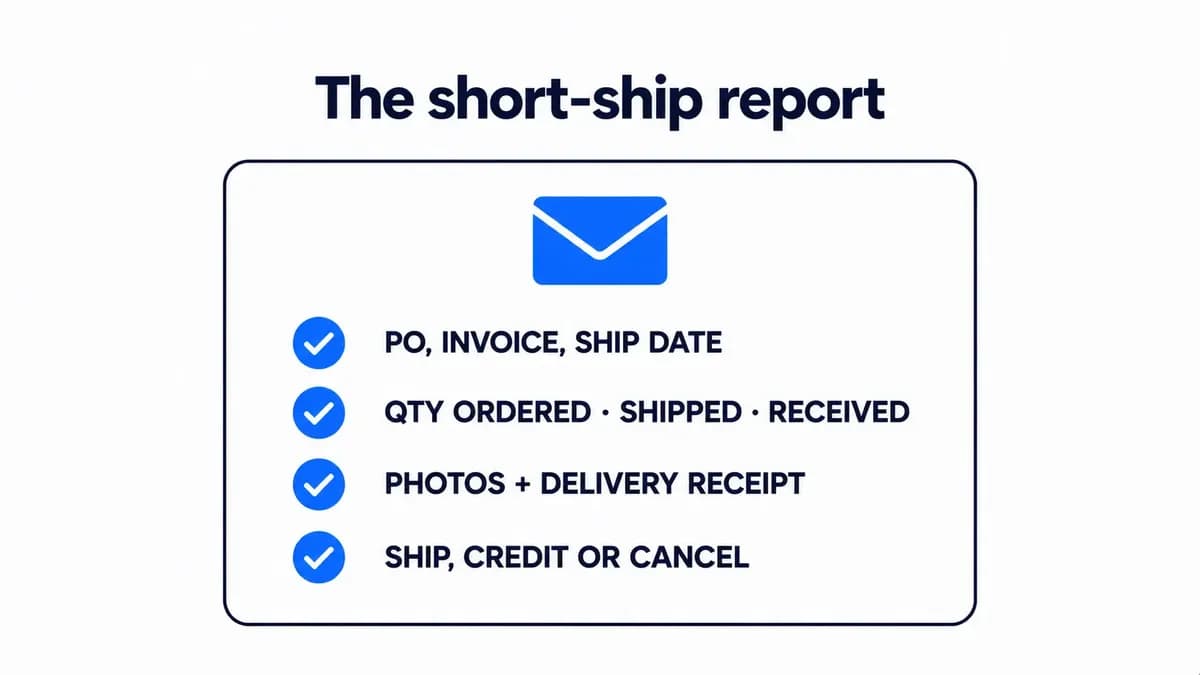
The reports that get sorted out fastest include:
- PO number, invoice number and ship date
- Each short line: item number, quantity ordered, quantity on the packing slip, quantity received
- Photos and the signed delivery receipt
- What you want: ship the balance, credit it, or cancel it
Don't skip the last line. If you leave it out, the supplier decides, and a backorder you didn't want will turn up weeks later on a new invoice.
This is procedural guidance for working with suppliers and carriers, not legal advice.
When It's a Freight Loss: Filing a Carrier Claim
If the bill of lading shows more cartons than were delivered, the claim goes to the carrier, filed by whoever arranged the freight. If the supplier arranged it, ask them to file and keep you updated.
Federal rules give you a minimum window here. For interstate freight, a carrier may not set a period of less than 9 months for filing a claim, and once a claim is filed, the carrier has to pay, decline, or make a firm settlement offer in writing within 120 days. Still, a shortage noted on the delivery receipt is far easier to prove than one reported after the freight is shelved.
When the Stock Was Gone Before You Ordered
If your paperwork matches but you still got less than the stock you planned on, nobody owes you a credit. You just need to find the missing units somewhere else.
If the product sells every day, you could run out soon, so follow the steps in what to do when a supplier runs out of stock. Ask the rep if the rest is coming, and when. If they can't give you a clear answer, find another supplier now.
You can search the product free to see real cost and stock from every verified distributor in our network that carries it. Each listing shows when the stock was last updated. If the product doesn't show up, submit a request and our team will find an authorized wholesale distributor who carries it. You'll get an answer within 30 days either way.
How to Prevent Short Shipments on Your Next PO
A lot of this can be headed off on the purchase order itself.
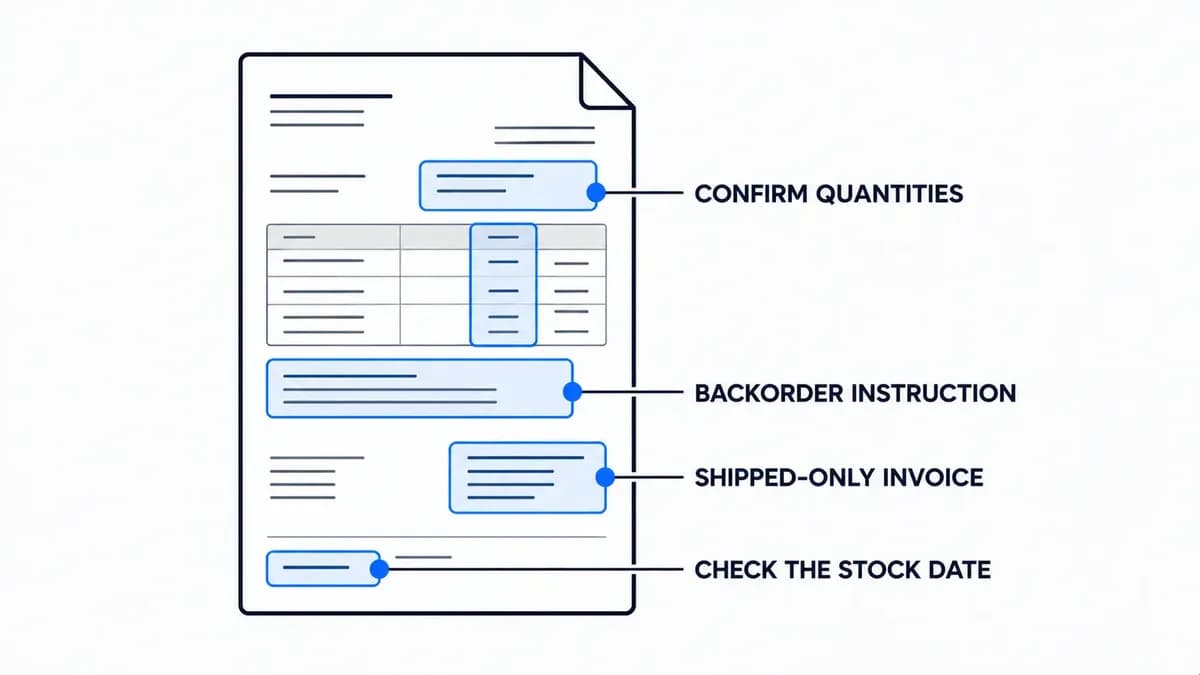
- Ask for an order acknowledgment with confirmed quantities per line before the order ships, so you hear about a shortage while you can still adjust the plan.
- Write your backorder instruction on the PO: ship partials and backorder the balance, ship complete only, or cancel anything not in stock.
- Ask that the invoice show shipped quantities only.
- For a large order against a stock number more than a few days old, call the rep and confirm the units are available to you before you send the PO.
- Keep a simple log of each supplier's fill rate. If shortages repeat, they belong in your supplier reliability score, and if you're early with this supplier, in the review steps from your first 30 days with a new distributor.
The Stock Number Is a Starting Point
Short shipments are part of buying wholesale. Most of what they cost you comes from catching them late or sending the claim to the wrong person.
So when an order comes in short, check the paperwork first. It tells you whether the supplier, the carrier or an old stock number is behind it, and who you need to talk to. Report it the same day, in writing, and say what you want: the rest shipped, a credit, or a cancellation.
Then make the next supplier short shipment less likely. Check how recent the stock number is before you size the PO, write your backorder instruction on it, and keep a second source ready for your best sellers. You can search your products free to see which other distributors in our network carry them and how much stock they have.
Frequently asked questions
01What is a short shipment?
02What should I do when a supplier ships short?
03Is a partial shipment from a distributor the same as a short shipment?
04How long do I have to report a short shipment?
The B2B SupplierHub Team
Wholesale & sourcing
Stop hunting suppliers by hand. Type a UPC instead.
B2B Supplier Hub shows the suppliers in our network carrying a product on one page: wholesale cost, stock, and retail price side by side. Free to search, no card required.