
Supplier Out of Stock? What to Do in the First 72 Hours
"Backordered, no ETA yet." That is the whole reply. It came in on the product that pays most of your bills, and the rep who sent it has already moved on to the next email.
There are two easy ways to get this wrong. Some wholesale resellers sit and wait, and quietly let the listing run dry. Others panic, send applications to four new distributors the same afternoon, and end up buying from a middleman whose invoice causes more trouble than the stockout ever did.
First, a quick check that you are in the right place. If the distributor has closed your account or told you they no longer sell to marketplace sellers, that is a different problem, and we cover it in your supplier stopped selling to Amazon sellers. If you have already decided to leave this supplier for good, read how to switch wholesale suppliers. This post is for the more common case: the supplier still wants your orders, the product is coming back, and you have a few days of stock and a decision to make.
Nothing new will arrive in three days. But in three days you can find out what is really going on, work out how long you can wait, and get the right things moving before you run out. Here is how.
Step 1: Get a Date and a Number, Not a Status
"Out of stock" is not an answer. It is a label that hides three different situations, and each one needs a different response from you.
- The first is a plain backorder. The distributor is waiting on the brand, and there is a date, even if the rep has not shared it yet.
- The second is allocation. The distributor has units, but not enough for everyone, so bigger accounts get served first and you are further down the list. The product is there. It just is not coming to you.
- The third is a data error. The catalog says zero, but the warehouse says otherwise, or the item was moved to a new code and the old one shows empty.
So your first message to the rep is two questions, sent in writing: when do you expect it, and how many units will you have. A rep who answers with a date and a quantity has a backorder. A rep who says "we have some, but" is telling you about allocation. If the rep checks and comes back with a different number, it was a mistake, and it is already fixed.
One thing to know before you trust that date. The latest wholesale trade report says distributors are getting more orders, paying more for products and shipping, and dealing with supply shortages and slower deliveries. Delivery dates are slipping right now, and it is nobody's fault. So ask for the date, then ask what happens if it moves. If the rep has an answer for that too, you can plan around it.
Step 2: Run Your Days of Cover Against Their Date
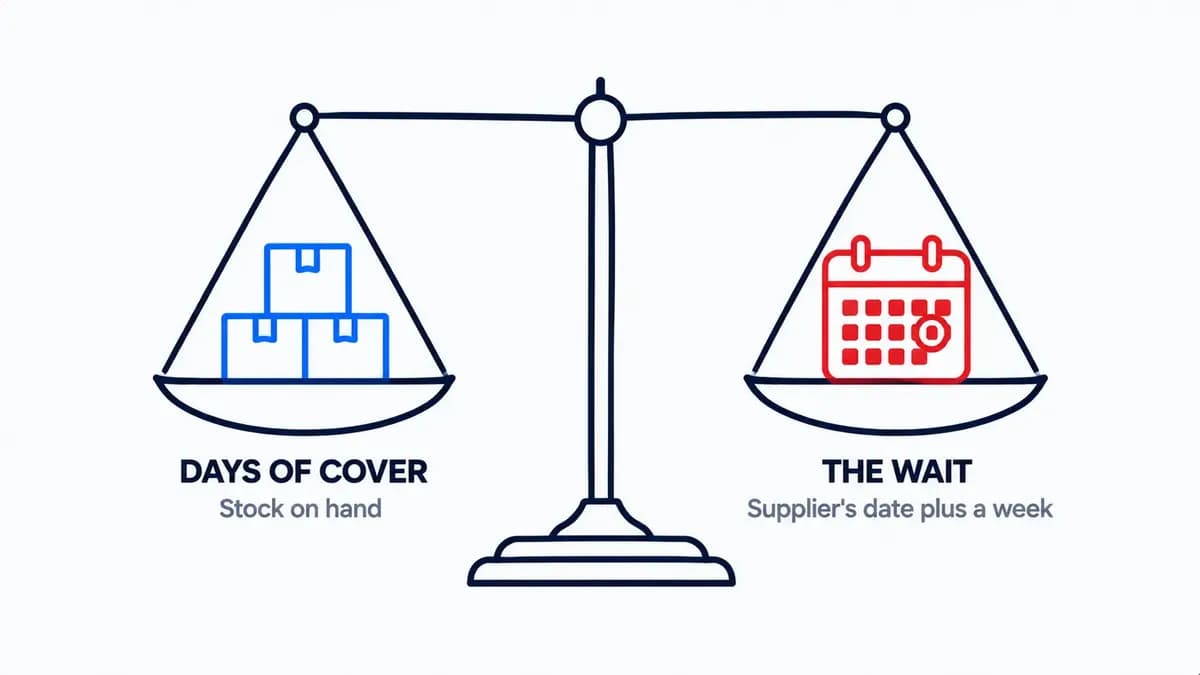
Take the units you have on hand and divide by what you sell in a day. That is your days of cover. Put it next to the supplier's date.
If your cover is longer than the wait plus a week for the date to slip, you are fine. Skip to "Before the 72 Hours Are Up," add the product to your watchlist, and go back to work. A lot of temporary stockouts end right here. The ones that cost money are often the ones where someone panicked when the numbers were fine.
If your cover is shorter than the wait, you have a real gap, and the next two sections are for you.
Two notes if you sell on Amazon. First, cut or pause your ads on that product now. Ads sell your last units faster, which brings the stockout closer, and you want those units to last. Second, do not raise your price to slow sales down. That advice is for brands that own their listing, and you share yours. You lose the Buy Box as soon as you stock out, so pricing up just hands it to another seller a day early. Cutting ads slows your sales without costing you the Buy Box. Raising your price costs you both. While you are out, the listing keeps selling. You are just not the one selling it. Amazon also charges a fee when your stock runs low, even before you run out, and we explain it in our guide to switching suppliers.
Step 3: Work the Account Before You Look Elsewhere
This is the step almost everyone skips. When a supplier says no, most wholesale resellers go looking for a new supplier that same afternoon. But a distributor is not one warehouse and one price. It is usually several warehouses, several pack sizes and a rep who can bend a little. Start by seeing what this supplier can still do for you.
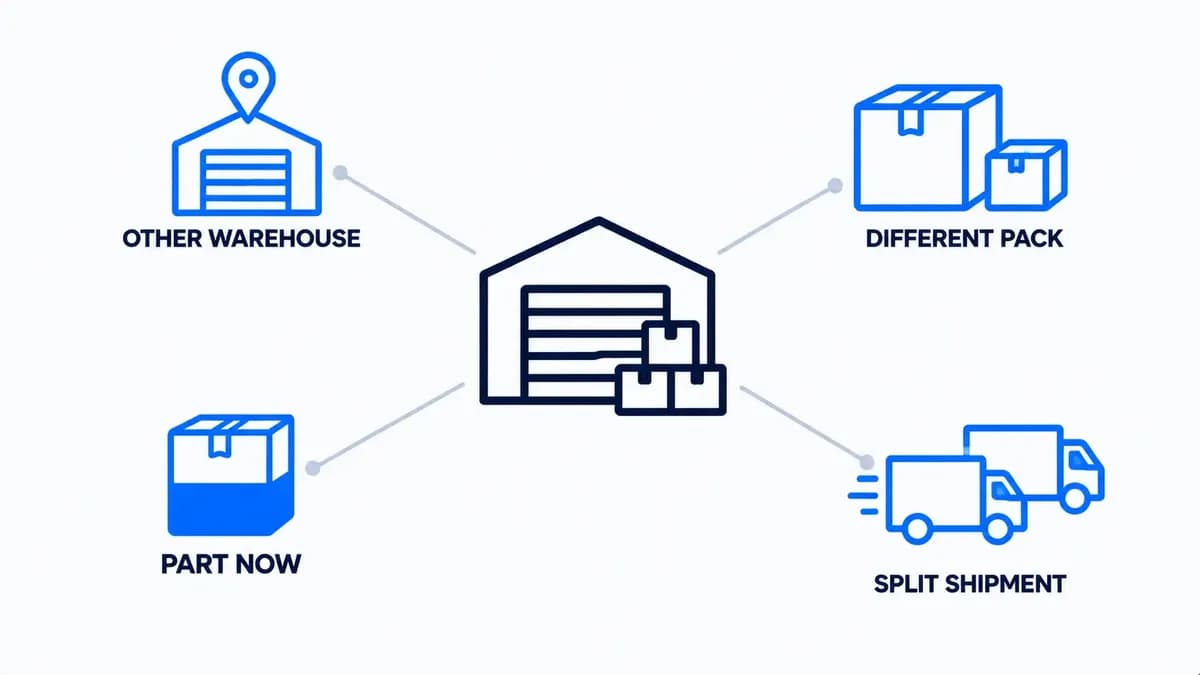
Another warehouse is the first place to look. Many distributors ship from more than one location, and the number you see in the catalog is often one location's number. A box from a warehouse further away is still better than no box at all.
The same product in a different pack is the second. A case of twelve might be empty while inner packs of four are sitting there, or the other way around. It is the same item under a different code, and you will not see it if you only search your usual code.
If it is allocation, the answer to "can I have all 200" is no, but the answer to "can I have 60 now and the rest when it lands" is often yes. Sixty units keeps you selling.
Ask for a split shipment too. If the product is arriving in two waves, ask to be on the first one, even for a small quantity.
And ask the rep plainly what moves an account up the allocation list. The honest answer is usually order history and paying on time. If you have both, say so. Reps tend to look after accounts that order steadily, and you are asking for something reasonable, not a favor.
Every one of these is a five-minute email. Between them they fix a lot of stockouts, and you do not need a new application, a test order or a new set of invoices.
Step 4: Check Your Backup Supplier's Numbers Today
If you built a three-supplier bench for this product, this is what it was for. Call the backup supplier. But do not reorder on the cost you saw last quarter. Prices change and stock changes, so check your backup before you count on it. Compare what they charge today, what they actually have, and how fresh that number is, then place the order.
If you have no backup supplier for this product, be realistic about time. A distributor you have never bought from will not ship to you inside 72 hours. They have to approve you first, and that takes weeks. What you can do in 72 hours is find out who else carries the product and what they charge, so you can apply today instead of after three weeks of emails.
Search the product free on B2B Supplier Hub and you see the real cost and real stock from every verified distributor in our network carrying it, with a date on each listing so you know how fresh the numbers are. This is reverse sourcing: you start from a product that already sells and work back to who else has it. Look at stock first and price second. The distributor with the most stock is the one most likely to still have some by the time they approve you. If nothing comes back, no distributor in our network carries it yet, so Request a Supplier and our team will go and find one. It is free on every plan, and you hear back within 30 days either way.
One warning, because this is where things often go wrong. Somebody will offer to ship you the product tomorrow. Check who they are before you say yes. If they are a middleman rather than a distributor, the invoice they give you is likely to fail the day someone asks where your products came from. Our post on verifying a supplier before you wire money covers the signs. You can recover from a week out of stock. A bad invoice takes much longer to fix.
Before the 72 Hours Are Up: Alerts, Dates, and Q4
Three small things, and then you can put this down.
Add the product to a watchlist. On Basic and Pro, you get an email when its stock or price moves among the distributors in our network, so you will know if another distributor has it before your supplier does. Basic covers 100 products and Pro covers 300. A free account gets a 10-product watchlist you can check yourself.
Write down the date it went out and the date the rep promised. When the product lands, compare the two. Bring that difference to your quarterly supplier audit. It tells you more about a supplier than their price sheet ever will.
If this is happening close to Q4, one more thing. A gap now can push you past Amazon's Q4 delivery deadlines, and storage costs more from October 1, so check the dates in our Q4 sourcing timeline before you decide how big the replacement order should be.
A Stockout Is the Cheap Version of This Lesson
A supplier running out of your best product is not a disaster. It is a warning. It shows you that one product and one supplier are carrying more of your business than you thought, and that is the thing to fix once the stock is back.
If the product is one of your real earners, it needs a backup supplier. Build one now, while things are calm, and the next email that says "backordered" will be a small problem instead of a big one. The bench post above shows how to set it up, and our post on why single-supplier dependency kills wholesale businesses explains what it costs to wait.
You can start today. Search the product free, see who else in our network carries it and what they charge, and pick the one worth applying to. If nobody comes back, submit a request and our team will go and find a distributor who does.
Frequently asked questions
How long should I wait for a backordered supplier before ordering elsewhere?
As long as your stock on hand covers the wait plus about a week for dela. If it does not, start working the account and your backup supplier now, because a new supplier takes weeks to approve you either way.
Will a new distributor ship to me within a week?
Almost never. They have to approve your account first. What you can do quickly is find out who has the product and what it costs, so your application goes to the right distributor today.
Should I raise my price when I am about to run out?
Not on a shared listing. Other sellers offer the same product, so a higher price just moves the sale to them sooner. Pause your ads instead and keep selling at your normal price.
Does going out of stock hurt me on a listing I share with other sellers?
Usually less than you'd think. If the other sellers still have stock, the listing keeps selling through them, so it holds its place. What you lose is your share of the sales while you are out. The exception is when the shortage comes from the brand. Then the other sellers often run out too, and the whole listing slows down until stock comes back.
The B2B SupplierHub Team
Wholesale & sourcing
Stop hunting suppliers by hand. Type a UPC instead.
B2B Supplier Hub shows the suppliers in our network carrying a product on one page: wholesale cost, stock, and retail price side by side. Free to search, no card required.
Search Free