How to Source Name-Brand Products for Amazon (Legally)
The B2B SupplierHub Team··7 min read
Selling name-brand products on Amazon is allowed. It is also where a lot of sellers get into trouble. That sounds strange, but here is why. The sellers who lose their accounts are almost never selling fakes. They bought real products from the wrong place, and when Amazon asked where the stock came from, they had nothing to show. So, sourcing "legally" really means two things: buying real products and buying them in a way you can prove. This guide walks you through both. If you are new to wholesale sourcing in general, start with our guide to finding wholesale suppliers first.
What "Legally" Actually Means for Amazon Sourcing
Let us clear up the legal part first, because it confuses almost everyone. In the US, reselling genuine products you bought legitimately is generally allowed. You do not need to own a brand to resell its products. That principle is called the first-sale doctrine, and it is why reselling exists at all.
But legal and safe on Amazon are two different questions. Amazon can remove your listing if it cannot verify where your stock came from, even when the products are real. And a brand can file a complaint against you whether or not the law is on your side, which creates a problem for your account either way. On top of that, some brands attach conditions to goods sold through their channels, so it is worth asking a supplier directly whether resale on marketplaces is allowed before you buy.
Shortly, the law says you can resell genuine goods. Amazon says prove it. Our guide on authorized distributors, middlemen, and gray market breaks down why that proof depends on who you bought from. This is general information, not legal advice.
The Two Sources That Survive Amazon's Checks
Frequently asked questions
Is it legal to sell name-brand products on Amazon?
Generally, yes. In the US, reselling genuine products you bought legitimately is allowed under the first-sale doctrine. But Amazon has its own rules on top of the law, and a brand can still file a complaint, so buying through a documented, authorized chain is what keeps you safe in practice. This is general information, not legal advice.
Do I need the brand's permission to sell its products?
Sometimes. Many brands are open, and buying from an authorized distributor with clean invoices is enough. Others require approval through Amazon, and some require a letter of authorization from the brand itself. It depends on the brand and on your account, so check the specific products in Seller Central before you buy.
Where do Amazon sellers actually buy name-brand inventory?
From the brand directly through a wholesale account, or from distributors the brand has authorized. Those are the two sources whose invoices reliably pass Amazon's checks. Sourcing from middlemen, unvetted wholesalers, or liquidation lots is where sellers run into trouble.
TB
The B2B SupplierHub Team
Wholesale & sourcing
Stop hunting suppliers by hand. Type a UPC instead.
B2B Supplier Hub shows the suppliers in our network carrying a product on one page: wholesale cost, stock, and retail price side by side. Free to search, no card required.
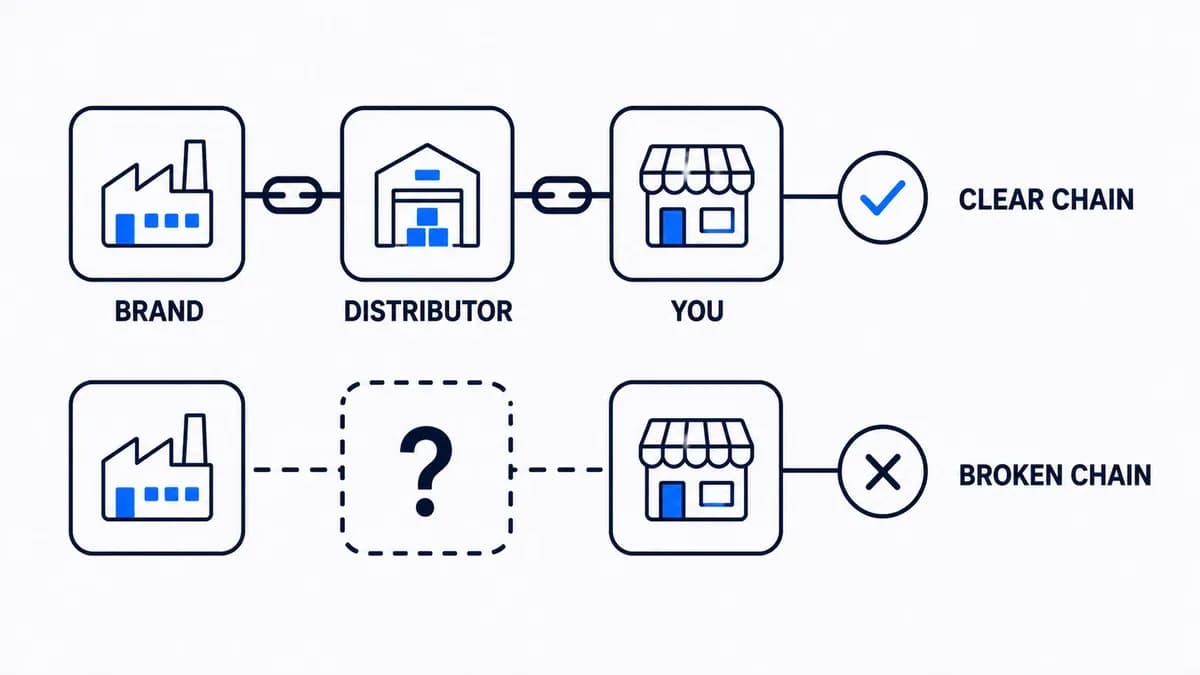
There are only two places to buy name-brand inventory that reliably hold up when Amazon asks questions: the brand itself, or a distributor the brand has authorized. Everything else is a weaker chain, and weaker chains are what fail verification. One thing to get straight early: "authorized" means authorized by the brand. A wholesaler with thousands of brands in stock and a relationship with none of them is not an authorized source, no matter what their website says. Our post on brand authorization tiers explains how your distance from the brand decides whether your invoice survives.
So, the real decision is between those two. Buying brand-direct gets you the best cost and the cleanest paperwork, but it is the hardest account to open, and some brands go quiet the moment you mention Amazon. Authorized distributors are the realistic route for most resellers: easier to get approved, many brands under one roof, and invoices that carry weight. We spent ten years sourcing wholesale at Leverify, working with a vast network of suppliers, and that is the lane this guide assumes.
The Paperwork Distributors and Amazon Expect
Before any real supplier takes you seriously, you need to look like a real business, because that is what they are required to check. That means a registered business, an EIN, a resale certificate for your state, and a professional Amazon seller account. Your business name should match across all of it, including your Amazon account, because mismatched names are one of the quiet reasons paperwork gets rejected later.
Then there is the invoice, which is where "sourcing legally" actually gets proven. A usable invoice comes from your supplier's real business, shows your details matching your Amazon account, and lists the products and quantities. Retail receipts, screenshots, and payment-app notes do not pass. If a supplier cannot produce a proper invoice, that is not a paperwork problem, it is a supplier problem. For what happens when Amazon actually reviews these documents, our post on inauthentic complaints and distributor invoices walks through the whole process.
And when a brand requires its own authorization, that is a separate document, a letter of authorization, and it can only come from the brand itself. A letter written by your supplier will be rejected. Our guide to brand letters of authorization covers what one needs and how to ask for it.
How to Source Name-Brand Products: Step by Step
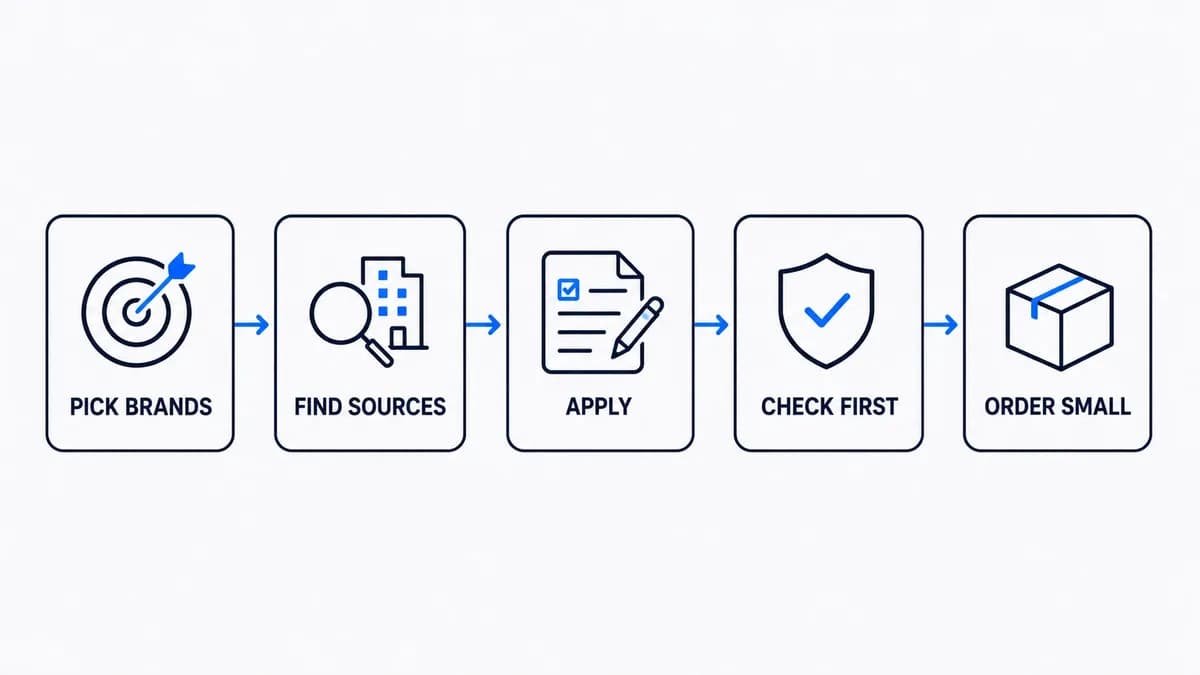
Here is the path in order, the way it actually works.
Pick Brands Where Approval Is Realistic
As a rule of thumb, mid-size brands are far more open to new distribution partners than the biggest names, which rarely authorize anyone. Chasing a giant brand as a new seller mostly burns time. Aim where the door can actually open.
Find the Brand's Authorized Distributors
Next, find out who the brand actually authorizes. Do not start from a wholesaler's claims. Start from the brand and work outward. Our step-by-step guide on how to find the authorized distributors for any brand covers exactly how to do this.
Apply With Your Paperwork Ready
Then apply, with the paperwork from the last section ready. Distributors approve businesses that look prepared, and a complete application moves faster than a promising one. On the Amazon side, applying costs nothing, even for brands that look closed, and approvals sometimes come through instantly. Our guide to getting ungated on Amazon covers that whole process.
Check Before You Wire Money
Before you wire any money, do two checks. First, confirm the products are actually open for your account, because a brand can be restricted for you and open for someone else. Our post on brands that restrict Amazon resellers shows how to spot the walls early. Second, ask the supplier two direct questions: do your invoices meet Amazon's verification standards, and is resale on Amazon allowed? A legitimate supplier answers both without flinching.
Order Small and Keep Every Invoice
Then order small. A first order is not about margin, it is about testing the relationship: does the stock arrive as promised, do the invoices look right, does the product match the listing. Keep every invoice from day one, filed where you can find it, because Amazon can ask for documents months after the fact.
Finding which distributors actually carry a product is the slowest part of all this. B2B Supplier Hub speeds it up: search a product free and see the suppliers in our network carrying it on one page, with wholesale cost, real stock, and retail price side by side, then reveal a supplier when you are ready to connect. Every supplier in the network is human verified. Whether a brand requires its own authorization on top is a separate step you handle with the brand.
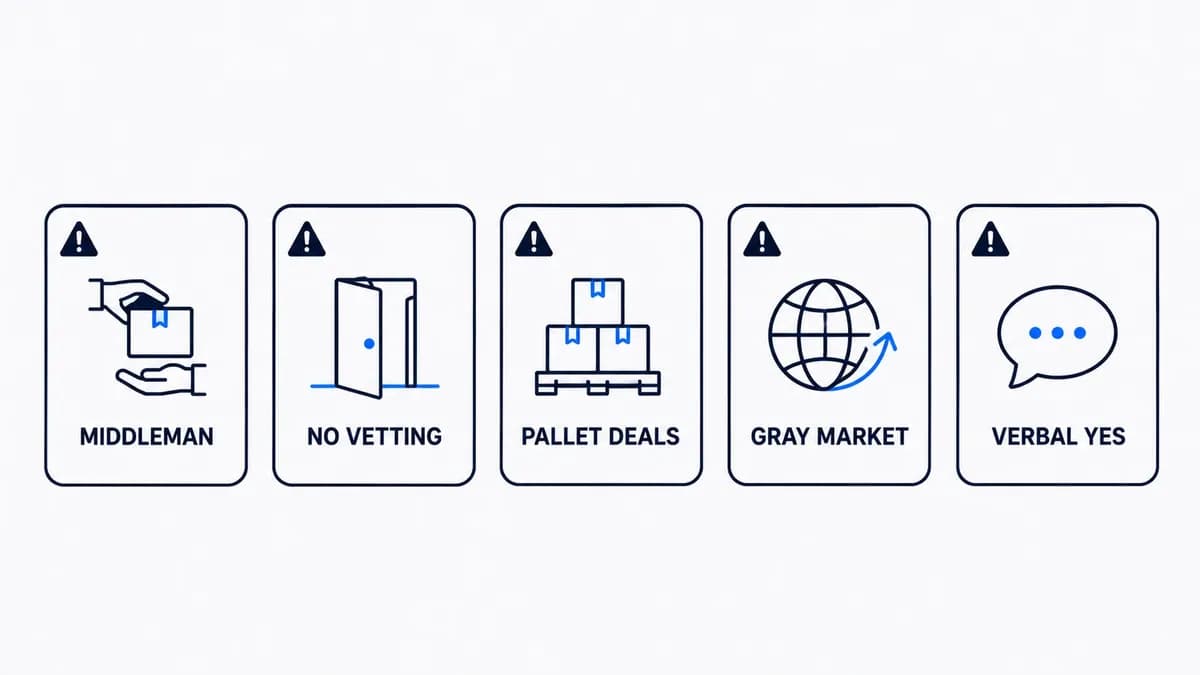
5 Sourcing Shortcuts That End Amazon Accounts
Every suspended wholesale seller has a version of the same story, and it usually starts with one of these.
The middleman with real products and a broken chain. The goods are authentic, but they passed through several hands before reaching him, and he cannot show where they started. When Amazon asks for the trail, there is not one.
The wholesaler anyone can buy from. No application, no resale certificate, no questions asked. That ease feels convenient, and it is actually the warning. Real authorized distributors are required to vet their buyers. If a supplier lets anyone buy, brands are not letting them distribute.
The pallet deal priced too good to paper. Closeouts and liquidation lots of gated brands almost never come with invoices Amazon will accept, and a price that seems impossible usually is.
The gray-market import. Genuine products from another market can differ in packaging, warranty, or support, and those differences are enough for a listing to come down.
And the verbal yes. A supplier telling you "sure, you can sell it on Amazon" binds nobody. If permission matters, it needs to be on paper, from the party that can actually give it.
The pattern under all five is the same. If the chain back to the brand cannot be documented, the deal does not work, no matter how authentic the product is.
Keep Proof of Every Purchase
Sourcing name-brand products for Amazon is not complicated, but it is unforgiving. The whole game is buying as if someone will one day ask you to prove every purchase, because one day Amazon probably will. Real business, real paperwork, real distributors the brand actually authorizes, and every invoice kept. Sellers who work that way run into far fewer sourcing problems. Sellers who cut one corner tend to find out at the worst possible moment. When you are ready to find distributors who carry the brands you want, you can search B2B Supplier Hub for free and see the numbers before you spend anything.
Will Amazon accept an invoice from any wholesaler?
No. Amazon cares who your supplier is, not just what the paper says. An invoice from a wholesaler that has no relationship with the brand often fails review even when the products are real. Retail receipts, screenshots, and payment-app records do not pass at all.
Why do brands reject new Amazon sellers, and where should I aim instead?
Big brands protect their pricing and their existing sellers, so they rarely take on newcomers. Smaller and mid-size brands are usually easier doors to open, because growing their reach matters more to them than guarding it. Your odds are far better there, especially with a registered business and clean paperwork ready to show.

-1200x627.webp&w=3840&q=75)