Supplier Stopped Selling to Amazon Sellers? What to Do Now
The B2B SupplierHub Team··8 min read
If you have been buying from a distributor for a while and they suddenly tell you they can't sell to Amazon sellers anymore, the natural reaction is to take it personally and try to talk them out of it. That makes sense. You did everything they asked, you paid on time, and now the door is closed with a two-line email and no real explanation.
The thing is, the explanation you didn't get is the only part that matters. Sometimes the brand made the call, sometimes the distributor did, and sometimes it really was about your account. Each one leads somewhere different, and if you start hunting for a new supplier before you know which one you're dealing with, you can easily spend weeks replacing a supplier for products you were never going to be allowed to sell again. Plenty of wholesale resellers have done exactly that.
So this blog post is about working that out first, and then doing the right thing for each case.
First, Find Out Who Decided: Brand, Distributor, or You
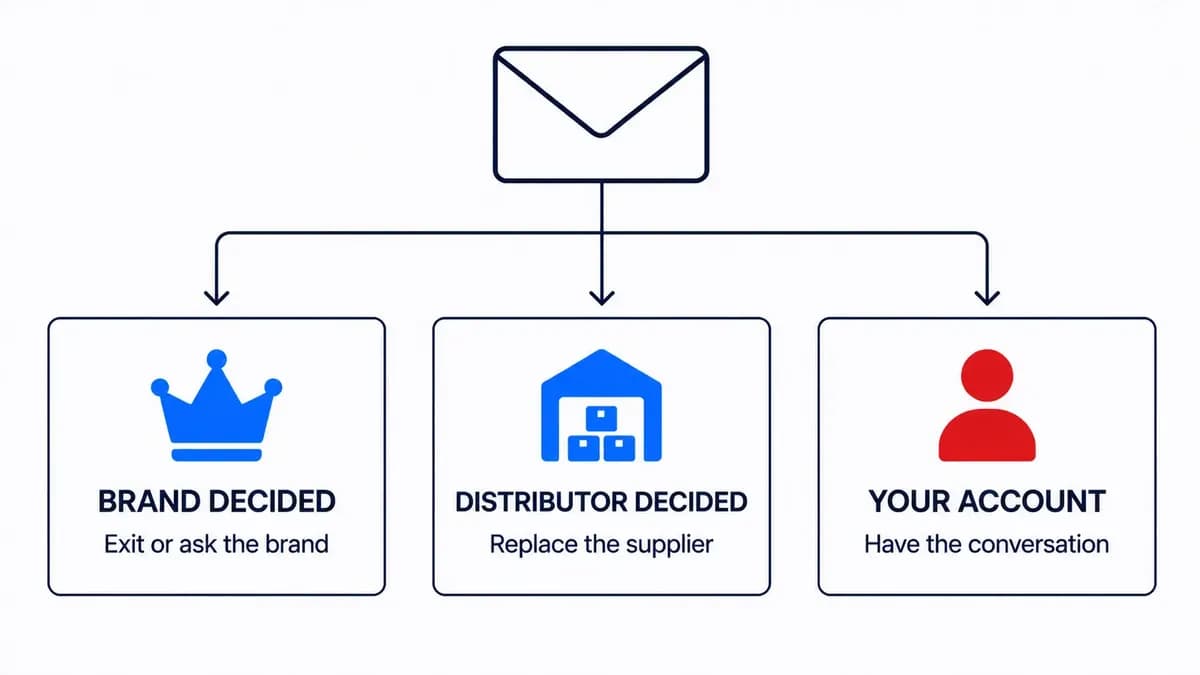
Behind the one sentence you received there are three different situations, and they need three different responses.
The brand decided. The brand told its distributors to stop serving marketplace accounts, or to serve only a short list of names it chose. Every other authorized distributor for that brand will give you the same answer, because they are all following the same instruction, so a new supplier doesn't help here. We covered how to spot this kind of brand in Brands That Restrict Amazon Resellers, so that part won't be repeated here.
The distributor decided. The company stopped serving all marketplace accounts, and you happened to be one of them. This usually happens when a distributor wants to protect its relationships with the brands and dealers that carry most of its business. The brand itself may be open, so other distributors of the same brands may still sell to you. This is the version a replacement fixes.
Frequently asked questions
Can a distributor refuse to sell to Amazon sellers?
Yes. A distributor can choose its customers, and many are contractually required to follow the brand's channel rules.
Can I keep selling the inventory I already bought?
Generally yes. You own it and your invoices still show where it came from. The risk is whether the brand or Amazon restricts the listing itself, so sell through carefully and don't replenish through a back door.
Will another distributor's invoice get me approved for the same brand?
Only if the brand is open to marketplace sellers. If the brand restricted you, a different authorized distributor's invoice won't override that. If it was the distributor's own policy, it can work.
How do I know whether the brand or the distributor made the decision?
TB
The B2B SupplierHub Team
Wholesale & sourcing
Stop hunting suppliers by hand. Type a UPC instead.
B2B Supplier Hub shows the suppliers in our network carrying a product on one page: wholesale cost, stock, and retail price side by side. Free to search, no card required.
Your account was the decision. Other resellers kept buying and you didn't. That normally traces back to something specific, like pricing that drifted under MAP, sales channels that didn't match what you told them at signup, or slow payments. Search won't fix this one either; an honest conversation with the rep will.
You can sort these with one question, sent in writing: "Is this brand-directed, company-wide, or specific to our account?" Reps don't always answer directly, but the shape of the reply still tells you a lot. A vague answer usually means brand pressure. A clear "this applies to all marketplace accounts" means the distributor. A reply that brings up your pricing or your channels means it is about you.
A distributor that ignores those rules risks losing the brand, and the brand is worth far more to it than any one reseller account. So when your supplier stopped selling to Amazon sellers, it almost certainly wasn't a judgment about you. It was told that keeping the brand meant enforcing the brand's rules, and it kept the brand.
Two Problems a Cutoff Creates: The Invoice Clock and the Temptation
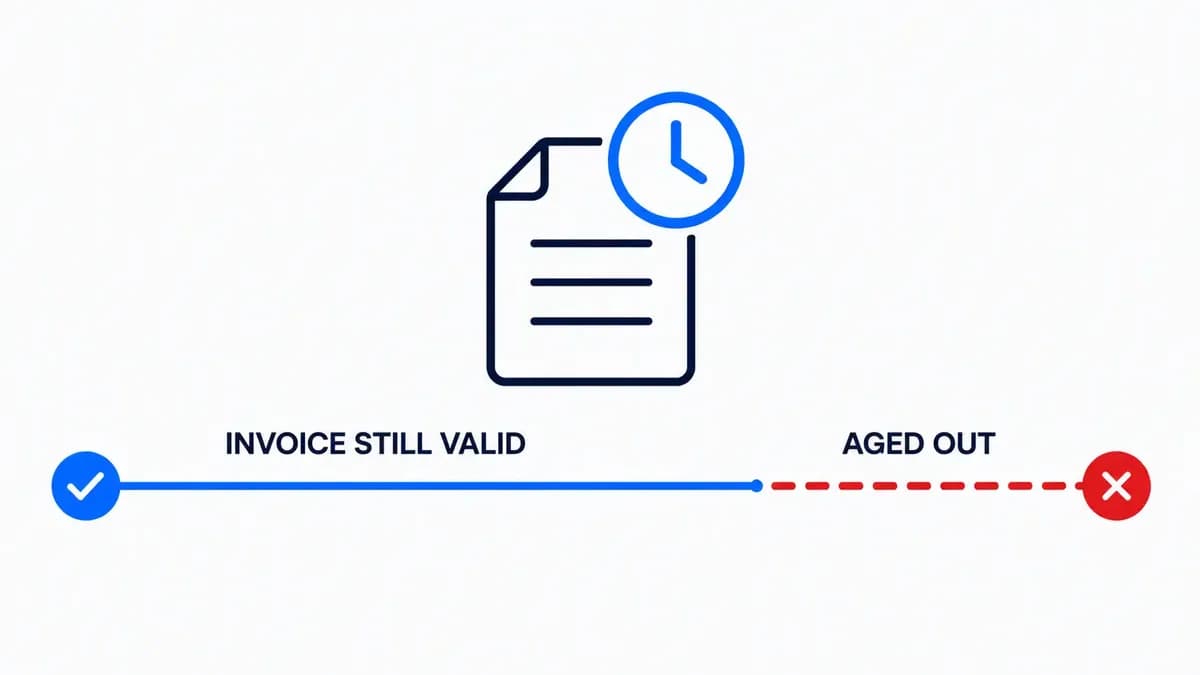
The first is the invoice clock. The inventory you already bought is yours, and the invoices you already have still prove your supply chain. They also still work for brand approvals on Amazon as long as they fall inside the date window Amazon accepts, covered in our post on Amazon ungating invoice requirements. Once they age out, any approval that depended on this distributor's paperwork has nothing behind it, so when you decide which products to replace first, look at which invoices expire soonest as well as which products sell fastest.
The second is the temptation. Somewhere in the first week, someone will suggest reapplying under a second company, or ordering through a friend's account, or quietly continuing to buy and seeing what happens. Every one of these turns a supply problem into an account problem, and the second kind is much harder to fix. It isn't worth it.
One thing worth knowing: if you bought the products legally and they are genuine, you aregenerally allowed to resell them in the US under the first-sale doctrine. But Amazon still enforces each brand's rules on its own platform. So the thing at risk here is your listing, not your legal position. This isn't legal advice, and if a lot of money is involved, speak to a lawyer.
Sort Your Products First: Brand-Locked vs Supply-Locked
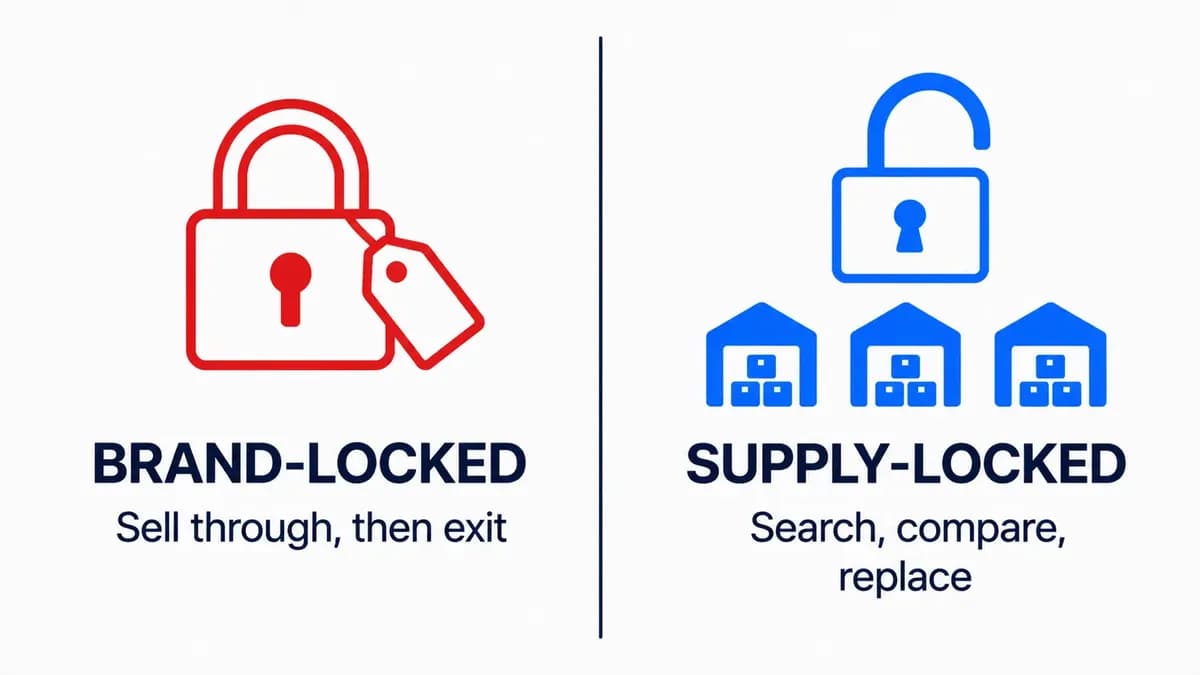
This is the step most resellers skip, and it is where the wasted weeks come from. Take every product you were buying from this distributor and put it into one of two groups.
The first group is brand-locked. The brand controls who sells its products on Amazon, and it has decided you're not on the list. A new distributor's invoice won't change that. The only lasting fix is the brand assigning you a Reseller role in Brand Registry, which the brand's administrator assigns by hand to partners with a selling agreement, and Amazon may ask for proof of that authorization. It is worth one polite ask, but don't count on it. For these products, sell through what you have and let them go.
The second group is supply-locked. The brand is open, and it is only this one distributor that closed. These are the products worth replacing, ranked by how fast they sell and how much they make you.
That second group is exactly what reverse sourcing was built for: you have a product that already sells and need to know who else carries it. Our reverse sourcing guide covers the full workflow; the short version for right now is below.
How to Replace a Supplier Without Repeating the Mistake
On B2B Supplier Hub, start with the best products in your second group andsearch each one by UPC. Searching is free. You see the real cost and stock from every verified distributor in our network that carries the product, before you apply to any of them. Retail Insights then shows what you would make after selling fees, so you can see straight away if a new supplier's cost still leaves you a decent profit.
Look at the numbers first. Then, before you apply anywhere, ask the question you skipped last time: "Do you sell to third-party marketplace sellers, and are any of these brands off limits?" Ask it by email so you have the answer in writing. That one email is what keeps you from going through all of this again next year.
When the numbers work, unlock the supplier, contact them directly, and buy with no commission. A supplier you have unlocked stays yours even if you cancel later.
For products no result in the network carries yet, use Request a Supplier. It's free on every plan. Our team finds an authorized wholesale distributor who carries it, verifies them, and brings them onto the platform, with an answer within 30 days, either way.
This lands hard because it looks like a judgment on your business, and nearly every time it isn't. A brand tightened its rules, your distributor chose to keep that brand, and you happened to be downstream of that choice.
The part you control starts now. Ask who decided. Split your products into the ones another distributor can carry and the ones no distributor can. Replace the first group carefully, on real numbers, and this time ask about channels before you apply. Sell through the second group and let it go.
If you want to know how many of those products already have another home, search them free on B2B Supplier Hub and look at the cost and stock side by side. For anything the search doesn't find, submit a request and our team will go and find a distributor who carries it.
Ask the rep in writing, then test it. If other authorized distributors for the same brand also decline marketplace sellers, the brand decided. If they will sell to you, the distributor did.