
Wholesale Economics
How LTL Freight Works on Wholesale Orders: Freight Class, Pallets and Quotes
The first wholesale order big enough to need a pallet comes with a cost line you have never had to read before. LTL freight, short for less-than-truckload, is how distributors move orders that are too big for parcel and too small for a full truck, usually one to six pallets. What you pay for LTL freight on a wholesale order comes down to four things: freight class, weight, distance, and add-on charges carriers call accessorials.
Most resellers find out after the fact, on an invoice. The order looked fine at the unit cost, then freight took a piece of the margin nobody had counted.
When a Wholesale Order Becomes a Pallet
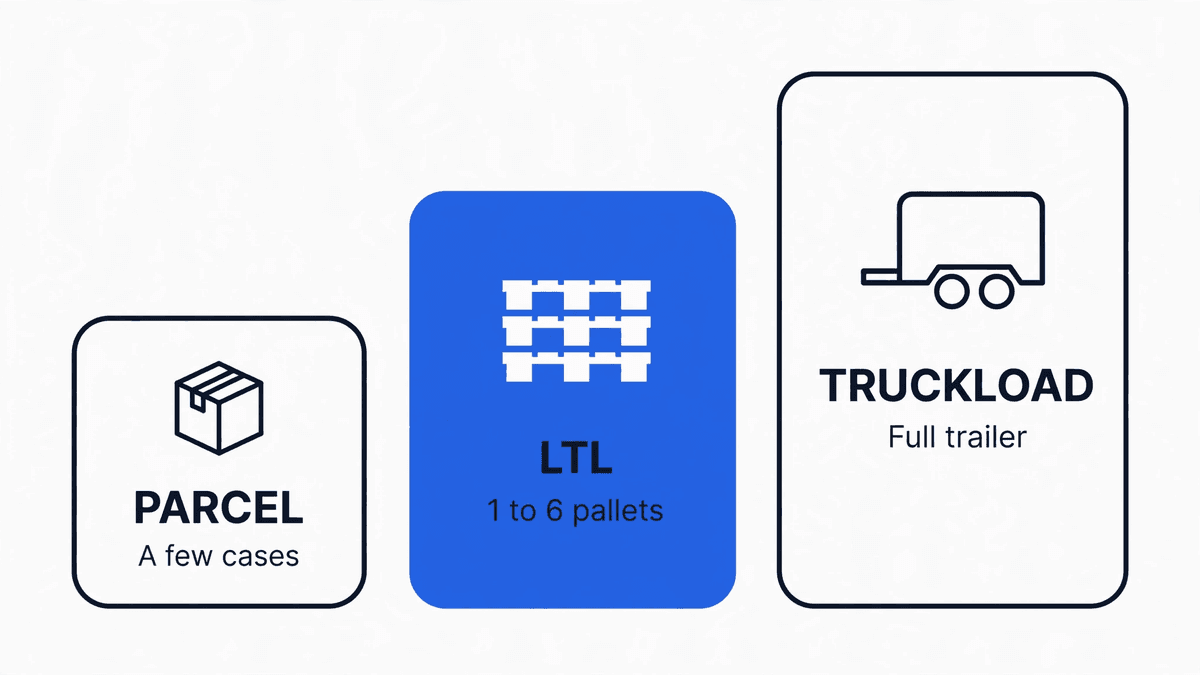
A few cases still go by parcel. Ten cases of anything bulky do not. Carriers treat LTL as roughly 150 to 15,000 pounds, or one to six pallets, which covers almost everything LTL shipping for a small business involves. Order minimums, case packs, and free-freight thresholds all push you over that line, and once you cross it, the shipping is priced differently, not just bought in bigger lots.
How to Determine Freight Class for LTL
Freight class is the carrier's shorthand for how expensive your pallet is to carry. The main thing behind it is density, and the sum is simple: weight in pounds divided by cubic feet.
Try it on a real pallet. A 48 by 40 inch pallet stacked four feet high holds about 53 cubic feet. Put 500 pounds of light goods on it, and you get about 9 pounds per cubic foot, which is class 100 on the current density scale. Load the same footprint with 1,500 pounds of denser product, and you are at roughly 28 pounds per cubic foot, which is class 65. The bill goes up and the cost per unit drops, because half-empty pallets are what carriers charge you for.
Density is not the whole story. Carriers also look at how easily the freight stacks, how easily it is handled, and how likely it is to get damaged, so a fragile item can sit a class above something of the same size.
If you are working from a freight class chart someone sent you years ago, it is out of date. The National Motor Freight Traffic Association moved a large share of goods onto a density-based scale on July 19, 2025, replacing many fixed codes. The scale now has 13 steps running from class 50 to class 400, and the lower the number, the denser the freight and the cheaper the rate.
So do not guess the class. Ask the distributor for the classification code, the NMFC number, and the class they ship that item under. They ship it every week and already know. A guess gets the pallet re-measured at the terminal, and the difference billed back weeks later, after you have priced the product.
Who Books LTL Freight on a Wholesale Order: You or the Distributor?
This is the part that decides most of the cost, and there are three normal arrangements.
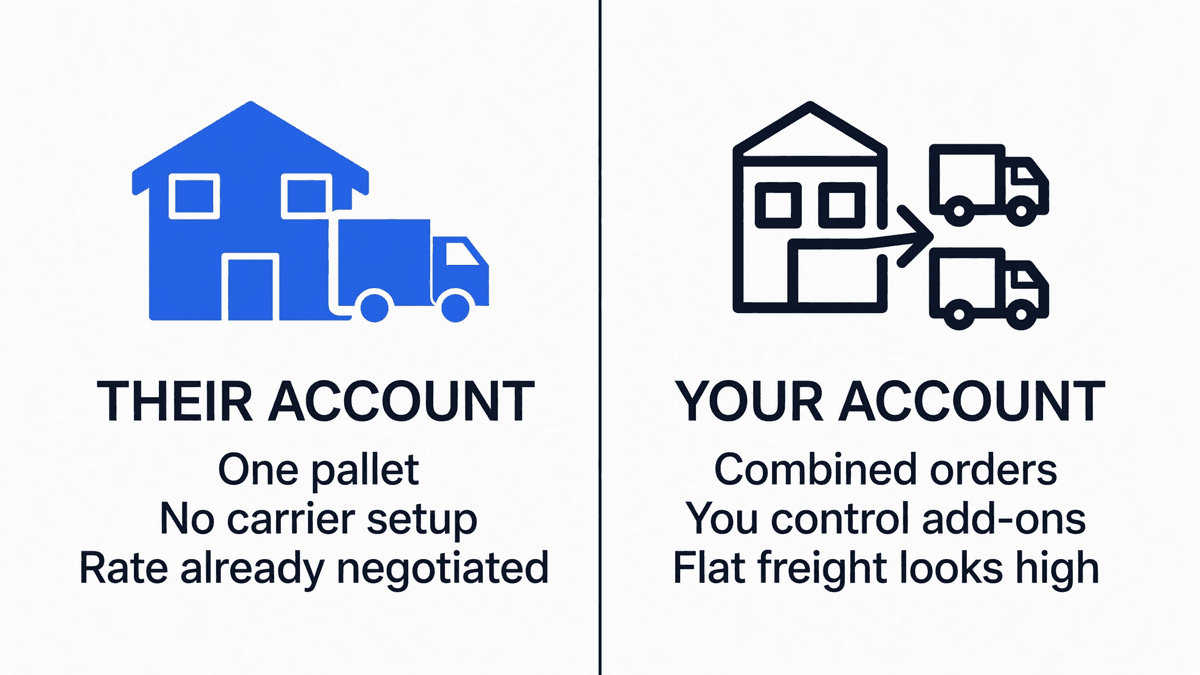
- They ship on their account and bill you. Shown as prepaid and add: they pay the carrier at their own rate, sometimes add a handling fee, and put it on your invoice as one line.
- You ship on your own carrier account. You give them your account number, the carrier bills you, and the distributor's invoice has no freight on it.
- Free freight over a set order value. That threshold is why so many first orders get rounded up.
Which one applies is usually buried in the terms as FOB origin or FOB destination, wording that also decides who owns the goods if something happens on the road, covered in FOB vs delivered pricing. Then ask one plain question before the first order: is that freight line what the carrier charged, or a flat rate? Both are normal, but only one moves when you order more at once.
When the Distributor's Freight Rate Wins, and When Yours Does
A distributor shipping freight every day has rates a new reseller will not match on a first quote, so taking their line is usually cheaper and easier. Booking your own LTL freight starts to make sense when you can combine several orders from one region into a single shipment, when you need to control the delivery day or the add-on charges, or when a flat freight line sits well above what the route should cost.
Finding out costs one email. Ask for the same order priced both ways, their freight and yours, on the same pallet, once with each distributor, while the orders are still small.
What an LTL Quote Leaves Out
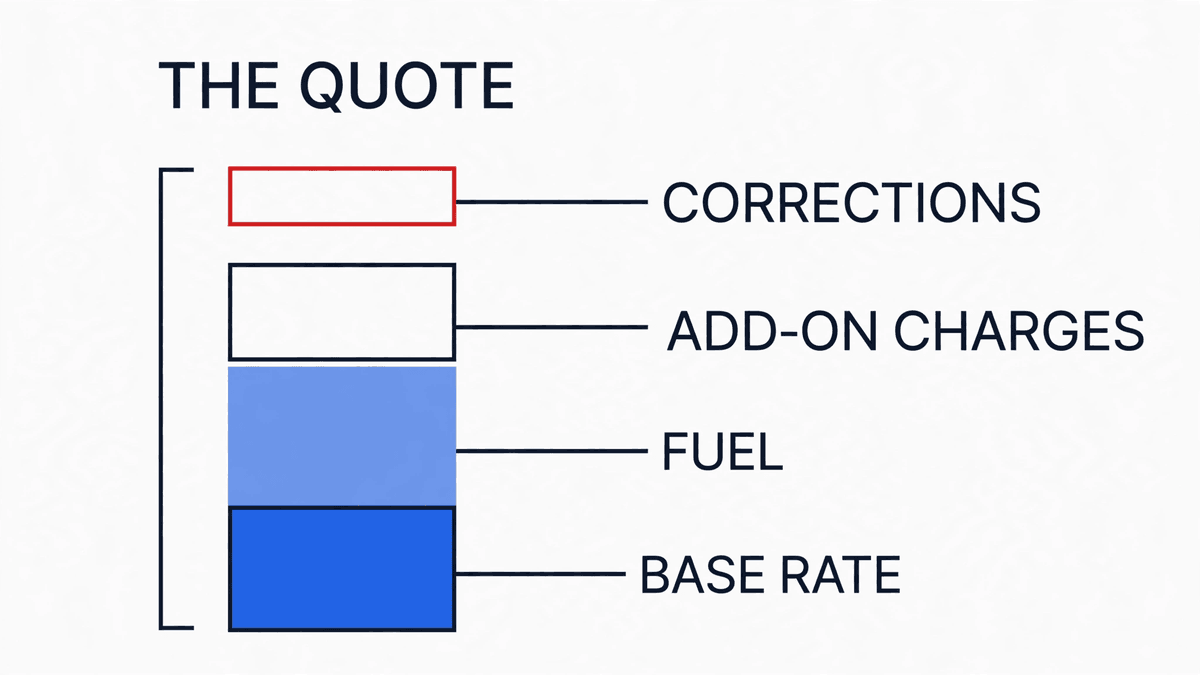
A quote is only an estimate until the pallet is weighed and measured at the terminal. Three things usually sit outside the number you were given.
The first is the add-on charges. Carriers bill extra for a liftgate, residential delivery, inside delivery, hard-to-reach locations and booked appointments. Receive at a home, a storage unit or a prep center with no loading dock and you need a liftgate, which the driver will not bring unless it was on the order. The second is corrections: a wrong class, weight or size comes back as an extra charge after delivery. The third is fuel, a percentage on top of the base rate.
Once you have the real total, divide it by the units on the pallet and put that number next to your unit cost, the same way distributors build their own landed cost before they quote you. A pallet that looked expensive often reads fine across the case count. Sometimes it goes the other way, which is the one worth catching before you reorder.
Receiving the Pallet: What to Check Before You Sign
Count the pallets and loose pieces against the delivery receipt before the driver leaves, and check the shrink wrap, the corners and the bottom cases. If anything is missing or crushed, write it on the receipt before you sign. That note is what a claim rests on later, and a clean signature closes the door on most of them. Who credits the damage comes down to the distributor's return and RMA policy.
4 Things to Do Before Your Next Pallet Order
- Ask for the NMFC number and class instead of guessing from an old chart.
- Ask whether the freight line is the real cost or a flat rate.
- Name the add-on charges you need, a liftgate first, before the quote is written.
- Divide the all-in LTL freight by units and carry it into your cost per unit.
Freight Is a Cost You Have Not Been Quoted Yet
That is the whole problem with a first pallet order. The number exists; you just have not asked for it, and the gap is where the margin goes. Ask the class, ask who books it, ask what the quote leaves out, then carry freight per unit into the product cost the way you carry the case price.
The other half of the math is whether that distributor has the best number on the product itself. You can search a product free and see real cost and stock from the verified distributors in our network carrying it, with a freshness timestamp on every listing, before you apply anywhere. If nothing in the catalog carries it, ask our team to find an authorized wholesale distributor and hear back within 30 days.
Related reading: How to Read a Distributor Price Sheet
Frequently asked questions
01How do you determine freight class for LTL?
02What is class 77.5 freight?
03What is a class 55 freight?
04What is class 70 in freight?
The B2B SupplierHub Team
Wholesale & sourcing
Stop hunting suppliers by hand. Type a UPC instead.
B2B Supplier Hub shows the suppliers in our network carrying a product on one page: wholesale cost, stock, and retail price side by side. Free to search, no card required.