
Supplier Management
Wholesale Return Policy: How RMAs Work and What Distributors Accept
A case arrives with the wrong item inside. You pack it up and send it back. A week later it shows up at your door again, refused. You never got an RMA number, and you paid freight both ways.
An RMA is a return authorization number, and the distributor gives it to you before you ship anything back. It is one part of a wholesale return policy: the rules for what a distributor takes back, how long you have, and what it charges you. Most resellers read those rules only after something goes wrong. This guide helps you read them first.
What a Distributor Return Policy Covers
A store return policy is a promise to shoppers. A distributor return policy is a business term, and it is usually tighter. It answers a handful of questions: how many days you have, what condition the goods must be in, whether you get a refund, a credit, or a replacement, whether there is a restocking fee, who pays freight, and whether you need an RMA first.
The answers differ from one distributor to the next, and sometimes from one brand to the next. Treat everything below as a list of things to ask. Your terms are whatever you and the distributor agree to.
What Is an RMA, and How the RMA Process Works
An RMA, short for return merchandise authorization, is a numbered authorization the seller gives you so you can send goods back. It tells the receiving dock that your box is expected and why. At most distributors, the RMA process goes like this:
- You contact the distributor or your rep and explain what is wrong and how many units are affected.
- They look at the claim and, if they accept it, give you an RMA number.
- You write the number on the outside of the box and pack the original packaging with the goods.
- You ship it with tracking.
- They inspect it and send a refund, a credit, or a replacement.
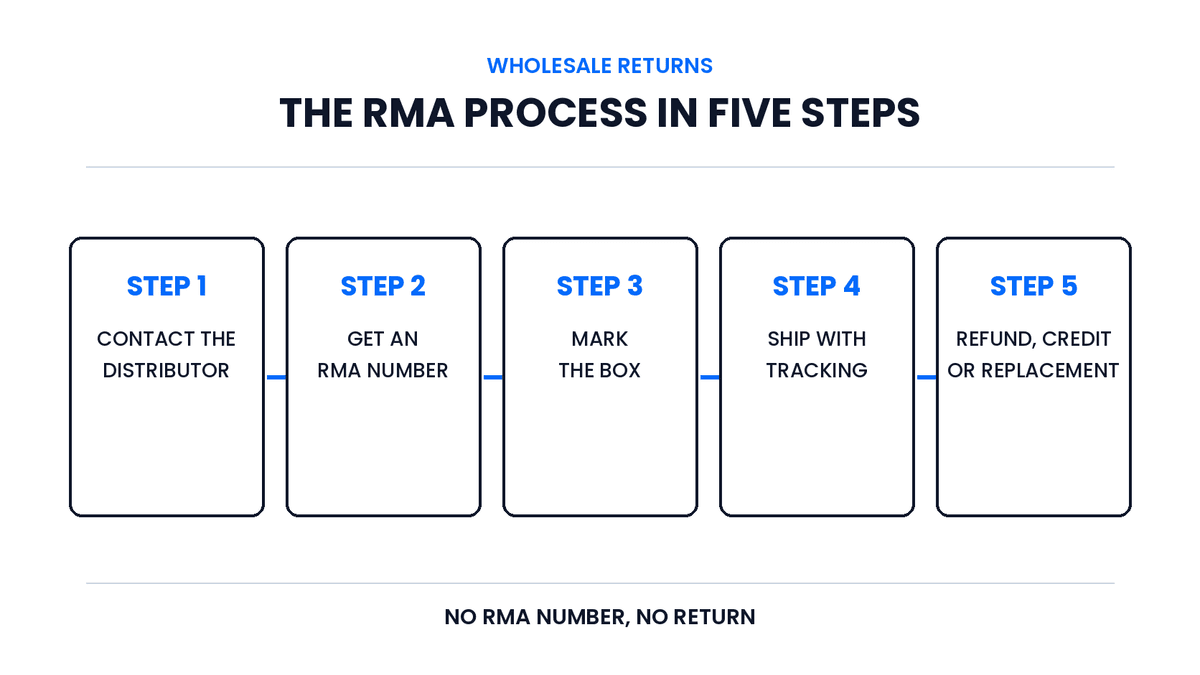
Skipping the number is a real risk. Without one, the seller may refuse the shipment, send it back, or charge a restocking fee. Before you pack, take photos of the goods and the packing slip. Keep the tracking number until the credit shows up in your account.
Can You Return Wholesale Products?
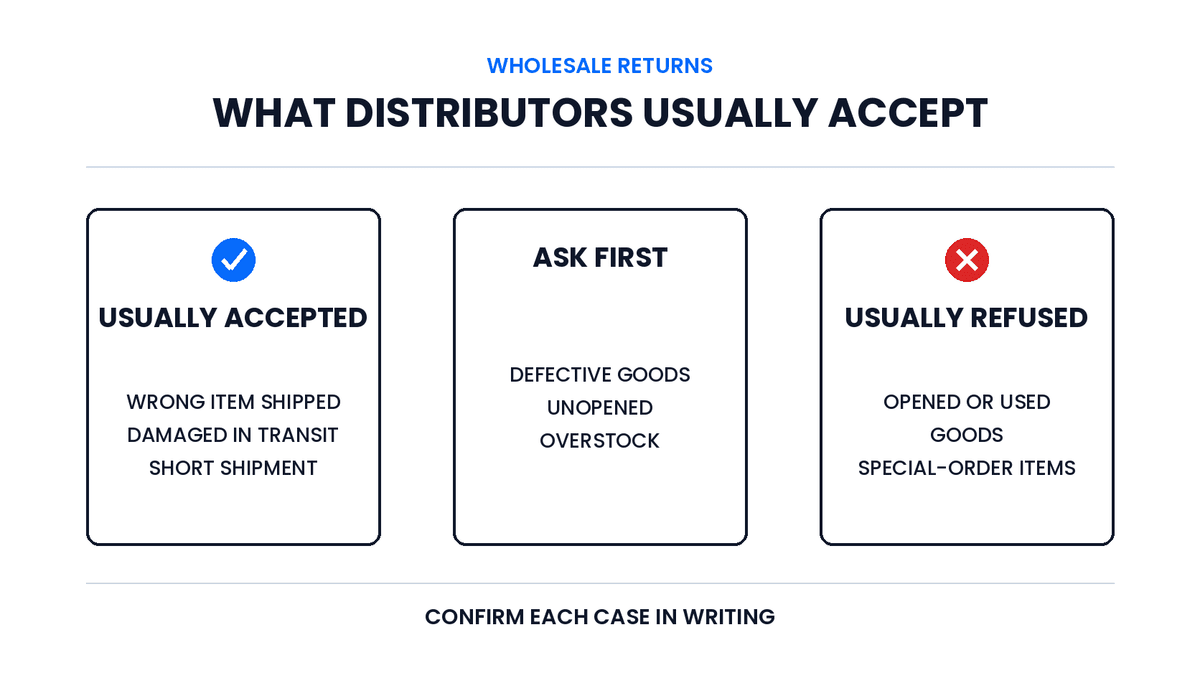
Often, yes, but mostly for mistakes, not for a change of mind. A distributor sells to businesses that plan to resell, so "I can't sell it" is a weak reason. Here is how the common cases usually go. Confirm each one in writing.
Situation | How it usually goes |
|---|---|
Wrong item shipped | Usually accepted. Report it fast, with photos. |
Damaged in transit | Usually accepted, often within a short reporting window. Note it on the delivery paperwork. |
Short shipment | Usually a credit or a re-ship. Count the goods when they arrive. |
Defective goods | It depends. Ask whether the distributor or the brand handles it. |
Unopened overstock you can't sell | Ask first. It may be refused, or accepted with a fee. |
Opened, used, or repackaged goods | Usually refused. |
Special-order items | Often final sale. Ask before you order. |
If a delivery comes in short, our guide to supplier short shipments shows how to tell who owes you and how to claim it, and our guide to testing a supplier's reliability covers how to spot a pattern. If you buy by the case, our case pack guide explains the terms, which helps you know what a short or damaged shipment means in units.
Restocking Fee on Wholesale Returns: What It Costs
A restocking fee is a share of the goods' cost that the distributor keeps when you return something it did not get wrong. One returns guide says B2B fees often run 15 to 25 percent and are set in the purchase agreement. That guide comes from a returns software company, so use the range as a rough guide and ask your distributor for its real number.
Here is an example with made-up numbers. You return 100 units that cost $20 each, so $2,000 of goods. At 20 percent, the distributor keeps $400. If you also paid freight to ship them back, you are out more than that.
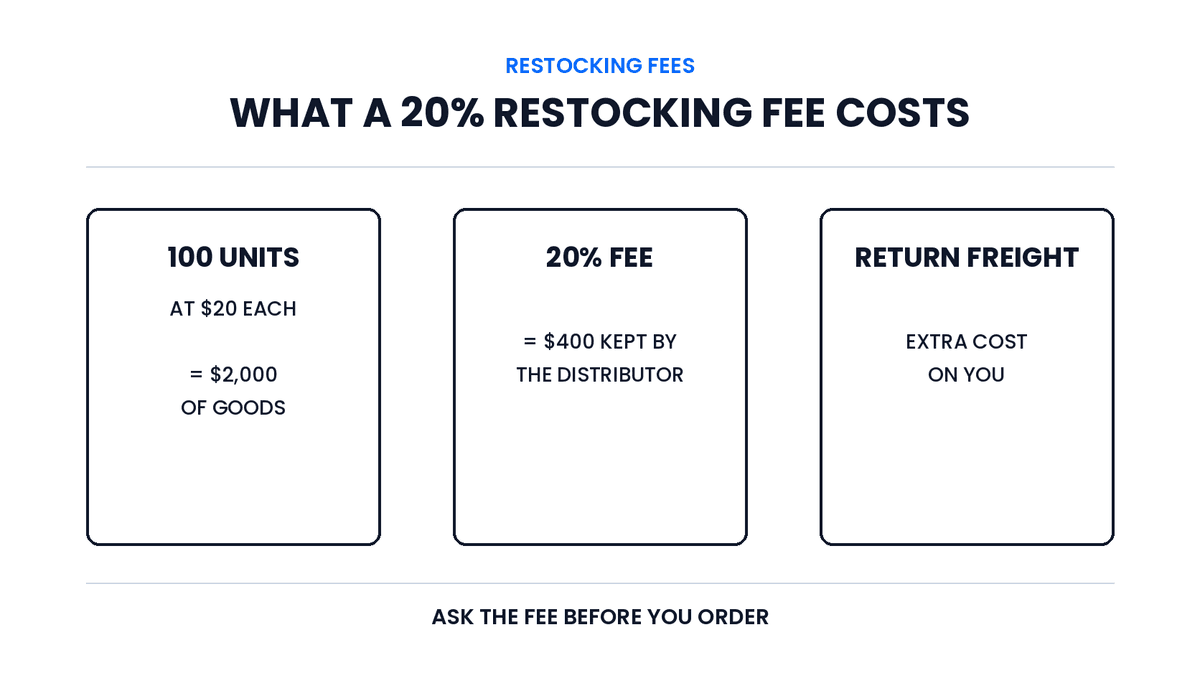
Ask two things. Does the fee apply to the whole order or only to the units you return? And is it dropped when the distributor made the mistake? The same guide says a fee should not apply when the return is the brand's fault, such as a defective or wrong item. Get the answer in writing.
The Return Window: When the Clock Starts
A distributor's return window is the number of days you have to ask for a return. The number matters, but the start date matters more. The clock might start on the ship date, the delivery date, or the day the goods reach the warehouse. If it starts on the ship date and freight takes a week, you have a week less than you thought.
So check goods the day they arrive. Open a few cartons, count, and compare against the invoice. A problem you find after the window closes is yours to carry.
Two small habits help here. Write the last day to report a problem on the order record the day the goods land. And ask who handles claims when your rep is out, so a claim doesn't sit in one person's inbox while the days run down.
Defective Goods: Distributor or Brand?
With defective goods, the distributor may replace the unit, or it may send you to the brand's warranty process. The two routes can move at different speeds, so ask which one applies before you buy. Ask what proof they want, such as photos or serial numbers. Ask, too, whether you get a credit while the brand looks into it or only after. Keep the original packaging. A thrown-away box gives them an easy reason to say no.
If You Sell on Amazon: What About Your Customers' Returns?
Everything above is about goods you bought. It does not cover units your own customers send back to you. A distributor usually won't take those, because they have been opened or used, or they are past the return window.
That matters on Amazon, where a New item should look as if you bought it off a store shelf in factory packaging. A returned unit may not meet that standard, so you can't count on selling it as New. Our post on liquidation pallets vs wholesale explains why returned stock usually ends up listed as Used. You can't count on sending it back upstream either.
That is a good reason to keep a first order small. Start with an amount you can sell through, see how the first deliveries and any claims are handled, then grow. Our guide to your first 30 days with a new distributor covers that sequence. Cost and stock help you size the order, and you can see both before you apply to anyone.
6 Questions to Ask About Returns Before Your First Order
Put these in an email, and keep the reply with your records:
- How many days do I have to report a problem, and when does the clock start?
- Do I need an RMA number for every return, and who issues it?
- Is there a restocking fee, how much is it, and when is it waived?
- Who pays return freight when the mistake is mine, and when it is yours?
- For defective goods, do you handle the claim, or does the brand?
- Do I get a refund, a credit, or a replacement?
Return terms come out in a conversation, not on a price list. After you search a product free and unlock a supplier, you contact them directly, and that is when to ask. Our guide to reading a distributor's price sheet helps with the cost side of the same talk.
This is general information about how distributor return terms commonly work, not legal advice. Your rights and costs are whatever you and the distributor agree to in writing.
Ask While It's Still a Quote
A return policy only feels strict after something goes wrong. Ask the six questions while the order is still a quote. If the answers don't suit your business, the fix is another distributor for the same product. If the search comes up empty, you can Request a Supplier and our team will find an authorized wholesale distributor for it.
Frequently asked questions
01What is an RMA?
02Can you return wholesale products?
03Is there a restocking fee on wholesale returns?
04What happens if goods arrive defective?
The B2B SupplierHub Team
Wholesale & sourcing
Stop hunting suppliers by hand. Type a UPC instead.
B2B Supplier Hub shows the suppliers in our network carrying a product on one page: wholesale cost, stock, and retail price side by side. Free to search, no card required.