How to Switch Wholesale Suppliers Without Breaking Supply
The B2B SupplierHub Team··9 min read
At some point every wholesale reseller looks at a supplier they have used for years and thinks the same thing. Prices have gone up, orders arrive later than they used to, and someone else sells the same product for less. Moving to the new supplier looks like the easy choice.
This blog post is about that move, the one you choose to make. If a distributor has closed your account or stopped selling to marketplace sellers, that is a different problem, and we cover it in your supplier stopped selling to Amazon sellers.
Most planned switches do not go wrong at the new supplier. They go wrong in the gap between the two. The listing runs out of stock for a week. A request for documents arrives almost a year later and half the invoices are with a supplier you no longer talk to. Or the old account has gone quiet just when the new supplier runs short. All three can be avoided, and the way to avoid them is to treat a switch as three separate moves instead of one.
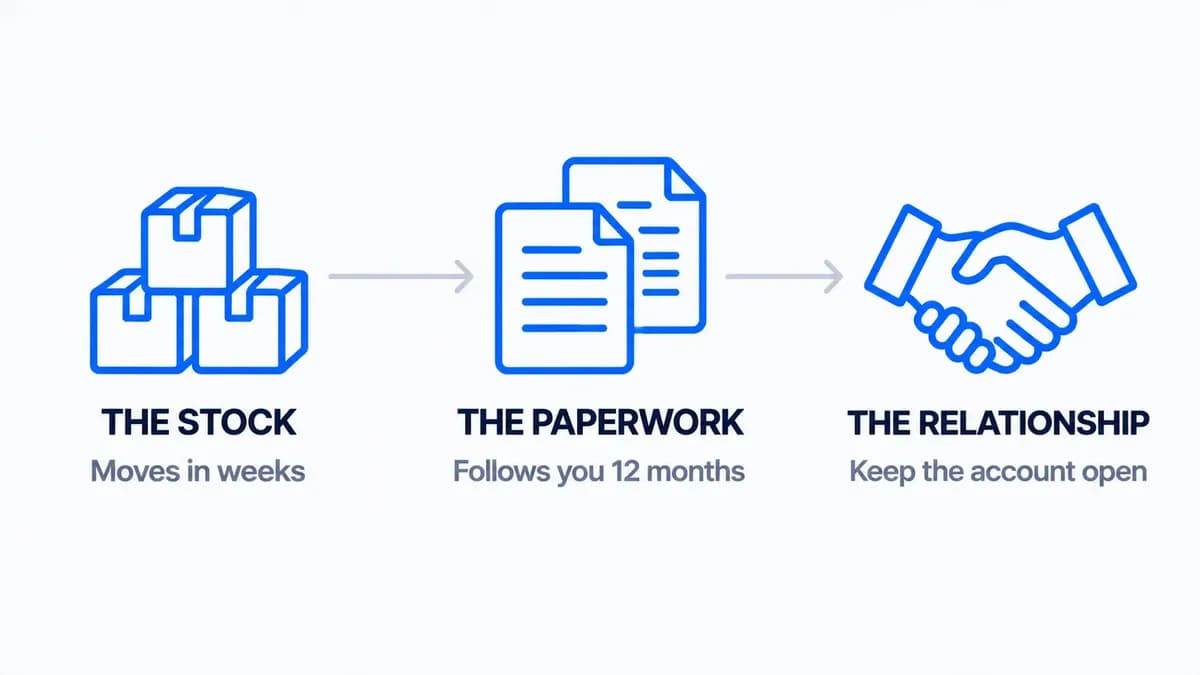
A Supplier Switch Is Really Three Switches
The first is the stock switch. The new supplier's units take over from the old supplier's units, and your listing never runs out along the way.
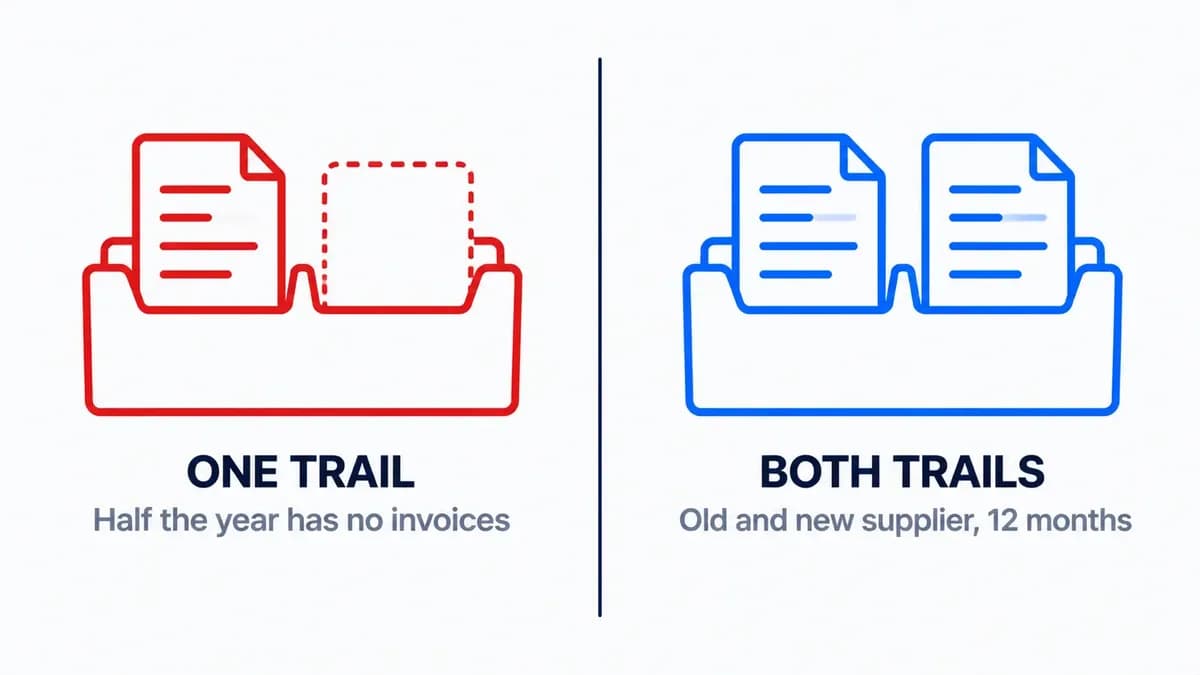
The second is the paperwork switch. For a full year after the last unit from your old supplier sells, any request for documents on that product needs invoices from both of them.
The third is the relationship switch. Your old supplier is no longer your main source for this product. They are now your backup, and a backup is only worth anything if the account is still open when you need it.
The steps below are in the order that gets all three right.
Frequently asked questions
Do I need to get approved again when I change suppliers?
No. Approval is for the brand or category, not the supplier. The new supplier's invoices still have to pass the same check the next time documents are requested.
How long should I keep the old supplier's invoices?
At least twelve months after their last unit sells. That is the look-back period Amazon states.
Can I mix units from two suppliers under one SKU?
Yes, once you have checked them side by side and they match on packaging and product codes. If they differ, keep them on separate SKUs.
Should I tell the old supplier I am switching?
TB
The B2B SupplierHub Team
Wholesale & sourcing
Stop hunting suppliers by hand. Type a UPC instead.
B2B Supplier Hub shows the suppliers in our network carrying a product on one page: wholesale cost, stock, and retail price side by side. Free to search, no card required.
A switch costs you one round of buying twice. You order a test batch from the new supplier, then for a while you have orders open with both, and you pay shipping and prep on both. That is the real cost of switching, and it is worth working out before anything else.
A simple way to judge it is if the saving per unit does not pay back that double round within a normal reorder period, do not switch yet. Add the new supplier as a backup and leave the old one in place. A backup only needs a small order now and then to keep the account open. A switch costs a full round.
Some reasons to switch are not good enough on their own. One late shipment is not. One price increase that every distributor passed on at the same time is not. A new sales rep is not. Repeated short deliveries, delivery dates that keep slipping, or a cost gap that is still there after shipping are real reasons. If you have been scoring how reliable your supplier is, you will already know which kind you have.
Getting the numbers is easier than it used to be. This is reverse sourcing: you start from a product that already sells and look for who else carries it. Search the product free on B2B Supplier Hub and you can see the real cost and real stock from every verified distributor in our network carrying it, with a date on each listing showing how fresh the numbers are, next to what you pay today, before you apply anywhere. If nothing comes back, no distributor in our network carries it yet, so submit a Request a Supplier and our team will go and find one. It is free on every plan and you get an answer within 30 days either way.
Step 1: Test The New Supplier With A Real Order
Order a normal case quantity, not a small sample. A supplier can look good on a box of six and fall apart on a pallet. Check how much of the order arrived against what you ordered, and check the delivery date against the date they promised. Our post on testing a supplier's reliability has the full method, so we will not repeat it here.
There is one check that post does not cover, and it is the one most people miss. Put one unit from the old supplier and one from the new supplier side by side before anything ships to a warehouse. Compare the packaging, the country of origin printed on the label, how many units come in each smaller pack, and the barcodes and model numbers on the box. The same product can reach two distributors by different routes and arrive in different packaging. The goods are real either way, but sellers report that a packaging difference on its own can lead to a complaint that the product is not genuine. If the units look different, they need their own SKU, or a conversation with the new supplier before you go further.
Check the invoice on this test order too, not later. It should show the supplier's name, address, phone number and website, the product codes, the number of units, and your business name exactly as it appears on your seller account. A supplier who cannot give you that document on a small order is unlikely to give it on a large one. Our invoice requirements post lists every field.
Step 2: Size The Overlap To The New Supplier's Delivery
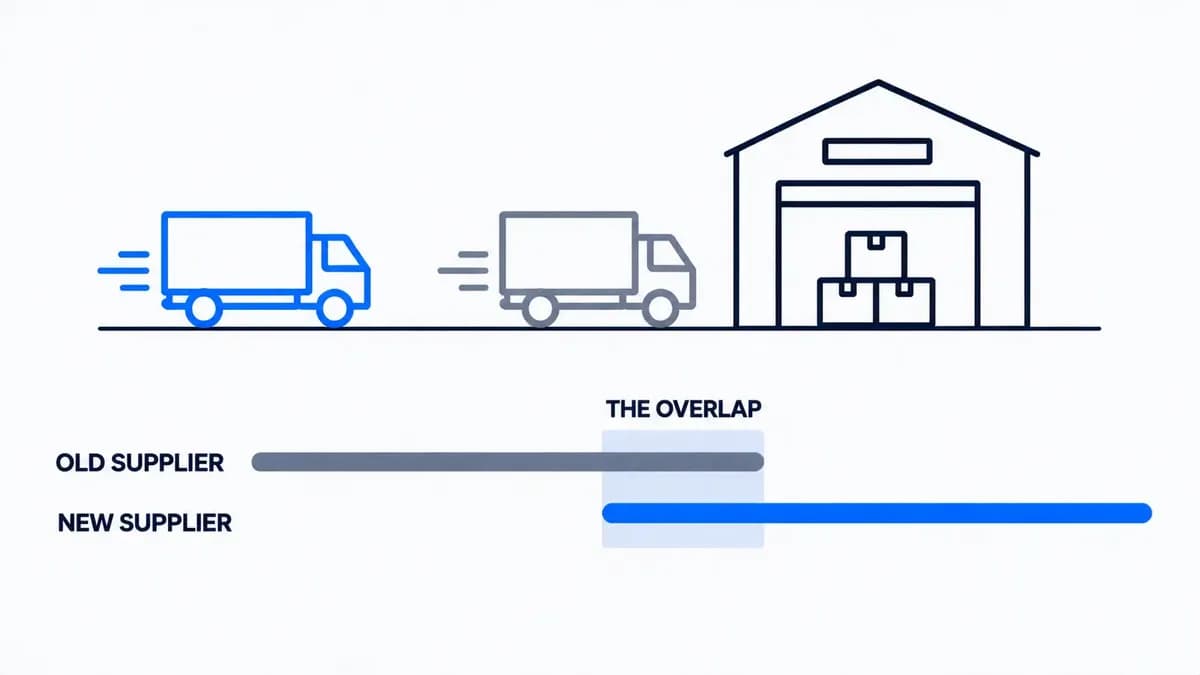
How long the two suppliers overlap is set by the new supplier, not the old one. Place your first full order with the new supplier while the old supplier's stock still covers the time the new supplier needs to deliver, plus a week in case something goes wrong.
In plain terms, your last order from the old supplier should be big enough to cover the new supplier's delivery time plus about a week of sales. Your first full order from the new supplier should be your normal reorder amount, because the test order has already answered the question of whether you can trust them.
One note on timing, since Q4 is close. Storage is charged each month on whatever is in the warehouse that month, so overlap stock that is still sitting there in October pays the higher rate no matter when it arrived. Keep the overlap lean going into Q4, and do not buy extra safety stock from both suppliers in the same month. Our Q4 storage fees guide has the dates.
If the old supplier still owes you units on an earlier order, let that order finish rather than cancelling it. Cancelling can sour an account you are about to need as a backup.
Step 3: Keep 12 Months of Invoice Cover
Many resellers believe they have to get approved again when they change suppliers. They do not. Approval is given for a brand or a category, not for a supplier, so you keep selling as before.
Let’s say you switched suppliers last year. Over the past year you sold 200 units of a product. You bought 120 of them from your old supplier and 80 from the new one. The request covers all 200, so you need invoices from both to answer it. And it can turn up eleven months after your last order from the old supplier, long after you stopped thinking about them. The numbers are only an example, but that is how these requests work.
Three things to do before the old account goes quiet. Download every invoice and statement from the old supplier's website now, while your login still works. Ask your rep in writing whether they can send invoices again later, and keep the reply. And start a simple record for each product with five columns: SKU, supplier, invoice number, number of units, and the date received. A VA can keep it in a spreadsheet, and that is all it needs to be.
The record matters because the units on your invoices have to match the units you sold. A reseller with every invoice saved but no note of which units came from where still cannot answer the request.
Step 4: Keep The Old Account Alive
Buying less from one supplier and more from another is normal in wholesale. Distributors see it all the time, so there is nothing you need to tell them. What you do need to protect is the account itself, because that supplier is now your backup on this product, and the first time the new one runs short you will be glad it is still open.
Keep a small order going now and then on something they are still good for, and reply when the rep gets in touch. Do not show them the new supplier's price unless you are ready to buy from them again, because a rep who was used only to push another supplier's price down will remember it.
One more thing on payment. Being allowed to pay after delivery is something you earn by ordering steadily, and it can go away if you stop ordering for a long time. Come back after six quiet months and they may ask you to pay up front again. Small, regular orders keep that from happening.
A supplier switch is three moves: the stock, the paperwork, and the relationship. The stock moves in a few weeks. The relationship needs a small order now and then. The paperwork stays with you for a year. Most of the trouble comes from treating it as one move and finding out about the other two later.
Before any of it, there is the question of whether the switch is worth doing at all, and numbers answer that.Search the product free, see what every verified distributor in our network charges for it today, and compare that with what you pay now. If the saving is big enough to cover the extra cost of buying from both suppliers for one round, make the switch. If it is not, you have still found yourself a backup supplier, and that is worth having.
You do not need to. Keep ordering something from them and keep the account open.